
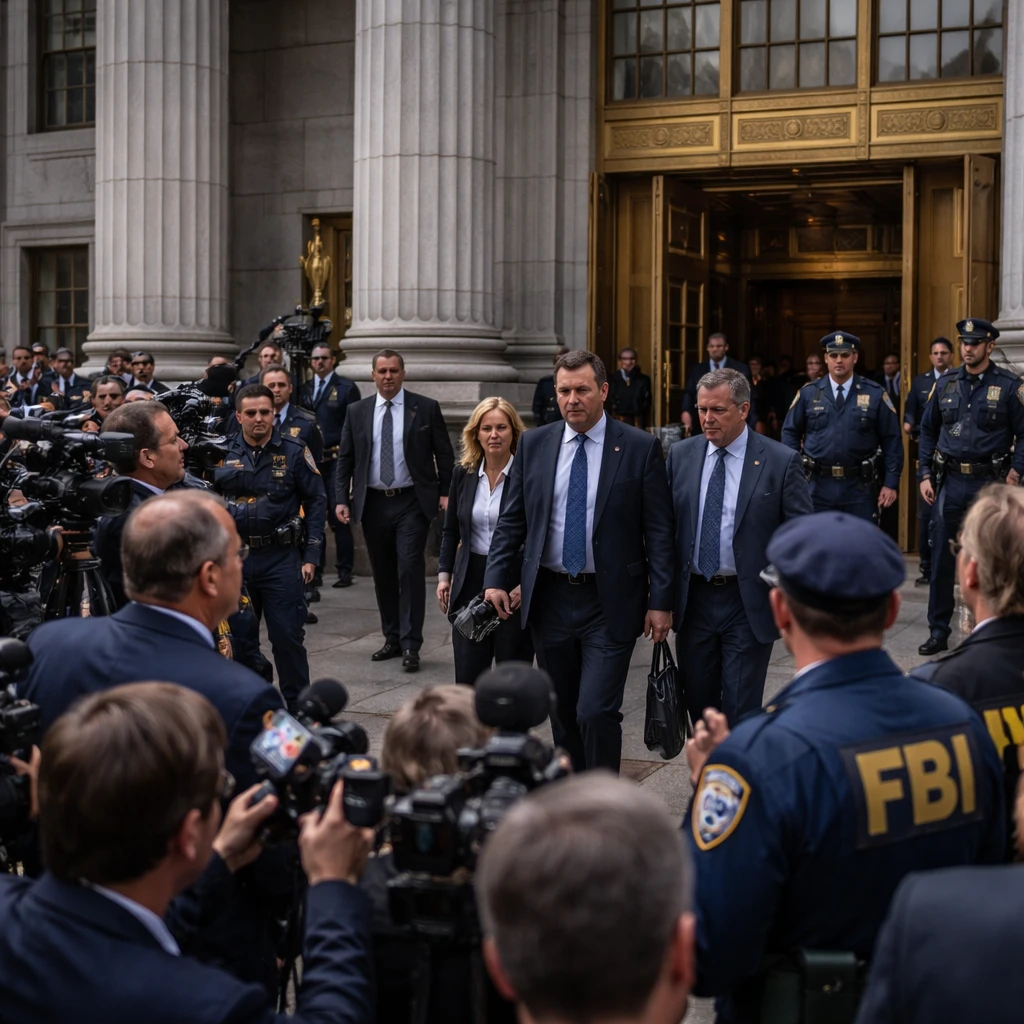
Luigi Mangione, charged with the fatal shooting of UnitedHealthcare CEO Brian Thompson outside a Manhattan hotel, is set for a critical federal court hearing where a judge will determine the admissibility of crucial evidence in the death penalty case. The decision centers on whether items found in Mangione's backpack were obtained through an unlawful search. Alongside this, separate state charges and controversies related to evidence suppression add layers to the ongoing litigation process.
Key Points
- Luigi Mangione is charged with fatally shooting UnitedHealthcare CEO Brian Thompson outside a Manhattan hotel, drawing significant public attention.
- A federal court hearing will assess the admissibility of evidence found in Mangione’s backpack, including a firearm and journal entries, contested on grounds of an illegal search.
- Mangione faces charges both federally and at the state level, with defense teams attempting to suppress key evidence and challenge the pursuit of the death penalty.
In a significant development related to the tragic death of a major health insurance executive, Luigi Mangione is scheduled to appear in federal court on Friday to address disputes over key evidentiary matters in his murder trial. The 27-year-old defendant stands accused of the deadly shooting of Brian Thompson, CEO of UnitedHealthcare, outside a hotel in midtown Manhattan. Given the serious nature of the charges which include murder, stalking, and weapons offenses, the court’s decision on the admissibility of evidence could profoundly affect the course of the proceedings.
Public officials have uniformly condemned the attack. However, Mangione has gained a degree of notoriety among certain segments of the American public who criticize the exorbitant costs and procedures linked to healthcare and insurance. Despite the public uproar, Mangione has formally pleaded not guilty to all charges within this federal case.
Central to Friday’s hearing before U.S. District Judge Margaret Garnett is a contention raised by Mangione’s legal team. They seek to exclude particular materials discovered in Mangione’s backpack, notably a 9-millimeter handgun, a silencer, and several journal entries. The defense alleges these were uncovered during an unlawful search conducted without a warrant by law enforcement personnel.
In contrast, prosecutors representing the U.S. Attorney’s Office for the Southern District of New York contend that the search was legitimate. They argue that police officers in Altoona, Pennsylvania, had duly arrested Mangione for presenting false identification and thus were entitled to inspect his belongings for potential dangers prior to his transfer.
To clarify these circumstances, Judge Garnett has summoned an officer from the Altoona Police Department to attend the hearing and offer testimony on the department’s standard protocol concerning the seizure, protection, and documentation of a detainee’s possessions when arrested in a public venue.
Concurrently, Mangione’s defense is pushing for the dismissal of the indictment on the basis of alleged deficiencies within the charges or seeks to prohibit the prosecution from pursuing the death penalty by alleging violations of Mangione’s constitutional protections. Jury selection for the federal trial remains scheduled for early September.
In addition to this federal case, Mangione faces separate charges brought by Manhattan District Attorney Alvin Bragg’s office. Similar to the federal legal battle, this state-level case includes efforts by defense lawyers to suppress evidence originating from the backpack, with trial dates yet to be established.
The ongoing legal skirmishes underscore the complexities involved in managing evidence and constitutional rights in high-stakes criminal proceedings. As the judiciary deliberates on these matters, the healthcare sector remains under scrutiny given Thompson’s role, while the case also highlights broader challenges tied to legal protocols and law enforcement practices across jurisdictions.
Risks
- The determination of evidence admissibility could impact the trial’s outcome substantially, affecting judicial precedents in search and seizure cases.
- Public scrutiny and divergent views on healthcare costs may influence broader reputational risks for the insurance sector involved.
- Legal uncertainties around constitutionality and procedural adherence introduce complexity to the prosecution’s case, potentially affecting trial timelines and outcomes.