
In a recent statement during a Washington event, Federal Aviation Administration (FAA) Administrator Bryan Bedford clarified the agency's involvement in the certification process for Boeing's two newest 737 MAX variants: the smaller MAX 7 and the larger MAX 10.
Bedford emphasized that while the FAA dedicates substantial resources to assist Boeing, the responsibility for completing necessary developmental work remains firmly with the aircraft manufacturer. "We can only help get them there, but they have got to do the work, and they’re doing the work," Bedford said, stressing that the FAA is not the hindrance in certification for these models.
Efforts to certify both variants have faced delays, largely attributed to technical challenges, including an engine de-icing issue that has specifically slowed progress on the MAX 7 and MAX 10. Nonetheless, Boeing executives remain optimistic about achieving certification within the current year.
Boeing's MAX 10 model has recently progressed to the second phase of its flight testing stage, a critical move in its extended certification campaign. This milestone was confirmed through confidential sources acquainted with the testing progress. The MAX 10 variant, identified as Boeing's largest single-aisle jet, carries a substantial backlog exceeding 1,200 firm orders as noted by aviation data analytics firm Cirium.
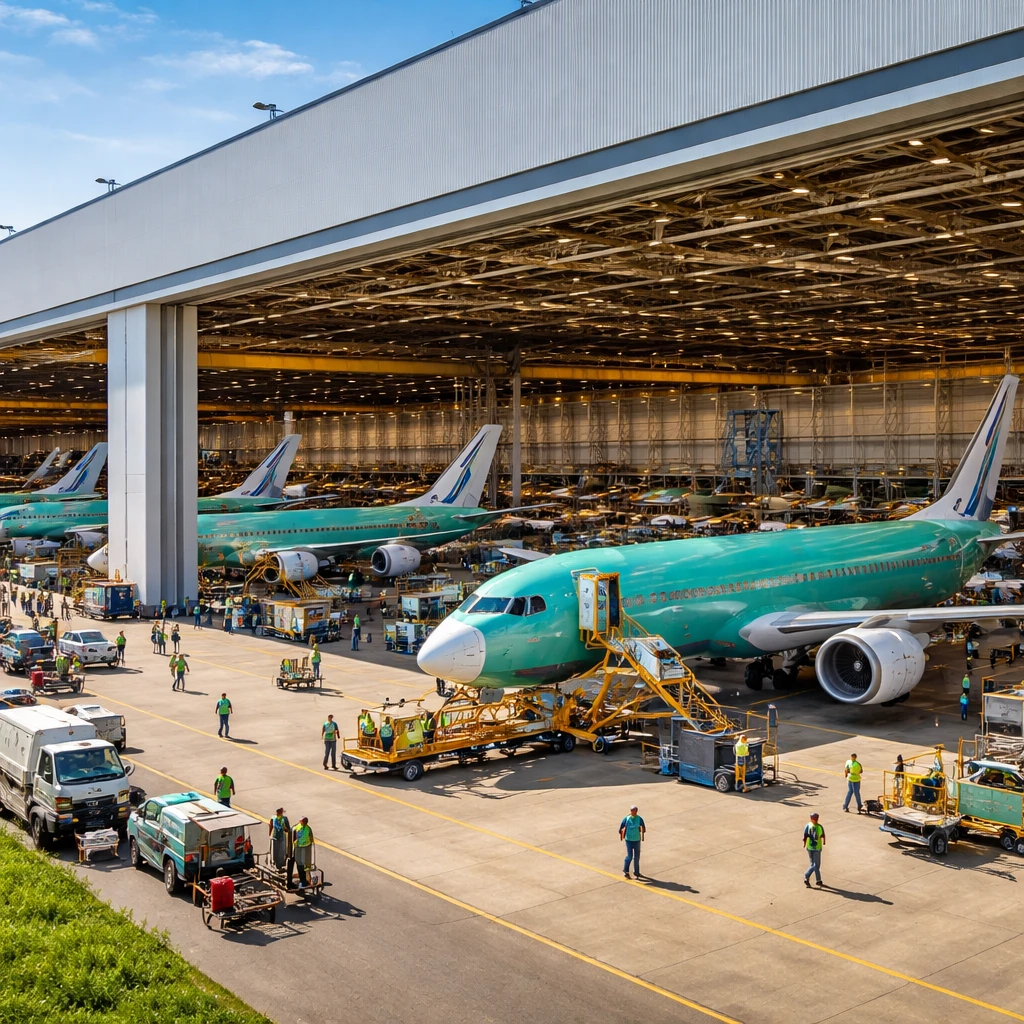
To accommodate the MAX 10's length, Boeing is setting up a new assembly line dubbed the 737 North Line at the company’s Everett, Washington plant. This move is necessitated because the plane's dimensions exceed efficient assembly capabilities at Boeing's original Renton facility, where 737 production has been ongoing since 1966.
In mid-January, Boeing posted job listings to recruit shift managers for the new 737 North Line, with applications accepted until February 23. These hires underline Boeing's commitment to ramping up production capacity to meet ongoing demand despite certification delays.
Beyond the 737 series, Boeing is also experiencing certification setbacks with its widebody 777X aircraft, indicating broader certification challenges within the company. In an encouraging development, the FAA raised the production cap of the 737 MAX from 38 to 42 planes per month as of October, demonstrating regulatory confidence in Boeing's manufacturing processes.
Further signaling market confidence, Alaska Airlines recently placed an order for 105 MAX 10 jets. Alaska CEO Ben Minicucci expressed confidence in the aircraft’s certification being finalized within the year, highlighting the airline industry's anticipation of the model's deployment.
FAA leadership, including both current Administrator Bedford and his predecessor Mike Whitaker, have called for reforms in the aircraft certification process. Bedford noted that the FAA has several "Skunk Works" projects underway with industry partners aimed at streamlining certification procedures, although he refrained from making predictions about their outcomes.
Key Points
- The FAA assures it is facilitating, not obstructing, Boeing's certification of the 737 MAX 7 and 10 variants.
- Boeing confronts technical hurdles, particularly relating to engine de-icing, influencing certification timelines.
- Boeing is investing in new production infrastructure, including a new assembly line for MAX 10 at its Everett, Washington facility.
Sector Impact
- Aerospace Manufacturing: Delays and production expansion affect supply chains and industry capacity.
- Commercial Aviation: Airlines like Alaska anticipate fleet upgrades contingent on MAX 10 certification.
- Regulatory Framework: FAA's procedural reforms may influence future certification processes across aviation.
Risks and Uncertainties
- Technical Certification Delays: Engine de-icing issues and other engineering challenges could further postpone aircraft approval.
- Production Risks: Scaling new assembly line operations may encounter initial inefficiencies or staffing challenges.
- Regulatory Changes: Possible reforms in certification procedures introduce uncertainty in approval timelines.
These dimensions highlight ongoing complexities in Boeing’s efforts to introduce new 737 MAX variants to the market, underscoring the balance between regulatory facilitation and manufacturer responsibility.