
Stock Markets May 12, 2026 12:57 PM

EU Considers Joining U.S.-Led 'Pax Silica' Alliance to Secure Semiconductor and AI Supply Chains

Brussels weighs collective participation as some member states move independently and France remains a key undecided partner

By Avery Klein

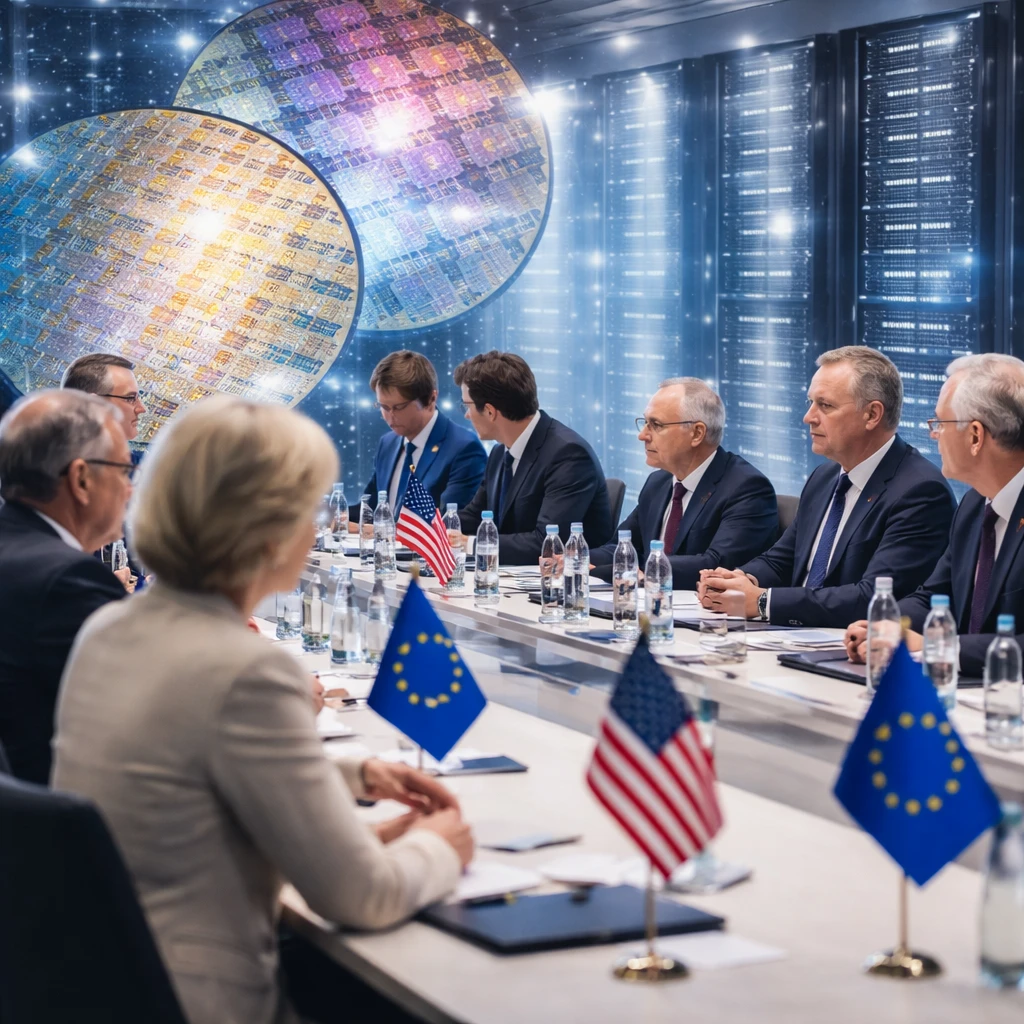
The European Commission is in talks to join the U.S.-backed 'Pax Silica' initiative, a proposed network aimed at protecting supply chains for semiconductors, AI infrastructure, critical minerals and data centers. While several EU members have already signed on independently, internal questions persist and France has not yet committed. Brussels plans to send a senior official to the United States soon to advance discussions.

EU Considers Joining U.S.-Led 'Pax Silica' Alliance to Secure Semiconductor and AI Supply Chains

Key Points

  • The European Commission is negotiating entry into the U.S.-backed Pax Silica alliance aimed at securing semiconductors, AI infrastructure, critical minerals and data centers.
  • Some EU members, including Sweden and Finland, have already joined the initiative independently while Brussels seeks a coordinated, bloc-wide approach.
  • France remains the main major holdout; the Commission plans to send a senior official to the U.S. to advance negotiations and resolve technical and conditional issues.

The European Commission is actively exploring membership in a U.S.-led initiative known as "Pax Silica," a proposal designed to create a trusted network for AI infrastructure, critical minerals and data centers. The initiative, which has backing from the previous U.S. administration, is intended to bolster supply-chain security for semiconductors and artificial intelligence technologies.

Officials in Brussels are negotiating the terms of possible EU participation as the bloc seeks to respond to rising competition with China in strategic technology areas. The Commission's discussions are focused on defining the boundaries and commitments that membership would entail, with both sides working to clarify the structure of any agreement.

Internal divisions within the EU complicate a unified approach. Some EU officials remain unsure about the ultimate scope and objectives of the Pax Silica proposal, and technical questions are still unresolved. Despite those reservations at the Commission level, individual member states have already taken independent steps: Sweden and Finland have moved to join the initiative on their own.

Brussels views collective participation as a way to avoid a patchwork European response to the American-led security effort and to present a coordinated position. To press the talks forward, the Commission intends to dispatch a senior official to the United States in the coming weeks to continue negotiations.

France represents the principal holdout among the larger EU member states. Negotiators are focused on pinpointing the specific conditions and technical clarifications needed to secure Paris's backing for a bloc-wide decision. Those discussions are ongoing and remain a critical element in any eventual EU commitment.

Observers of the talks say the formalization of Pax Silica would likely hasten a separation between Western technology ecosystems and Chinese suppliers in the semiconductor and AI sectors. For firms involved in critical minerals extraction and data center construction and operation, such a shift suggests a trajectory toward more stringent regulatory frameworks and trade routes that are narrower but positioned as more secure.


Context limitations: The details of the proposed agreement, including precise obligations of participants and timelines, are still under negotiation and have not been finalized.

Risks

  • Internal uncertainty within the EU about Pax Silica's scope and objectives could delay or weaken a unified European participation - this affects policymakers and companies in semiconductors, AI infrastructure, critical minerals and data centers.
  • France's hesitancy to commit without specific technical clarifications introduces a political risk to a bloc-wide agreement - this impacts negotiations and potential timing for regulatory and trade changes.
  • Formalizing the alliance may accelerate decoupling from Chinese suppliers, creating narrower but more regulated trade routes that could restrict supply options for affected industries such as chipmakers and data center providers.

More from Stock Markets

TrueBlue Shares Rise After HireQuest Offers $105M for PeopleReady On-Demand Unit May 12, 2026 U.S. Equities Finish Mixed as Healthcare, Telecoms and Energy Outperform; Tech and Industrials Slip May 12, 2026 Bovespa Ends Lower as Utilities, Industrials Drag Stocks to One-Month Low May 12, 2026 Canadian equities tick higher as energy, staples and materials lead gains May 12, 2026 Intuitive Machines Selected for Space Force Andromeda IDIQ to Develop GEO Surveillance Systems May 12, 2026