
Energy-sector equities rallied Thursday as traders responded to a sharp rise in oil prices after President Donald Trump said the U.S. would escalate military strikes on Iran. The comments increased concerns that the ongoing conflict could cause prolonged interruptions to global oil flows.
In premarket action by 07:25 ET, shares of Chevron rose about 3% and Exxon Mobil advanced roughly 3.4%. ConocoPhillips also posted gains of approximately 3.1%. The energy-focused XLE exchange-traded fund (NYSE:XLE) climbed 2.9% as the sector broadly outperformed.
Crude benchmarks jumped significantly on the news. Brent futures were up nearly 8% to $109.12 per barrel, while U.S. West Texas Intermediate futures increased about 8.7% to $108.84 per barrel. Both benchmarks had initially opened modestly lower earlier in the session after pulling back in the previous trading day.
In a televised address, President Trump said the U.S. military would step up its campaign against Iran over the coming weeks, framing the planned actions around preventing Tehran from obtaining a nuclear weapon. "We’re going to hit them extremely hard over the next two to three weeks. We’re going to bring them back to the Stone Ages where they belong," he said. He added that "discussions were ongoing" but did not indicate that a ceasefire was imminent.
The remarks hardened an earlier, softer signal that had briefly calmed markets. On Wednesday, Trump told reporters the U.S. could withdraw from Iran within "two to three weeks" even without a formal agreement. Prior to his speech, he had posted on social media that Iran’s "new regime president" had requested a ceasefire, an assertion Tehran denied. Iran’s Foreign Ministry rejected the claim, and state media reported that Tehran had not sought a truce.
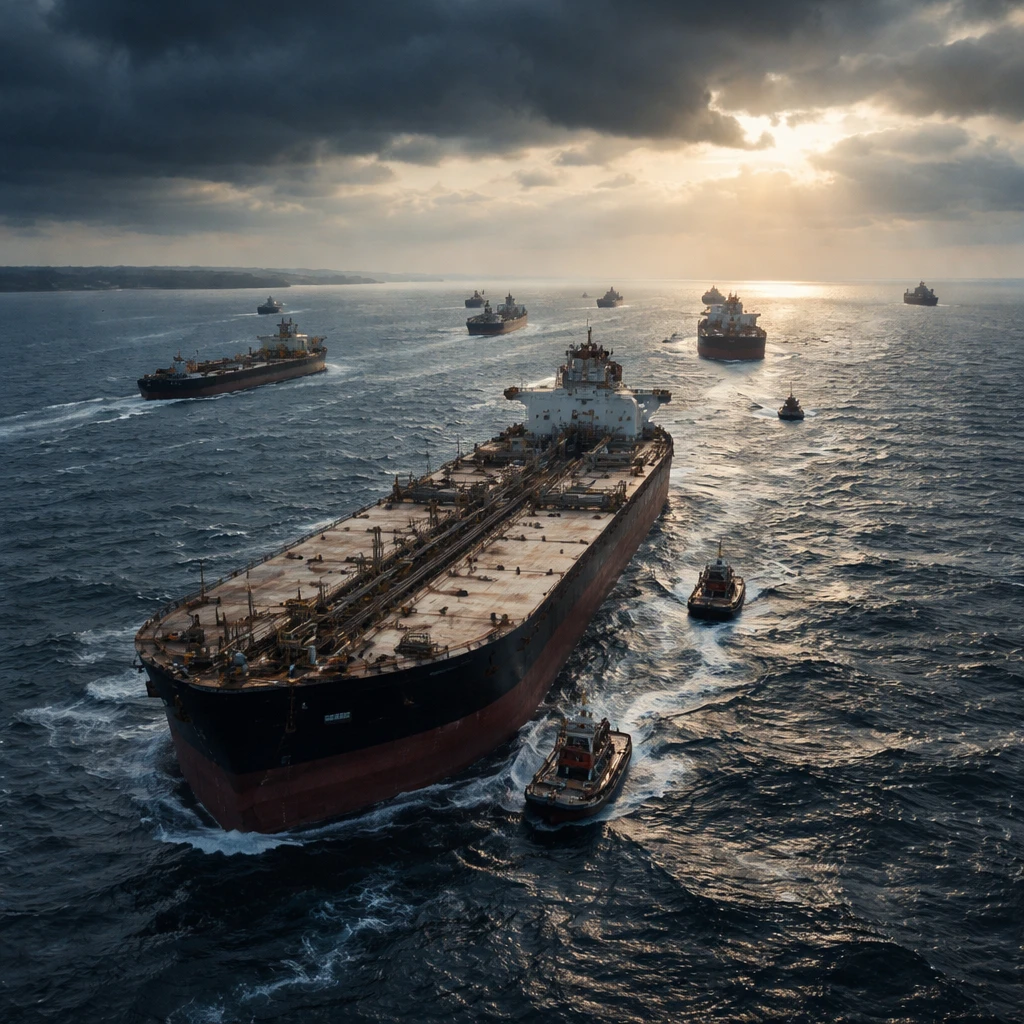
The U.S. president offered no specifics about measures that might lead to the reopening of the Strait of Hormuz - a vital shipping lane for global oil flows - leaving uncertainty among market participants about how soon disrupted crude shipments could resume.
Threats to maritime commerce have increased as the conflict has escalated. Qatar’s defence ministry said an oil tanker leased to QatarEnergy was struck by an Iranian cruise missile in Qatari waters on Wednesday, an incident that underscores the operational risks for vessels in the region.
Some traders and cargo operators said they had halted transactions for barrels priced off the Dubai Middle East benchmark, which is commonly used to value nearly a fifth of global crude supplies. Market participants cited an inability to access ports located within or near the Strait of Hormuz as the reason for pausing such trades.
Separately, a market research and stock selection tool referenced in the prior coverage evaluates Chevron under the ticker CVX using algorithmic scoring across numerous metrics. That tool asserts it assesses fundamentals, momentum, and valuation to surface investment ideas, though the current article does not provide additional validation or endorsement of those rankings.
This developing market reaction reflects heightened sensitivity across energy equities, commodity benchmarks, and shipping-related activity to geopolitical developments affecting the Persian Gulf region.