
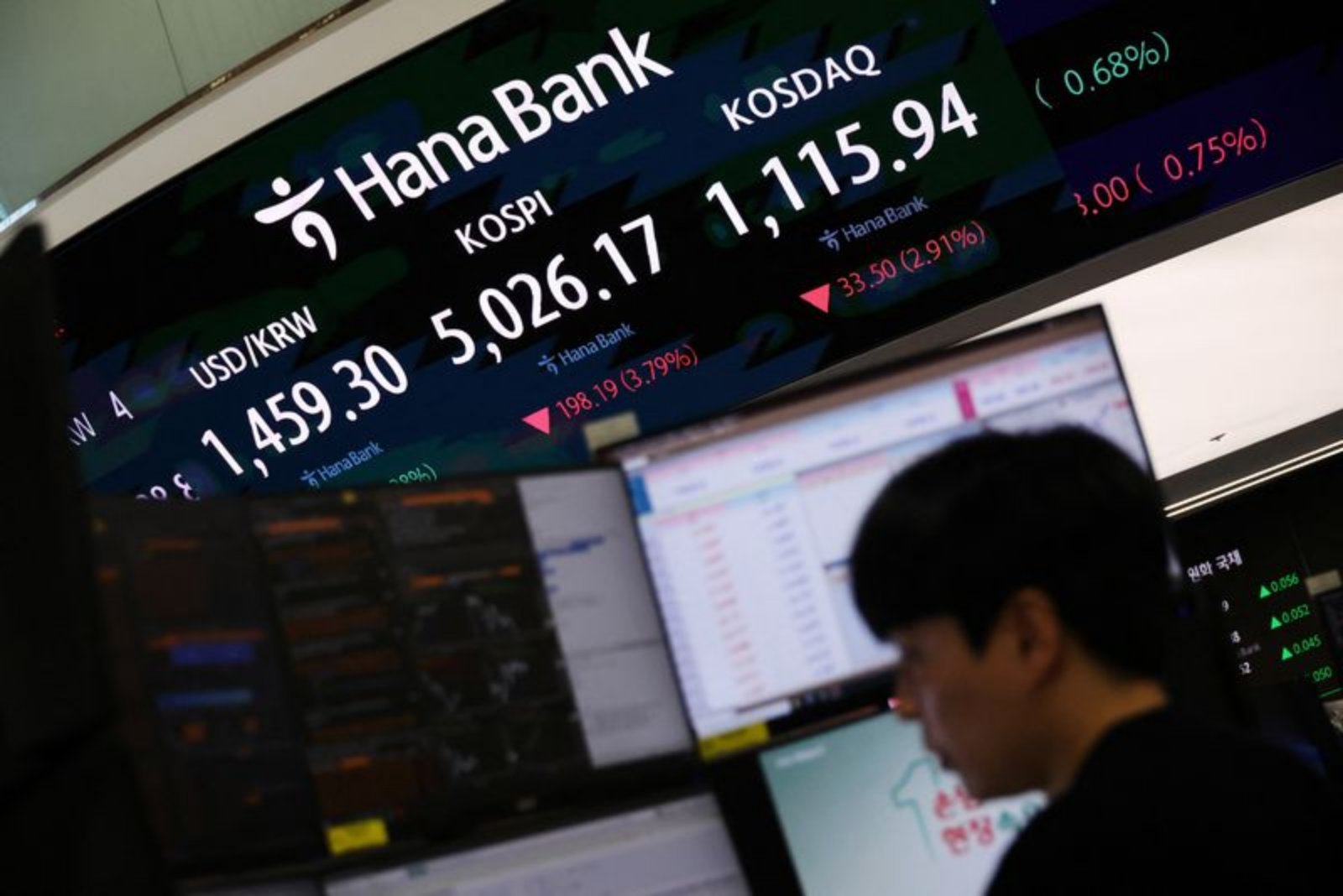
Global investors increased allocations to emerging market equities at a rapid pace in January, lifting year-to-date net inflows above $39 billion, according to J.P. Morgan. Last week saw one of the biggest weekly inflow totals on record for emerging market equity funds, a surge that the investment bank called one of the strongest openings to the year in more than 20 years.
Fund managers and strategists say the convergence of a weaker U.S. dollar and improving earnings expectations has strengthened the case for extending the asset class's rally from the prior year. That rally was already notable: the MSCI emerging markets index rose 30.6% last year, while the S&P 500 gained 16.4%.
Flows and scope
Latin American equity funds, in particular, recorded their largest weekly inflows on record. Several managers described the recent activity as more discerning than past episodes of enthusiasm for emerging markets, with investors increasingly deploying single-country strategies rather than treating the bloc as a uniform trade.
"What’s really standing out this time is how much investors are using single-country emerging market ETFs," said Dina Ting, head of global index portfolio management at Franklin Templeton. That selective approach reflects wide divergence in performance across countries and a growing view that national macro and policy dynamics now matter more than they have in recent years.
Portfolio managers pointed to South Korea and Brazil as examples where stricter central bank discipline and tighter controls on government spending are supporting investor confidence relative to some developed markets. "If I want policy orthodoxy and fiscal responsibility, I go to EM, not DM," said James Athey, a fund manager at Marlborough in London. He added that some developed countries are acting as if their economies require ongoing support, which could raise longer-term risks for those markets.
Currency dynamics and implications for profits
A sharp retreat in the dollar has been a central factor behind the inflows. The U.S. dollar declined by more than 9% last year against a basket of developed-nation peers, while an emerging-market currency index rose by more than 7% - the biggest gain since 2017. Expectations for further dollar weakness have encouraged investors to move capital into other geographies.
Emerging market managers note that a softer dollar can improve corporate profitability by lowering financing costs and supporting domestic demand. Varun Laijawalla, an emerging market equity portfolio manager at Ninety One, said the dollar had been a headwind for years and that last year’s break in that trend changed the backdrop for emerging markets. "Last year you saw a break in that trend, and that changes the backdrop for emerging markets," he said.
Global economic projections cited by some investors also support the case for EM earnings growth: the International Monetary Fund’s forecasts indicate developed economies expanding by roughly 1.8% this year and 1.7% next year, while emerging markets are projected to grow by about 4.2% in the current year and 4.1% in 2027. Investors are positioned on the expectation that corporate earnings in emerging markets will broadly follow that stronger growth trajectory. "For the first time in years, earnings are no longer a drag. That’s essential if this rally is going to be sustained," Laijawalla added.
Sector and regional exposures
While artificial intelligence has dominated headlines in developed markets, some investors highlight that emerging markets provide exposure to parts of the AI supply chain, notably semiconductor producers and advanced manufacturing equipment suppliers in South Korea and Taiwan. South Korea’s KOSPI index posted outsized gains last year, rising more than 75% in local terms and roughly 97% in dollar terms, and it climbed 24% in January alone - its strongest monthly gain since December 1998.
Steve Kolano, chief investment officer at Integrated Partners, said the momentum in markets such as South Korea has room to continue and that his firm has been moving closer to benchmark weights for emerging markets as a result. Other investors are broadening exposure beyond AI-linked segments into markets tied more closely to domestic consumption and younger demographics. "Emerging markets offer exposure to very different parts of the global economy, including consumer sectors that are less tied to the AI investment cycle," said Andrew Briggs, director of portfolio management at Plaza Advisory Group.
Investor sentiment and policy considerations
Some investors also point to shifts in how Washington’s policy direction and geopolitical developments have affected the dollar and perceptions of risk. Jorry Noeddekaer, head of Polar Capital’s emerging markets and Asia team, said he finds it difficult to justify a persistent premium for the U.S. as an asset class given the range of developments influencing policy and geopolitical considerations. "I find it hard to believe that the U.S. as an asset class could carry an extra premium when you have so much going on," he said.
Fund managers described the current environment as a rare alignment of macro and fundamental signals supporting emerging market equities - a combination of favorable currency dynamics, stabilizing earnings expectations and stronger policy discipline in selected large EM economies.
Data and decision-making
Managers emphasized the importance of reliable data and disciplined analysis in identifying opportunities amid heightened flows and selective positioning. Where excitement can masquerade as intuition, relying on institutional-quality information and structured analysis was presented as a safeguard against costly mistakes. Investors said that blending detailed data with rigorous frameworks improves the odds of identifying durable opportunities across a diverse set of emerging market economies.