
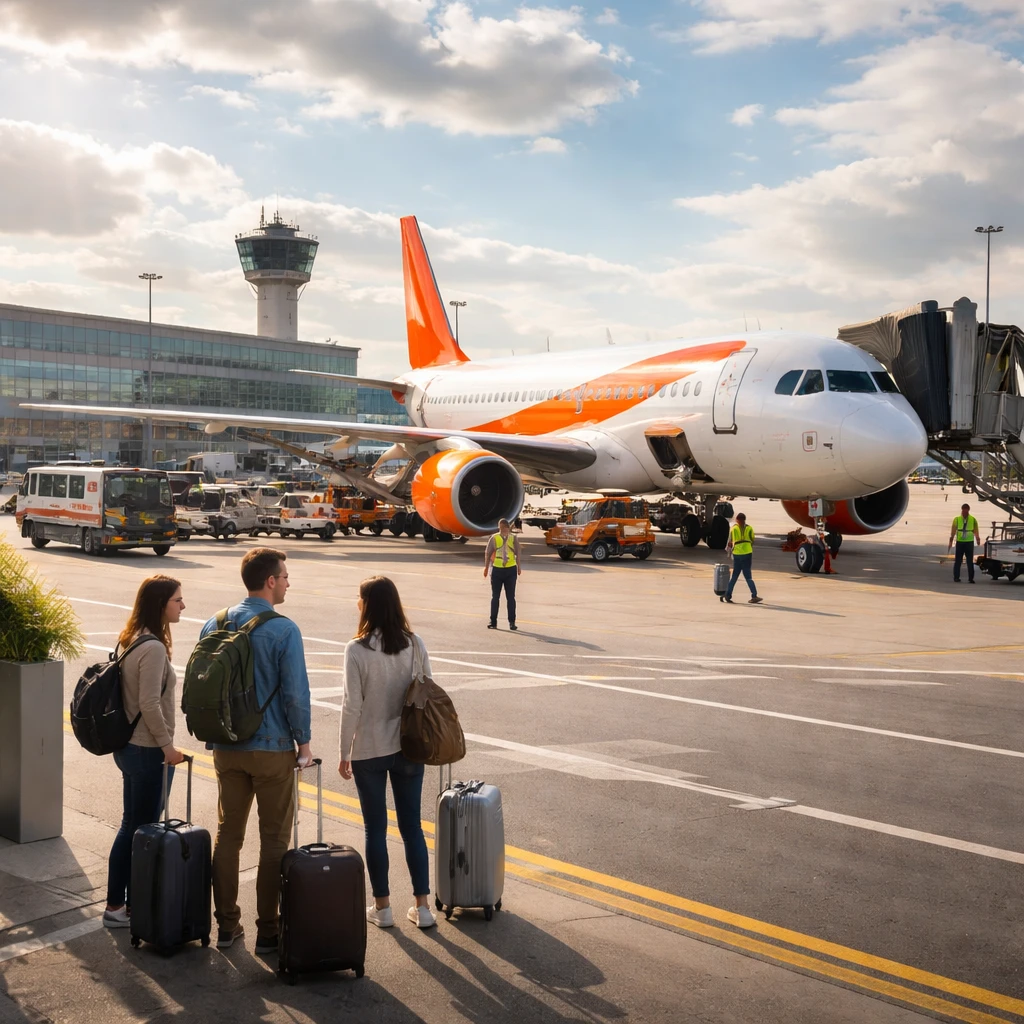
EasyJet's chief executive, Kenton Jarvis, said on Monday that European travellers are likely to face higher ticket prices toward the back end of the summer as rising fuel costs related to the Iran war begin to feed through when the airline's current fuel hedges expire.
Speaking while opening a new operational base at Newcastle Airport in northeast England, Jarvis told reporters that fare increases will depend on how fuel prices evolve but indicated that the impact of higher costs would reach consumers later in the summer.
"The reality is that prices will start feeding through to the consumer towards the back end of the summer, but equally it depends what happens to fuel prices," Jarvis said.
In a disclosure made in January, the British low-cost carrier detailed its fuel hedging positions for upcoming periods. The company said it had hedged 84% of its fuel requirements for the first half of 2026 at an average price of $715 per metric ton. For the second half of this year, EasyJet reported hedging 62% of its fuel needs at $688 per metric ton, and for the first half of 2027 it had hedged 43% of requirements at $671 per metric ton.
Those hedges mean a significant portion of EasyJet's short-term fuel demand is fixed at the disclosed rates, while coverage decreases for later periods. Jarvis' remarks at the Newcastle base linked the timeline for any consumer price adjustment to the point at which those hedges come off and to the subsequent trajectory of fuel costs influenced by the Iran war.
The comments were made in the context of the airline expanding its UK operations with a new base, where executives highlighted operational developments while flagging the sensitivity of fares to fuel market movements as hedging positions change.
EasyJet's hedging disclosures provide a window into the carrier's risk management for fuel expenses across distinct future periods, showing higher coverage nearer term and reduced protection into 2027. The company did not provide further guidance beyond the hedging figures and Jarvis' statement about the potential for prices to rise depending on fuel-market developments.
Where this matters: The airline sector and consumer travel budgets are directly affected by changes in jet fuel prices and the timing of hedge expiries. Energy markets and airlines' cost structures will influence ticket pricing decisions.