
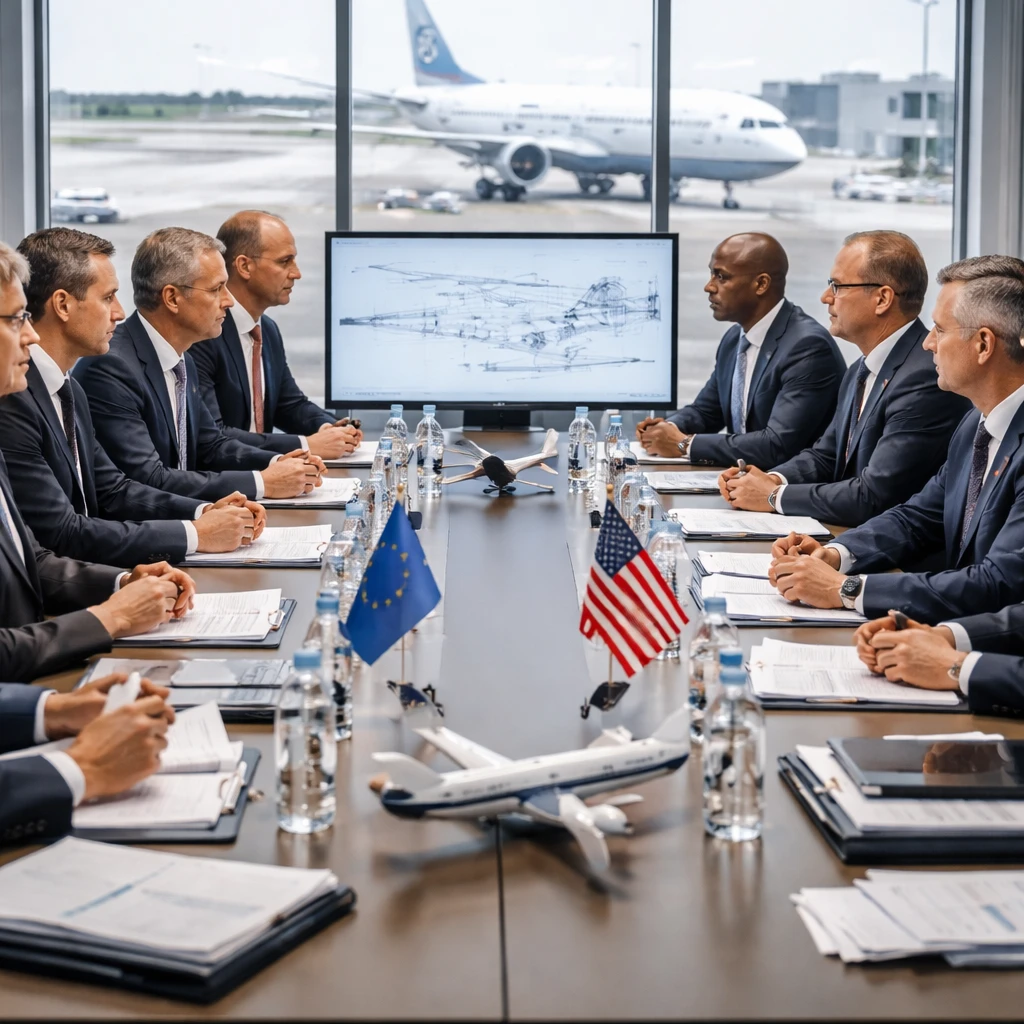
Florian Guillermet, Executive Director of the European Union Aviation Safety Agency, said in a recent interview that cooperation between EASA and the U.S. Federal Aviation Administration has markedly improved. He characterized the relationship as one of trustful partnership, reflecting a shift from previously strained interactions.
Guillermet stated that EASA is currently in a phase where it trusts the FAA to take the appropriate steps. He reported that he has no indication the FAA is failing in its responsibilities, nor that Boeing is failing to react appropriately to regulatory oversight.
The EASA chief emphasized that the FAA is fulfilling its oversight duties and that Boeing is responding in an appropriate manner. Guillermet explicitly said his remarks applied to matters of aircraft certification as well as to production-related issues.
Relations between the two regulators had deteriorated after fatal Boeing 737 MAX accidents in 2018 and 2019. Those crashes were linked, according to the account given, to flawed software and shortcomings in oversight, prompting EASA to undertake closer examination of Boeing designs.
EASA serves as the lead regulator for Airbus (EPA:AIR) jets and is one of several major aviation authorities responsible for certifying aircraft domestically. While these national and regional agencies generally recognize one another's certification decisions under bilateral agreements, they retain the authority to pose detailed questions and seek further information when needed.
Guillermet's comments portray a regulatory relationship that has moved from tension to collaboration, with mutual recognition and the capacity for scrutiny remaining in place. The statements confine themselves to the current working relationship and do not offer evaluations beyond the agency interactions and Boeing's stated responsiveness.
Summary
Europe's top aviation regulator says cooperation with the FAA has strengthened and that Boeing is responding appropriately to oversight, applying to both certification and production. The improved relationship follows a period of tighter scrutiny after the 2018-2019 Boeing 737 MAX crashes.