
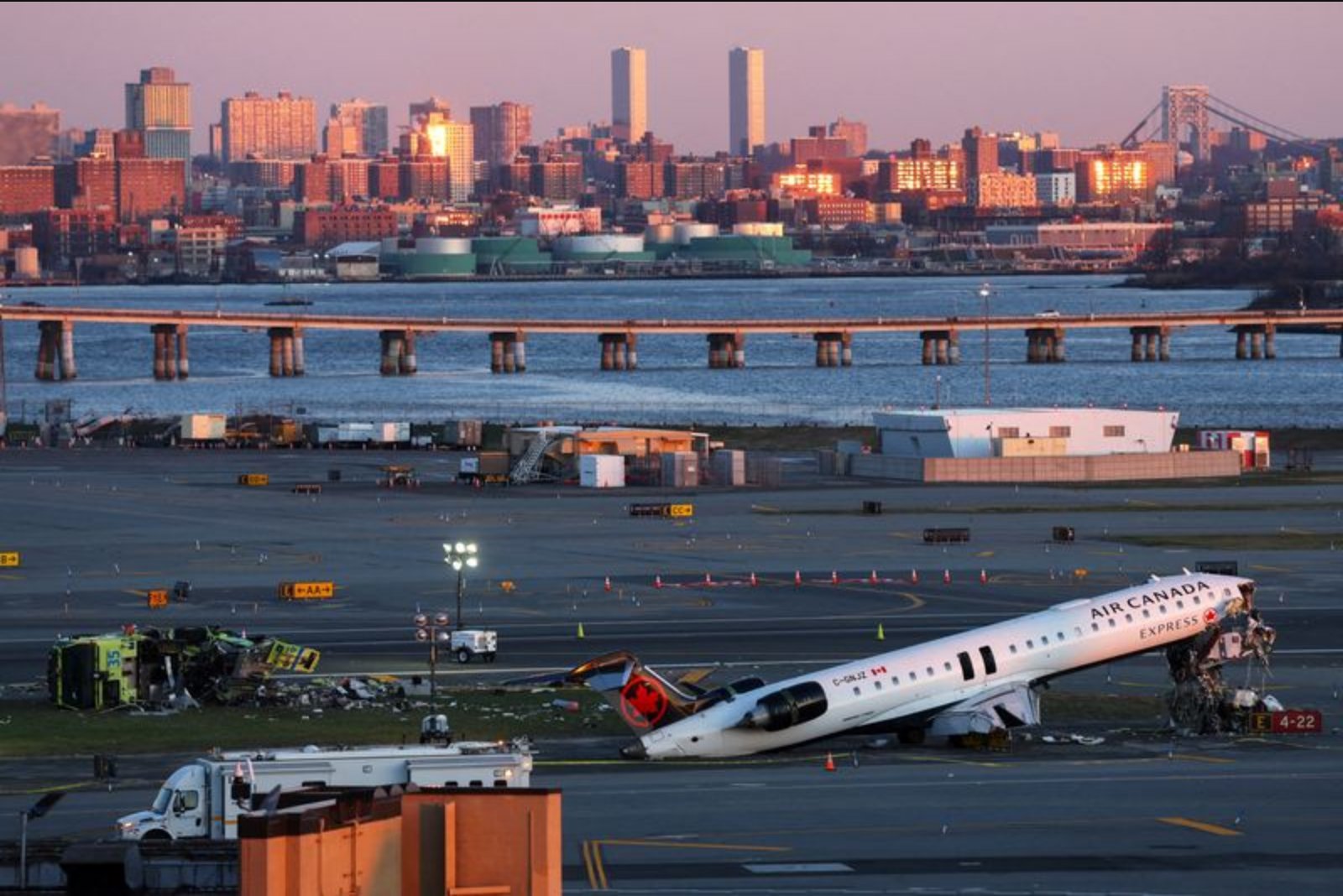
Newly obtained material suggests controllers at LaGuardia Tower may have merged responsibilities before the time set by local rules on the night an Air Canada jet collided with a fire truck.
The collision occurred at roughly 11:37 p.m. ET on March 22 and resulted in the deaths of both pilots. A LaGuardia Tower Standard Operating Procedures (SOP) document seen by Reuters indicates that the tower has explicit restrictions on consolidating the local and ground positions before midnight, or 90 minutes after the start of a shift, whichever is later.
According to the 2023 SOP document, which people familiar with the matter said remained in effect in 2026, "Positions at LaGuardia Tower are not to be consolidated to one position prior to midnight local time or 90 minutes after the start of the shift, whichever is later." The document further states that positions will only be consolidated as traffic warrants and that any consolidation should be reversed as traffic volume increases.
What investigators are seeking
The National Transportation Safety Board said last week that, as part of its probe into the crash, it was requesting details about the duties each controller was performing at the time. NTSB Chair Jennifer Homendy told reporters that two controllers were present in the glass-enclosed tower cab when the accident occurred: a local controller managing the active runways and the immediate airspace, and a controller-in-charge who was providing departure clearances.
Homendy added that it is "not clear who was conducting the duties of the ground controller," referring to the role that handles aircraft and vehicle movements on taxiways, generally excluding active runways, and that investigators have received conflicting information about that function.
Sign-in times and role consolidation
In briefing remarks, Homendy said the controller-in-charge signed in at 10:30 p.m. while the local controller signed on at 10:45 p.m. The SOP language seen by Reuters indicates the local and ground positions should not have been combined prior to midnight at the earliest. If a controller on duty was performing both local and ground duties before that time, such an arrangement would be inconsistent with the LaGuardia tower’s standard operating procedures.
Multiple current and retired air traffic controllers who reviewed audio recordings posted on LiveATC.net said they believed the local controller managing the active runways was also handling ground traffic that night. The NTSB did not return a request for comment on those specific assessments, and the Federal Aviation Administration, which operates U.S. air traffic control, did not respond to a request for comment.
Workload, staffing and traffic on the night
The March 22 shift was described by several controllers interviewed by Reuters as busy. Weather-related delays that evening produced 70 commercial flight takeoffs or landings at LaGuardia between 10 p.m. and 11:37 p.m., compared with an average of 53 during the same hour since 2022, according to Cirium data cited in the document.
Several controllers told Reuters that on busy nights, additional controllers are typically called in or that personnel on duty will remain beyond their scheduled shift end time to handle an unexpected rise in traffic. Staffing shortages across facilities, including a lack of supervisors, have increasingly put controllers into combined roles that cover both local air and ground operations, multiple controllers said.
Air crash inquiries often conclude that accidents stem from multiple contributing factors rather than a single cause. The NTSB has been gathering information on who performed which duties in the tower cab at the time of the accident as part of that broader investigation.
Context in procedures
A final NTSB report on a 1997 collision at LaGuardia referenced procedural changes implemented afterward to prevent early consolidation of local and ground responsibilities. The SOP language reflected in the 2023 document echoes that earlier guidance by explicitly restricting combination of those positions before midnight.
People familiar with the SOP said the 2023 version remained current in 2026. The document reiterates that consolidation should be driven by traffic needs and reversed as traffic increases.
Ongoing uncertainties
The NTSB is continuing to collect evidence and testimony related to controller duties, staffing levels and shift coverage on the night of the crash. Conflicting accounts remain about which controller was responsible for ground movements in the moments leading up to the collision.
Given the ongoing investigation, regulators and investigators have not issued definitive findings on causal factors. The FAA and the NTSB declined to provide additional comment in response to Reuters' requests.
Summary
A document reviewed by Reuters raises questions about whether LaGuardia Tower staff combined local and ground controller responsibilities earlier than permitted by the tower’s standard operating procedures on the night an Air Canada jet struck a fire truck. The accident at about 11:37 p.m. ET on March 22 killed both pilots. The NTSB is seeking records and statements about who was performing which duties as part of its investigation. Controllers and procedural documents state that local and ground positions should not be consolidated prior to midnight or 90 minutes after the start of a shift, whichever is later. Traffic that night was heavier than recent averages, and several controllers described the workload as busy. The FAA and the NTSB did not provide further comment to Reuters.