
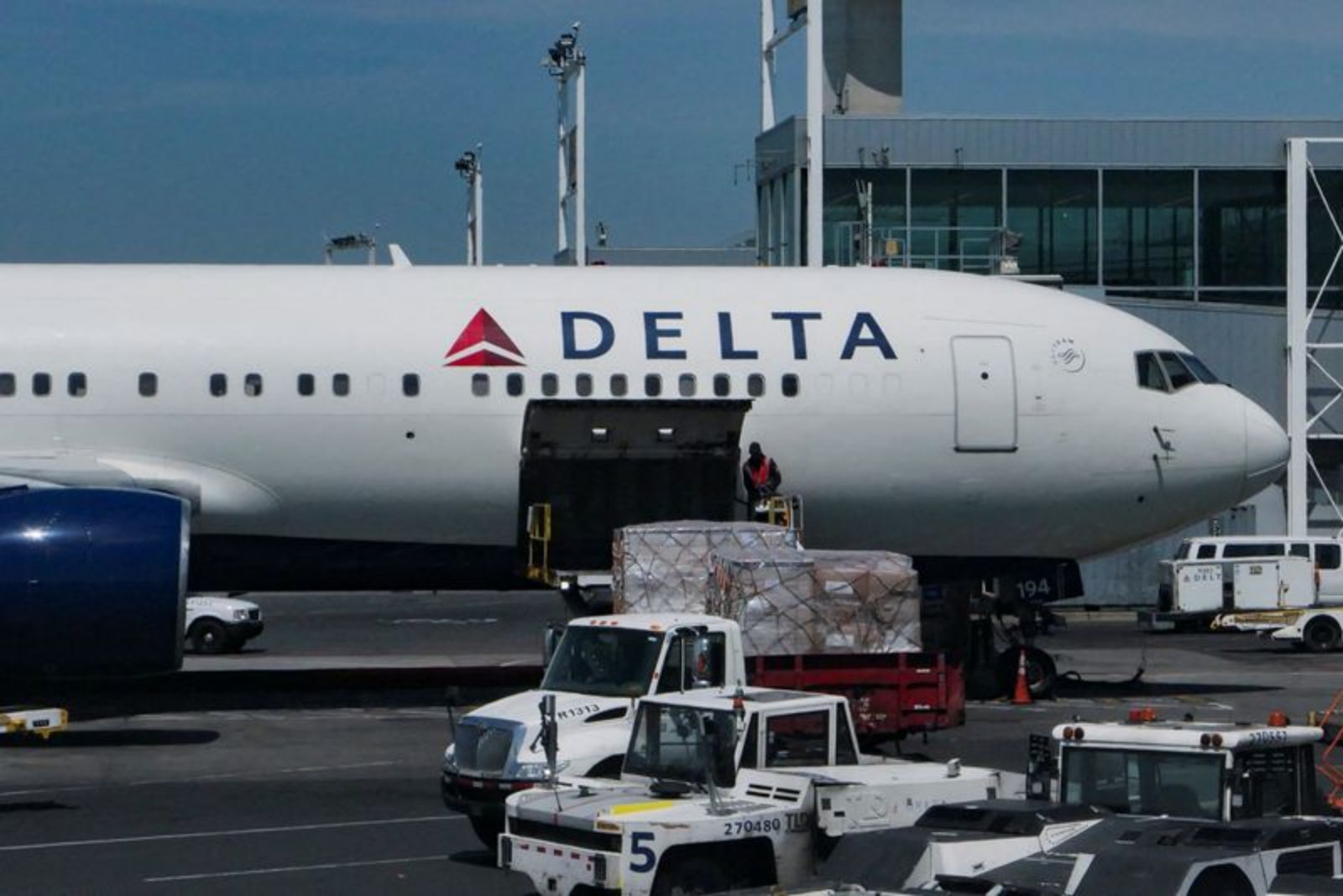
CHICAGO, April 8 - Delta Air Lines on Wednesday warned that a sharp climb in jet fuel prices has prompted the carrier to dial back its growth plans and to forecast second-quarter results below market expectations, while deeming it premature to revise its full-year outlook amid ongoing fuel-price volatility.
The Atlanta-based airline said it will eliminate all planned capacity expansion for the June quarter, a move that reduces supply by roughly 3.5 percentage points relative to its prior plan. Delta also said its capacity outlook now carries a "downward bias until the fuel environment improves."
Management attributed the abrupt change to a run-up in jet fuel costs tied to the Iran war, a development that has reverberated through energy markets and placed new pressure on carriers. Since late February, jet fuel prices have nearly doubled, creating what the airline industry is calling its first significant post-pandemic stress test - one that is inflating operating costs, complicating schedules and testing passengers' tolerance for higher fares.
Profit outlook and guidance
Delta now expects adjusted earnings of $1.00 to $1.50 per share for the June quarter. The midpoint of that range, $1.25, sits below the $1.41 per share analysts had been projecting on average, according to LSEG. Given the uncertain fuel outlook, the carrier said it was too early to provide an updated full-year earnings forecast; Delta had previously projected full-year adjusted earnings of $6.50 to $7.50 per share in January, a range management declined to revisit Wednesday. Analysts' current consensus stands at $5.40, as per LSEG.
For the March quarter, Delta reported adjusted earnings of $0.64 per share, beating analysts' expectations of $0.57.
Fuel costs and offsets
Delta anticipates paying about $4.30 per gallon for jet fuel in the June quarter, a level that will increase fuel expenses by more than $2 billion compared with a year earlier. The carrier said it plans to recoup roughly 40% to 50% of the higher fuel cost in the second quarter by pushing fares higher, though management cautioned that fully recovering the surge would take more time.
On a positive note, Delta expects roughly $300 million of benefit from its refinery in the June quarter, up from about $60 million in the March quarter as refining margins widened.
Operational responses and industry effects
To protect margins and conserve fuel, U.S. carriers have begun trimming schedules, focusing cuts on lower-margin routes and less time-sensitive travel. Since March 13, U.S. airlines have reduced planned domestic capacity growth by more than half a percentage point.
Delta also announced an increase in checked-bag fees that follows similar moves by other carriers, including United and JetBlue. CEO Ed Bastian indicated the hikes may persist, saying, "At this level of fuel, it’s hard to call anything temporary." He pushed back on worries that higher fares and fees would significantly dent demand, noting that ticket sales have been rising at a double-digit year-on-year pace over the past month, with momentum extending into the second quarter, and that higher-income travelers remain resilient.
Bastian also warned the spike in fuel prices will reshape the competitive landscape, saying, "It’s going to separate the winners and force the weaker players to take some pretty significant steps to either get better or something else will happen." The carrier's comments underline industry concerns that prolonged elevated fuel costs could force weaker airlines to cut capacity, assume more debt or suffer deeper losses, while stronger carriers continue to invest and potentially gain market share.
Industry modelling and geopolitical signals
United Airlines' CEO Scott Kirby has said his carrier is modeling for Brent crude to climb as high as $175 a barrel and to remain above $100 through 2027. There were limited signs of easing in fuel-market tension on Tuesday after U.S. President Donald Trump said a two-week ceasefire agreement had been reached with Iran, though Delta characterized the broader environment as uncertain.
Related promotional content
The article included promotional material referencing an investment evaluation tool that examines jetBlue (JBLU) among other stocks using an AI-driven scoring system, noting past winners in that system. This content offers readers a separate product-related prompt rather than additional airline operating details.
Bottom line
Delta's decision to withdraw planned June-quarter capacity growth and to lower its second-quarter profit outlook highlights the immediate financial strain created by rapidly rising jet fuel prices. While the carrier plans partial cost recovery through higher fares and expects some refinery-related gains, the company and the broader airline sector face an uncertain path until fuel markets stabilize.