
Stock Markets March 16, 2026

CoreWeave, Cerebras and BCE to erect 300-MW AI data center on Regina's southern edge

Three-company partnership will build four-hall facility, with BCE funding and tenant capacity split between Cerebras and CoreWeave

By Sofia Navarro BCE
CoreWeave, Cerebras and BCE to erect 300-MW AI data center on Regina's southern edge
BCE

CoreWeave Inc., Cerebras Systems Inc. and BCE Inc. will construct a 300-megawatt data center on the southern outskirts of Regina, Saskatchewan, intended for artificial intelligence workloads. The project will be delivered in multiple phases, with the first phase slated to begin operations in the first half of next year. Cerebras has committed to 160 megawatts and CoreWeave to 140 megawatts; CoreWeave will operate Nvidia GPUs. BCE is investing C$1.7 billion for construction and projects the development could generate about C$12 billion in economic value over time, while noting an impact to its free cash flow guidance.

Key Points

  • A 300-megawatt AI-dedicated data center will be built on the southern edge of Regina, Saskatchewan, with first phase expected in the first half of next year.
  • Cerebras secured 160 megawatts and CoreWeave secured 140 megawatts; CoreWeave’s compute will run on Nvidia GPUs.
  • BCE plans to invest C$1.7 billion to build four data center halls and says the project could generate about C$12 billion in economic value over time, but has lowered its free cash flow guidance.

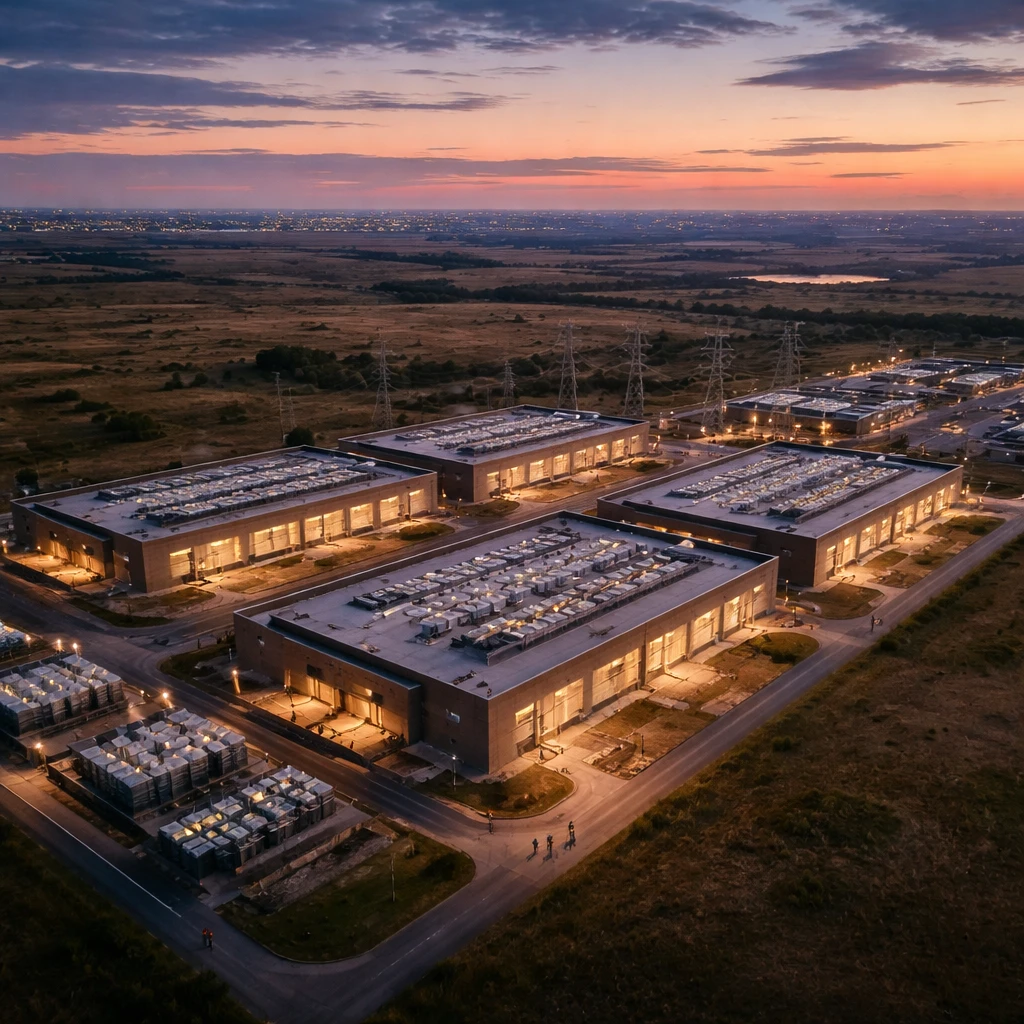
CoreWeave Inc., Cerebras Systems Inc. and BCE Inc. confirmed plans to develop a 300-megawatt data center on the southern edge of Regina, Saskatchewan, dedicated to artificial intelligence compute.

The facility will comprise four data center halls and is being staged so that the first phase is expected to begin operations in the first half of next year. Cerebras has secured 160 megawatts of capacity as a tenant, while hyperscaler CoreWeave has taken 140 megawatts. CoreWeave has said its compute will be powered by Nvidia graphics processing units.

Montreal-based BCE will fund the build of the halls, planning an investment of C$1.7 billion for construction. The company said the project could create roughly C$12 billion in economic value over time, a figure it also expressed in U.S. dollars as about $8.7 billion.

At the same time, BCE adjusted its free cash flow outlook amid the capital requirements of the project. The company cut its free cash flow guidance for 2026, and now expects free cash flow to reach no more than C$2.3 billion this year, down from a prior forecast of up to C$3.5 billion.

BCE described the data center as an asset that will contribute to revenue expansion and earnings power in coming years. In an interview, Chief Executive Officer Mirko Bibic noted that industry valuation standards price compute hardware at approximately C$35 million per megawatt. Applying that metric to this 300-megawatt site would equate to about C$10.5 billion in compute hardware value.


Operational and financial mechanics

The development partners have allocated the 300 megawatts between Cerebras and CoreWeave, matching tenant demand to the planned supply. CoreWeave’s disclosed use of Nvidia GPUs identifies the specific compute architecture that will be deployed in its portion of the site.

BCE’s construction commitment focuses on the physical build-out of the four halls, while the company also signaled that the near-term cash-flow profile will be affected by the project’s funding requirements.


Outlook

Project proponents emphasize the long-term revenue and earnings potential the site could deliver. BCE’s comment about industry-standard per-megawatt compute valuation provides a further lens on the scale of hardware investment associated with the campus.

Risks

  • Near-term free cash flow impact: BCE reduced its free cash flow guidance and now expects no more than C$2.3 billion this year, down from up to C$3.5 billion.
  • Execution and realization risk: the C$12 billion economic value is presented as a projection the company says the project could generate over time, indicating uncertainty in achieving that outcome.
  • Timing risk: the first phase is expected in the first half of next year, so any construction or commissioning delays could affect the schedule and near-term financial plans.

More from Stock Markets

Senate Moves to Close Debate on Markwayne Mullin's Homeland Security Nomination Mar 22, 2026 Analyst Moves: Qualcomm, Target Hospitality, Trade Desk, Five Below and SolarEdge Draw Fresh Ratings Mar 22, 2026 SMBs Shift Ad Budgets Toward AI-Driven Search; Google Features Lead Adoption Mar 22, 2026 Four Years On, China Eastern Crash Probe Yields No New Answers Mar 21, 2026 Taiwan Says First Delayed F-16V Fighters to Begin Arriving This Year as Production Runs at Full Capacity Mar 21, 2026