
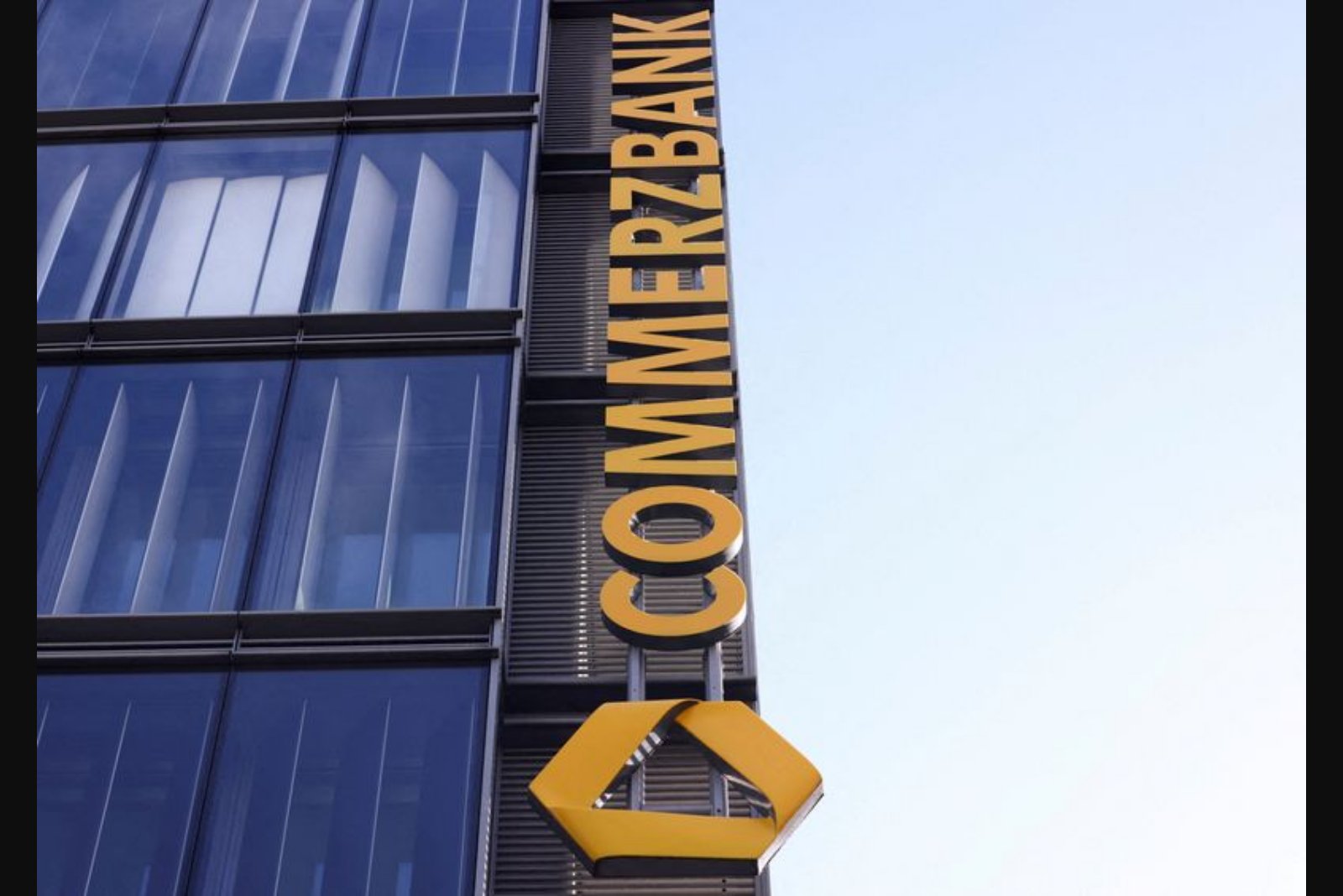
Commerzbank announced a new cost and performance plan on Friday that includes 3,000 job cuts and roughly 450 million euros of restructuring charges, part of a push to lift its medium-term financial targets and resist a takeover by Italy's UniCredit.
The German bank framed the package as a way to demonstrate the case for remaining independent after UniCredit this week moved to formally launch a takeover attempt valued at 37 billion euros ($43.43 billion) - a price Commerzbank said is below market. The lender also criticized UniCredit's bid, saying: "UniCredit's communicated plan remains vague and bears considerable execution risks, while using misleading narratives that discredit Commerzbank."
As part of the updated targets, Commerzbank now expects 15 billion euros of revenue in 2028, up from its prior goal of 14.2 billion euros, and a 2028 profit of 4.6 billion euros versus an earlier target of 4.2 billion euros. The bank noted that analysts had largely anticipated it would exceed the targets set last year.
The announcement represents the third recent wave of workforce reductions at Commerzbank. Earlier this decade the bank reduced headcount by around 10,000 employees - roughly a third of its German workforce - and it set out plans last year to cut an additional 3,900 roles. UniCredit's chief executive, Andrea Orcel, has signaled that he would cut the Frankfurt-based headquarters if his takeover succeeds.
UniCredit's own proposal presented last month envisioned cost efficiencies of 1.3 billion euros and staff reductions of 7,000 at Commerzbank. UniCredit has become Commerzbank's largest shareholder with a stake of just under 30% and has argued that the German lender is not reaching its potential. It has also said a larger pan-European bank structure would be beneficial in the face of volatile geopolitics, according to Commerzbank's account of the bid.
The contest over Commerzbank's future has drawn political attention in Germany, where officials and industry figures have pushed back against a hostile acquisition. On Thursday, German Chancellor Friedrich Merz criticized aggressive takeover tactics, saying: "This is not how one treats institutions such as a bank in Germany, namely Commerzbank. This is how trust is destroyed, not how new trust is fostered."
Germany retains a 12% stake in Commerzbank stemming from a bailout during the financial crisis two decades ago, and some politicians and bankers have urged Berlin to consider increasing that ownership to block UniCredit's approach - a step the bank said would face considerable obstacles.
Commerzbank said the revised targets and cost measures are intended to persuade investors that the lender can prosper on its own. The bank reported first-quarter net profit of 913 million euros, a 9.4% rise that exceeded the 868 million euro consensus forecast it published.
Leaders of the two banks held talks earlier in the year, but Commerzbank said those discussions broke down after Easter. The bank reiterated concerns that UniCredit's plan carries execution risk and relies on narratives that diminish Commerzbank's standing.
Context and implications
- Commerzbank's revised 2028 targets - 15 billion euros of revenue and 4.6 billion euros of profit - represent a step up from the goals issued last year and are accompanied by fresh workforce reductions and restructuring spend.
- The conflict has broader significance for Germany's financial sector and Frankfurt's role as a European banking hub, with political leaders weighing how to respond to the takeover bid.
- UniCredit's takeover attempt and proposed restructuring measures have escalated the debate on consolidation in European banking amid geopolitical uncertainty.
What remains uncertain
- How UniCredit will address the execution risks Commerzbank highlighted in its response to the takeover offer.
- Whether German political authorities will move to increase state ownership to block the bid, and what legal or practical hurdles such a move would entail.
- The degree to which the newly announced cuts and restructuring will satisfy investors that Commerzbank can deliver on its upgraded 2028 targets.
Commerzbank's statement and the updated targets come as the bank seeks to make the financial and strategic case for remaining independent rather than becoming part of UniCredit. The dispute highlights both shareholder activism by a major investor and the political sensitivities that arise when a large domestic bank faces a foreign suitor.