
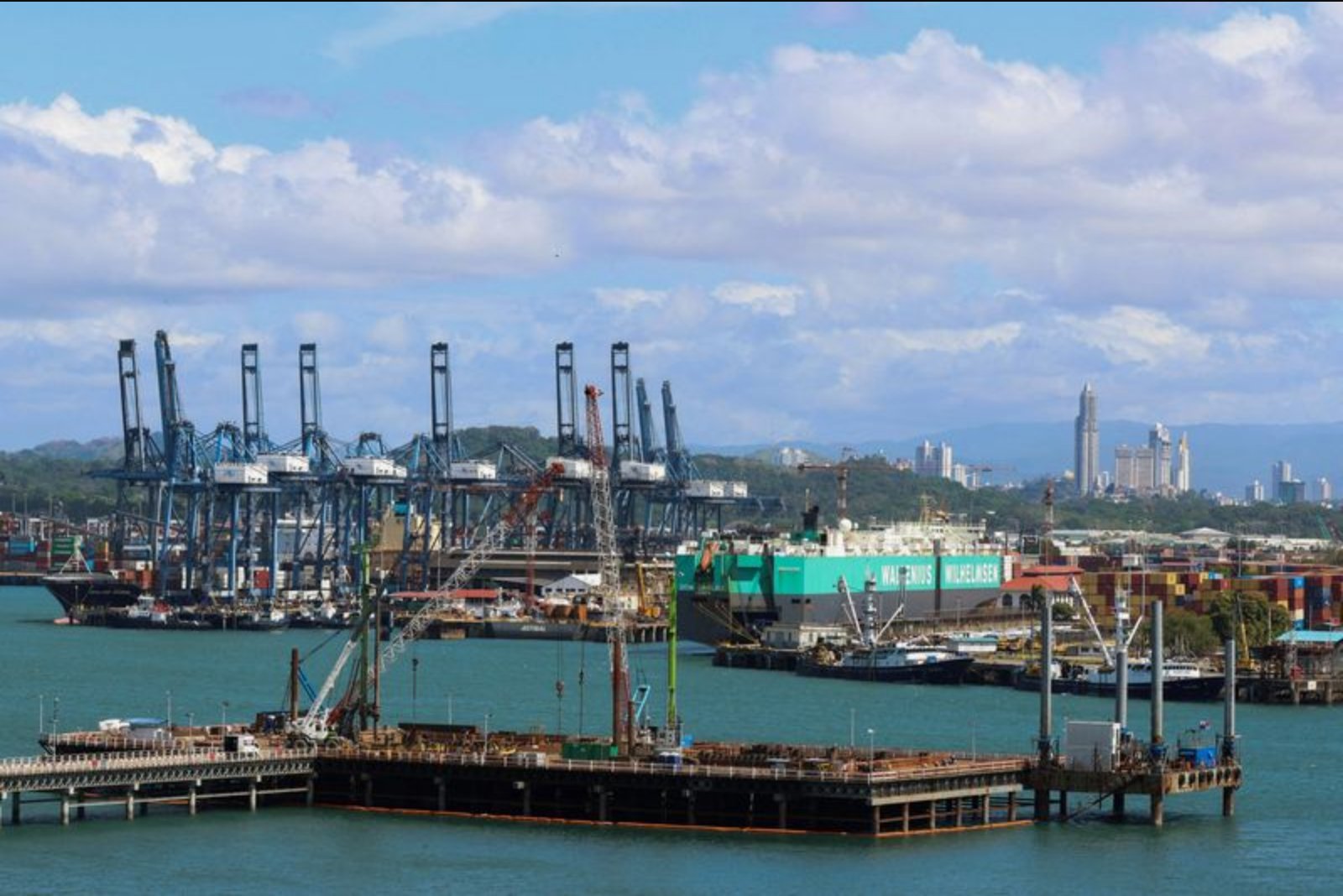
CK Hutchison has confirmed that its Panama Ports Company unit has begun international arbitration proceedings after Panama’s Supreme Court last week annulled the licences enabling the company to run two Panama Canal ports. The court concluded the contract held by the CK Hutchison subsidiary conferred exclusive rights and tax exemptions that breached Panama’s constitution.
The arbitration filing follows the broader context of a planned $23 billion sale, announced in March 2025, in which CK Hutchison agreed to divest 43 ports in 23 countries to a purchaser group led by BlackRock and the family-run shipping operator MSC. The two Panamanian terminals at the heart of the court ruling - Balboa and Cristobal - are part of that larger portfolio.
Legal move and immediate implications
By commencing international arbitration, CK Hutchison’s Panama Ports Company seeks to resolve the dispute through legal channels outside the Panamanian court system. The company did not provide a timeline for the proceedings. Observers and some analysts note that, given the political sensitivity and complexity surrounding the assets and the transaction, arbitration could extend over several years.
The Panamanian court determined the contract provided exclusive privileges and tax exemptions to the operator in a manner inconsistent with the constitution. The precise legal remedies or potential remedies available under arbitration remain unspecified in company statements and court notices.
Sale structure and the role of a Chinese investor
The sale agreed in March 2025 covers a broad global portfolio of ports and was structured with a consortium led by BlackRock and MSC. Following criticism from Beijing, CK Hutchison said in July it was in discussions to include a Chinese "major strategic investor" in the consortium. Sources have identified COSCO as the Chinese party under consideration, with reports indicating COSCO sought a substantial stake while other bidders preferred it to be a minority investor. That difference became a sticking point during negotiations. COSCO did not respond to requests for comment.
Market reaction and company valuation context
CK Hutchison shares have fallen by more than 8% since the Panamanian court’s ruling, although the stock remains at its highest level since June 2021 and is up almost 60% since the sale was announced in March 2025. Investors had anticipated the transaction would yield more than $19 billion in cash for the conglomerate.
Strategic importance and geopolitical friction
While the two Panama ports represent approximately 5% of Hutchison Port Holdings’ earnings before interest, tax, depreciation and amortisation (EBITA), their strategic value is substantial. Balboa sits at the Pacific entrance to the Panama Canal and Cristobal at the Atlantic entrance. The canal is a central maritime passage for global trade into the United States, with over 40% of U.S. container traffic - estimated at roughly $270 billion annually - transiting the waterway.
The transaction has become entwined with geopolitical concerns. The sale drew comment from U.S. political figures, including initial public remarks from President Donald Trump expressing support for the proposed buyer group. Some U.S. lawmakers had previously flagged CK Hutchison’s control of the ports as a potential security risk for canal operations. John Moolenaar, chair of the U.S. House Select Committee on China, publicly described the court ruling as a "win for America."
China’s response was swift; on February 3 Beijing warned Panama it would face "heavy prices" following the court decision. Hong Kong’s government also registered its opposition to any foreign government using coercive measures against Hong Kong’s business interests.
What remains unresolved and possible next steps
It is not clear how the loss of the Panama terminals will reshape the overall ports sale. Some analysts, including those at JPMorgan and Citigroup, suggested that negotiations among the buyers and sellers might proceed more readily if Panama’s involvement were removed from the equation. All parties involved in the ports sale are reported to still be in discussions, according to a person with direct knowledge of the transaction who spoke on condition of anonymity.
Sources indicate several options are under consideration. One possibility is to divide the portfolio among bidders, allowing each of the three principal buyers to take stakes in different individual ports. Other strategic assets in the portfolio include terminals in Rotterdam, Barcelona, Mexico and the Bahamas. CK Hutchison’s ports in China, though significant to the company’s operations, are not part of the divestment.
Complicating the timeline further, sources have warned regulatory approval could take considerable time. Clearing antitrust and other regulatory hurdles across nearly 50 jurisdictions may require at least two years, according to people familiar with the process who spoke anonymously. That estimate underscores the multi-jurisdictional nature of a deal of this scale.
Responses from involved parties
CK Hutchison, MSC and BlackRock did not provide responses to requests for comment. COSCO also did not respond to a request for comment regarding reports it was being considered as the Chinese strategic investor.
The dispute now moves from a national court decision into the international arbitration arena, where timelines, legal arguments and political factors will determine whether the annulment of the Panama contract proves decisive for the broader sale or becomes one of several obstacles to an ultimately restructured transaction.