
Stock Markets January 30, 2026

Citi: Gold Backed by Layered Risks, But Roughly Half May Erode in 2026

Bank sees geopolitical and economic threats keeping gold elevated versus history, while many risks could fade during the midterm year

By Nina Shah
Citi: Gold Backed by Layered Risks, But Roughly Half May Erode in 2026

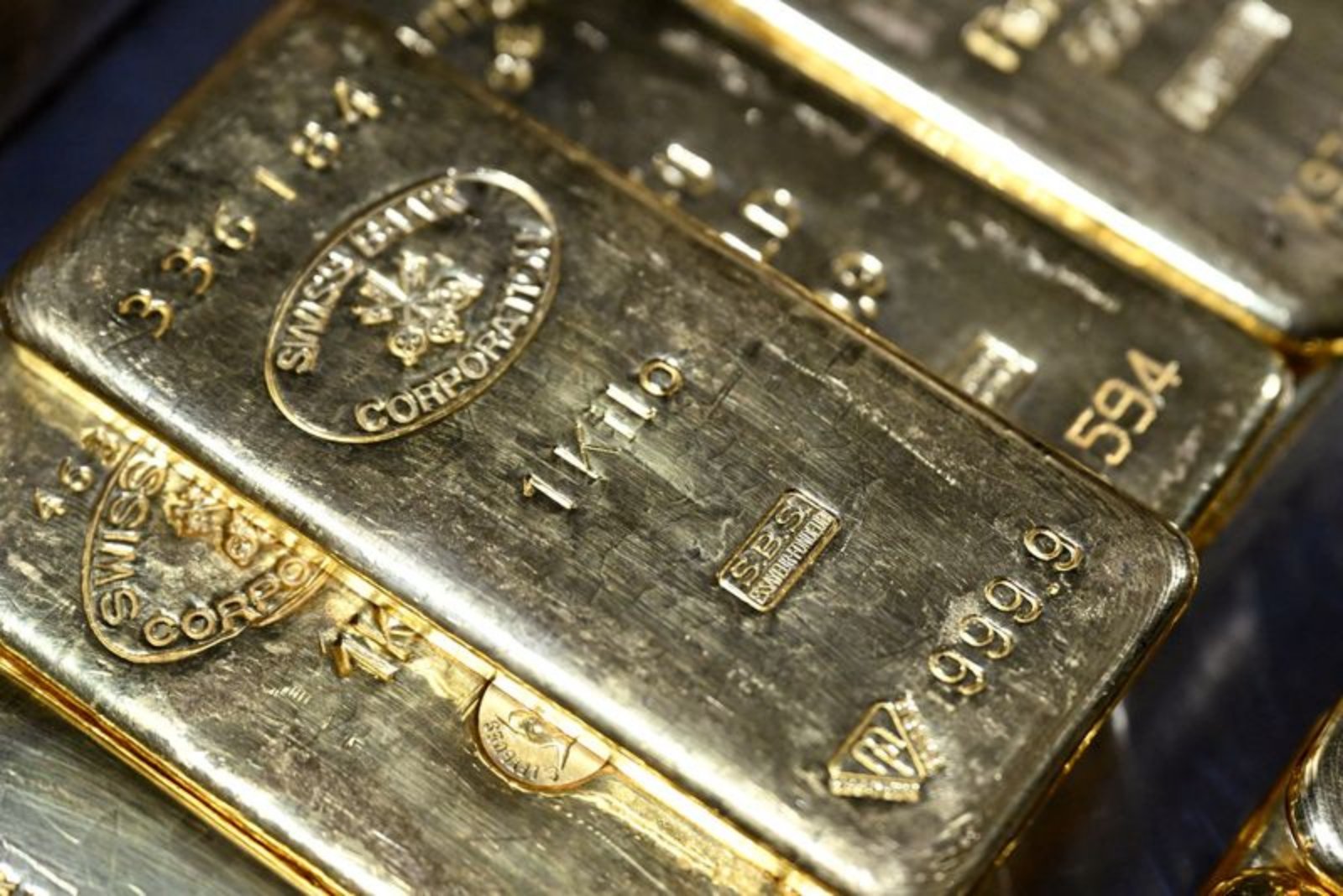
Citi says a convergence of geopolitical and economic risks is supporting gold allocations, yet the bank estimates roughly half of the risk premium embedded in current prices may not materialize or persist through 2026. Recent price swings, including a sharp intraday drop after a Fed-related nomination, illustrate the metal's sensitivity to political and policy developments.

Key Points

  • Citi says a mix of geopolitical and economic risks is underpinning gold allocations and keeping prices elevated versus historical norms - impacting commodities and safe-haven asset demand.
  • The bank estimates roughly half of the risks embedded in gold prices will either not materialize in 2026 or will fail to persist beyond that year - affecting investor positioning and portfolio risk management.
  • Recent market action showed extreme sensitivity to policy and political news: spot gold hit a record close near $5,600/oz earlier in the week, then fell 12.6% as of 1840 GMT on the same day following a Fed-related nomination - relevant to currency and fixed-income markets.

Jan 30 - Citi said on Friday that gold investment allocations are being supported by a broad, overlapping set of geopolitical and economic risks, but that about half of those risks may dissipate later in 2026.

According to the bank, several key risk drivers - including tensions between the U.S. and China, risks around China and Taiwan, concerns over U.S. government debt, and uncertainty linked to artificial intelligence - are likely to keep gold prices high relative to historical norms. Citi nevertheless cautioned that it estimates roughly 50% of the risks currently priced into gold either will not occur in 2026 or will not endure beyond the year.

Citi outlined scenarios that would lower the risk environment materially from current levels. The bank said it expects the incoming administration to pursue a U.S. economic environment favorable to growth and stability during the 2026 midterm year, and it identified the end of the Russia-Ukraine war and an eventual de-escalation with Iran as events that would represent major declines in risk compared with today.

Market moves this week underscored gold's vulnerability to political and policy signals. Earlier in the week, spot gold climbed to a record closing high near $5,600 per ounce amid geopolitical and economic uncertainty. On Friday, prices reversed sharply, down 12.6% as of 1840 GMT - on track for the largest single-day percentage decline on record - after the dollar strengthened following the announcement that former Federal Reserve Governor Kevin Warsh was the pick to lead the U.S. central bank when Jerome Powell's term ends in May.

Citi noted the potential policy implications of that nomination. The bank said that the nomination of Warsh, if confirmed, would further reinforce Citi's long-standing base case that the Federal Reserve maintains its political independence - a dynamic the bank views as a medium-term bearish factor for gold.


While Citi expects core geopolitical and economic concerns to keep gold elevated compared with historical averages, the bank's central estimate assumes a meaningful portion of current risk premia will decline in 2026. Investors and market participants should therefore weigh both the persistence of present risks and the prospect of significant risk reduction during the midterm year.

Risks

  • Geopolitical tensions - including U.S.-China friction and China-Taiwan risks - could continue to support gold demand if they persist, with implications for commodities and defense-sensitive sectors.
  • Policy and central bank developments - such as the nomination to lead the U.S. central bank and potential shifts in perceived Fed independence - can quickly alter gold prices and influence currency and bond markets.
  • Conflict resolution scenarios - the potential end of the Russia-Ukraine war or a de-escalation with Iran would reduce perceived risk and could exert downward pressure on gold, affecting safe-haven flows.

More from Stock Markets

Draganfly Shares Jump After Win to Supply Flex FPV Drones and Training to Air Force Special Ops Feb 2, 2026 Peakstone Realty Trust to Be Taken Private by Brookfield; Shares Jump 33% Feb 2, 2026 Beyond Inc. Moves to Build Unified Investment and Personal Finance Platform with Tokens.com Deal Feb 2, 2026 Eton Pharmaceuticals Gains After Securing U.S. Rights to Ultra-Rare Disease Candidate Feb 2, 2026 Morgan Stanley Survey: Broader Consumer Sentiment Improves While Electronics Spending Intentions Slip Feb 2, 2026