
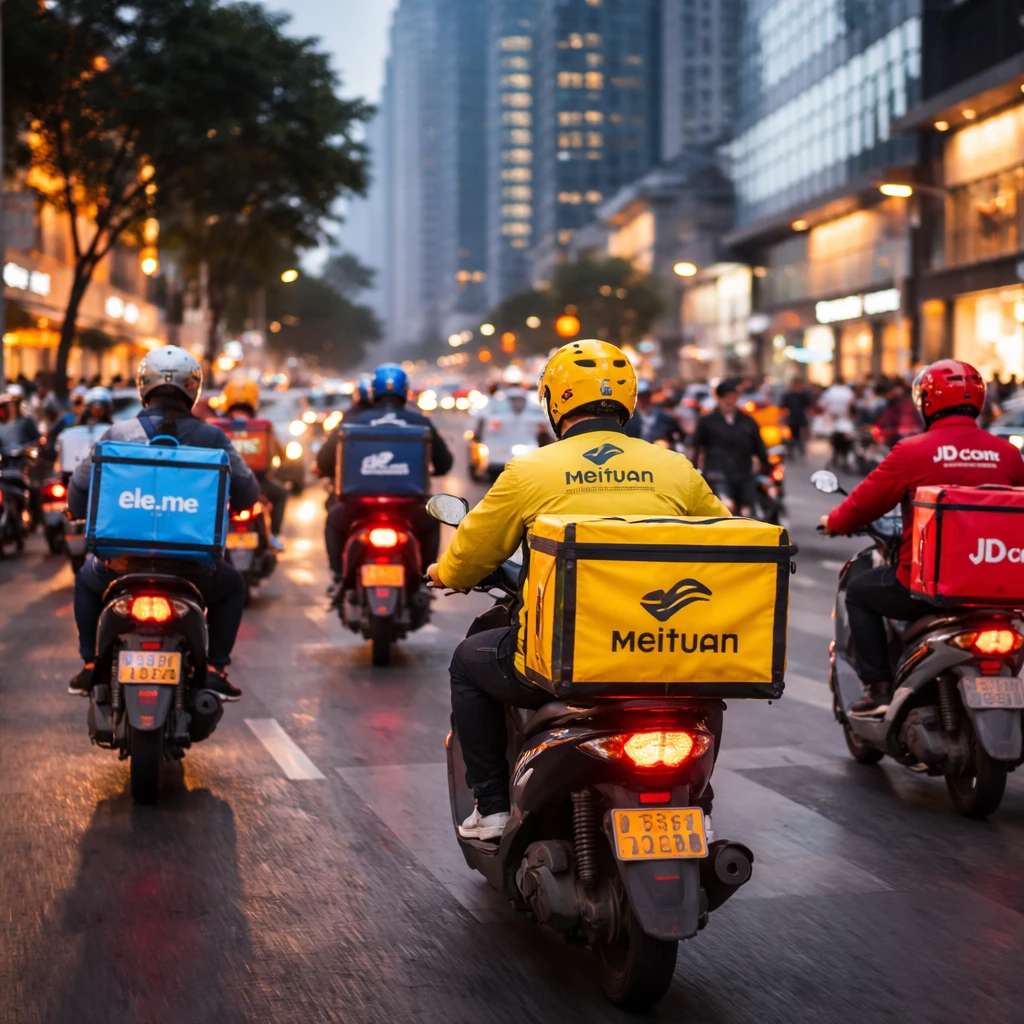
Shares of major Chinese food-delivery platforms advanced strongly after authorities increased public pressure on the sector to stop deep discounting and other measures that have intensified competition and eroded profits.
In Hong Kong trading, Meituan closed up 14%. Alibaba Group rose 4.6% and JD.com increased 4.9%. In U.S. premarket trading, Alibaba and JD.com were higher by 4.6% and 4.3% respectively.
The market response followed a seminar convened by China’s market regulator that focused on tackling unfair competition. The regulator also reposted a column from the state-backed Economic Daily that urged an end to price wars in the food-delivery industry.
The Economic Daily described the sector as having entered a "vicious cycle" in which platforms sacrifice profitability to win attention and users, a dynamic that the column said could hinder a broader consumption recovery. The commentary said such pricing battles are at odds with government objectives to bolster consumption.
Competition in food delivery intensified after JD.com indicated plans last year to enter the takeaway market and compete alongside Alibaba and Meituan. Following that signal, the companies enacted several rounds of subsidies and promotional campaigns aimed at attracting users and restaurant partners.
Meituan reported its largest annual loss since at least 2021 in February, attributing the result in part to elevated competitive pressures. JD.com in February announced it was expanding into the highly contested takeaway market by adding catering merchants to its logistics platform. The company said merchants who join JD Takeaway before May 1 would receive commission-free services for a full year, a move it described as intended to provide comprehensive support to merchants and to promote the "healthy and sustainable development" of the sector.
As consumer spending softened, JD rolled out discount campaigns to win users, the resulting price competition has weighed on its share price. The company is leveraging a self-operated logistics network that it says enables same-day or next-day delivery across most regions in China.
The coordinated signals from a regulator seminar and state-backed media commentary appear to have reassured investors that authorities are seeking to restrict subsidy-led battles that compress margins across platforms. Market moves suggest investors view reduced intensity in price competition as supportive for profitability prospects in the food-delivery segment and for the wider e-commerce and logistics businesses tied to these platforms.
At the same time, the situation remains dynamic. Companies have already used discounting, commission waivers, and logistics advantages to compete for users and merchants, and the degree to which pricing tactics change will determine near-term earnings trajectories for market participants.