
Lead
When a delegation from Tianjin returned from the Brazilian Amazon in April, one member described the trip back on social media as being "enveloped by tens of thousands of shades of green." The group was not a travel club but representatives of the Tianjin Meat Industry Association, which collectively handles roughly 40% of the city's beef imports from Brazil. Under the association's guidance, its members have committed to buy 50,000 metric tons of Brazilian beef certified as deforestation-free by the end of the year.
Why this matters
The Tianjin commitment is notable because it suggests a willingness among a segment of Chinese buyers to absorb a premium for supply chains that can be verified as not contributing to deforestation. That amount - 50,000 metric tons - is equivalent to about 4.5% of what Brazilian beef exporters are expected to sell to China this year. The move adds nuance to the prevailing assumption among many Brazilian producers that Chinese demand is driven solely by price.
Policy signals and corporate moves
The Tianjin pledge arrives amid a broader backdrop of Chinese government and state-owned enterprise actions that touch on environmental impacts of trade. In 2019, China revised its forest law to ban trade in illegal timber. In 2023, China and Brazil signed a joint commitment aimed at ending trade-driven illegal deforestation. And beginning last year, state-owned trader COFCO committed to removing deforestation from its supply chain.
Why beef is in focus
Analysts tracking commodity-driven land use point to beef as a practical starting point for supply-chain reforms linked to deforestation. Beef is less central to the average Chinese diet than commodities like soy, making it more amenable to product differentiation and premium positioning, according to experts monitoring environmental impacts of trade. Available information has linked Brazilian beef more strongly than other agricultural imports to deforestation, prompting some Chinese buyers and consumers to pursue alternatives with verified environmental credentials.
Scale and market context
China imports over 10% of Brazil's beef, according to government data and the Brazilian beef export association ABIEC. If Tianjin's group can secure and sell the 50,000 metric tons under a credible deforestation-free label, it could be an early commercial test of whether a price-premium model for greener beef can scale.
Traceability and certification
Central to the Tianjin plan is traceability. The beef will carry a Beef on Track label developed by Brazilian nonprofit Imaflora. The label features four levels of compliance, which capture how far down the supply chain the beef is traced and whether ranchers can demonstrate their farms were legally cleared. Tianjin importers say they are prepared to pay roughly 10% more for product from meatpackers that can demonstrate their supplying farms are free of links to both legal and illegal deforestation, and free of slave labor.
Traceability appeals to Chinese consumers for two reasons. First, environmental credentials can differentiate products for wealthier and more discerning buyers. Second, traceability also dovetails with food safety concerns: being able to trace a product back to its source helps buyers and regulators respond to contamination or disease events.
A traceability practice already familiar to Chinese shoppers is linking eggs to production farms via QR codes. During their visit to Brazil, the Tianjin delegation showed local officials how QR codes can be used so consumers can trace eggs to their originating farm. Those eggs command a substantial premium - according to the visitors, consumers have been willing to pay twice as much for traceable eggs.
On-the-ground reaction in Brazil
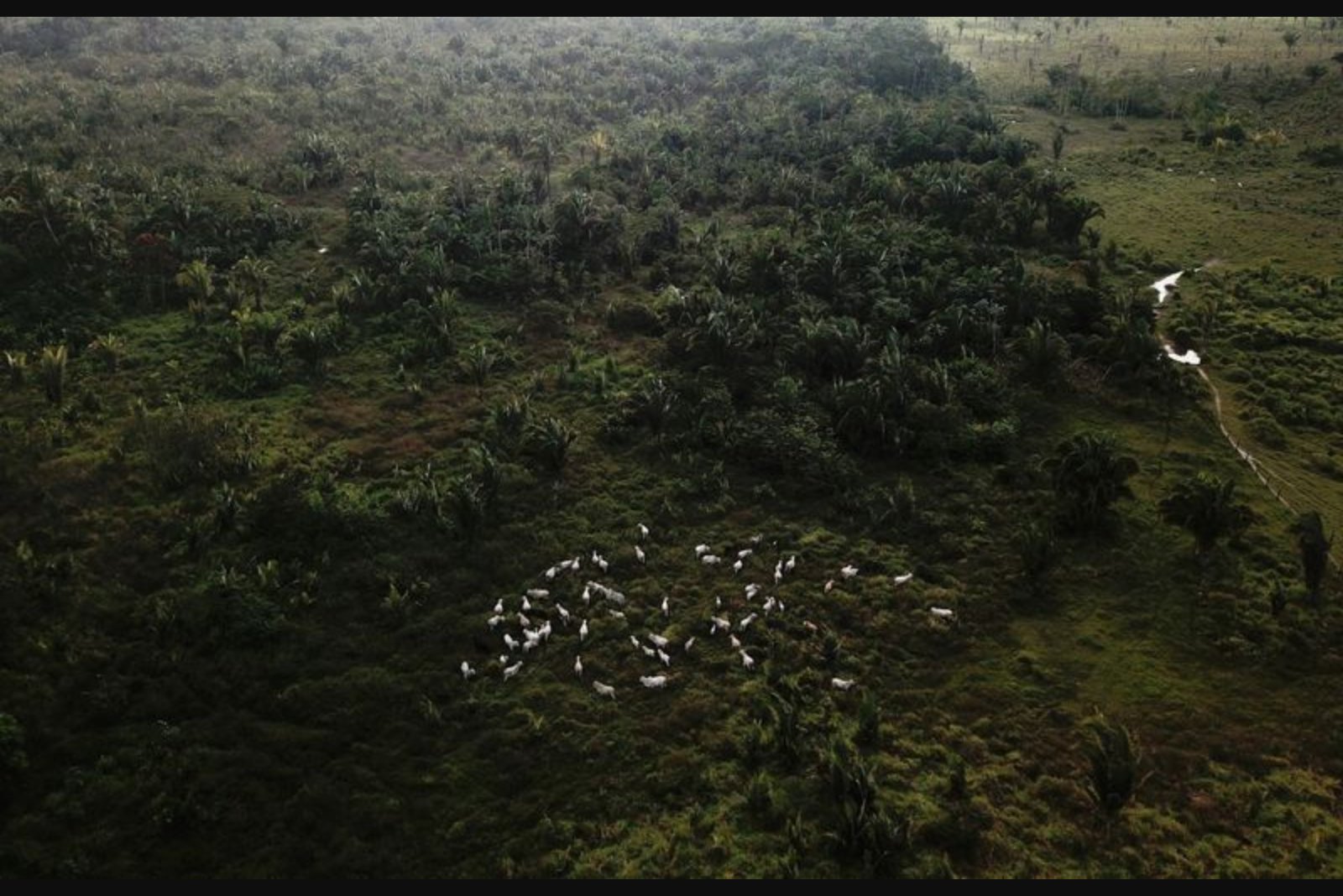
The Tianjin group visited the Carioca farm in Castanhal, in the north of the Amazon. Rancher Altair Burlamaqui opened his property and his cattle to the delegation. By the end of the visit, the Chinese guests asked whether Burlamaqui had ever imagined his beef could be sold in China as a product that helps protect the Amazon rainforest. He described the idea as both thrilling and overwhelming.
Burlamaqui summarized his takeaway from the meetings: the Tianjin buyers wanted a beef product with more added value for a segment of their population that would pay for it. He added that the segment in China might be larger than Brazil's entire population.
Despite that enthusiasm at the farm level, the broader Brazilian beef industry has given the Tianjin initiative a more restrained reception. ABIEC, the country's beef export association whose members include several large meatpackers, is reported to be uncomfortable with the initiative. Two people who spoke to ABIEC leadership recently told industry observers the association is concerned that new demand for certified sustainable beef could create additional friction in an already constrained market.
Trade policy, quotas and tax risk
China imposed import quotas on beef this year, part of measures intended to protect its domestic industry. Brazil is expected to reach its quota limit of 1.1 million tons by the end of next month, which is also the timing Tianjin plans to import its first container of beef certified as sustainable. Once the quota is exceeded, imports face a 55% Chinese tax. That tax could undermine the economics of higher-priced certified beef by substantially increasing costs on shipments that arrive after the quota limit is reached.
Those quotas have appeared against a global backdrop of expected declines in beef production this year as ranchers in major producing countries rebuild herds. Lower production has contributed to higher prices globally, affecting markets including China.
Systemic traceability challenges
Implementation of a credible certification faces a structural obstacle in Brazil's current cattle traceability framework. The system relies heavily on cattle transportation documents, which prosecutors say can be manipulated. Bad actors may hide illicit origins through a practice known as "cattle laundering," in which cattle from illegally cleared land are moved through multiple intermediaries to obscure provenance. Prosecutors warn such fraud can allow supply chains to appear clean on paper while hiding wrongdoing.
Fixing systemic weaknesses in traceability is likely to take years, according to observers, even as some private, municipal and nonprofit initiatives seek to strengthen verification on shorter timelines.
Certification details and industry adoption
The Beef on Track certification is intended to be available to meatpackers, supermarkets and importers by year-end. Its lowest compliance level aligns with a program used by Brazil's federal prosecutors to check whether farms directly supplying the beef industry comply with environmental and labor rules. That prosecutor-led program cleared suppliers producing about 2.7 million tons of beef a year. That volume is roughly one fifth of Brazil's total beef production, but nearly double China's imports last year. Some of the beef that Tianjin intends to import this year will come from that approved output.
To date, no Brazilian meatpackers have publicly committed to adopting the Beef on Track label. Imaflora, which designed the certification, argues the label is meant to be enabling rather than exclusionary, offering a way to recognize and value existing corporate sustainability and traceability efforts. Marina Guyot, an Imaflora policy manager, said the certification is intended to acknowledge what companies are already doing to meet their sustainability and traceability pledges, and to create the possibility of putting a premium on those efforts.
ABIEC has said it supports certification initiatives in principle but cautions that any new labels should align with established systems and avoid overlapping requirements that lack public infrastructure for implementation. In a statement, the association warned that ill-coordinated labels could create production barriers if they impose requirements that cannot be practically enforced.
Potential implications
If the Tianjin initiative grows, its commercial signal is clear: a subset of Chinese buyers and consumers may be prepared to pay for beef that carries verified environmental credentials and traceability. For Brazilian ranchers and exporters the opportunity is to capture a premium for verified supply chains. But meaningful scaling depends on credible verification, broader industry buy-in, and trade policy that allows certified supplies to enter Chinese markets without punitive tariffs once quotas are reached.
Conclusion
The Tianjin commitment is an early, tangible test of whether international demand can be steered toward deforestation-free beef with paid premiums and traceable supply chains. The project highlights both shifting buyer preferences and persistent implementation challenges: a certification and traceability infrastructure still in development, industry concerns about added market friction, and quota limits that could raise costs sharply once reached. The coming months will show whether the initiative can move from pilot pledges to widespread commercial practice.