
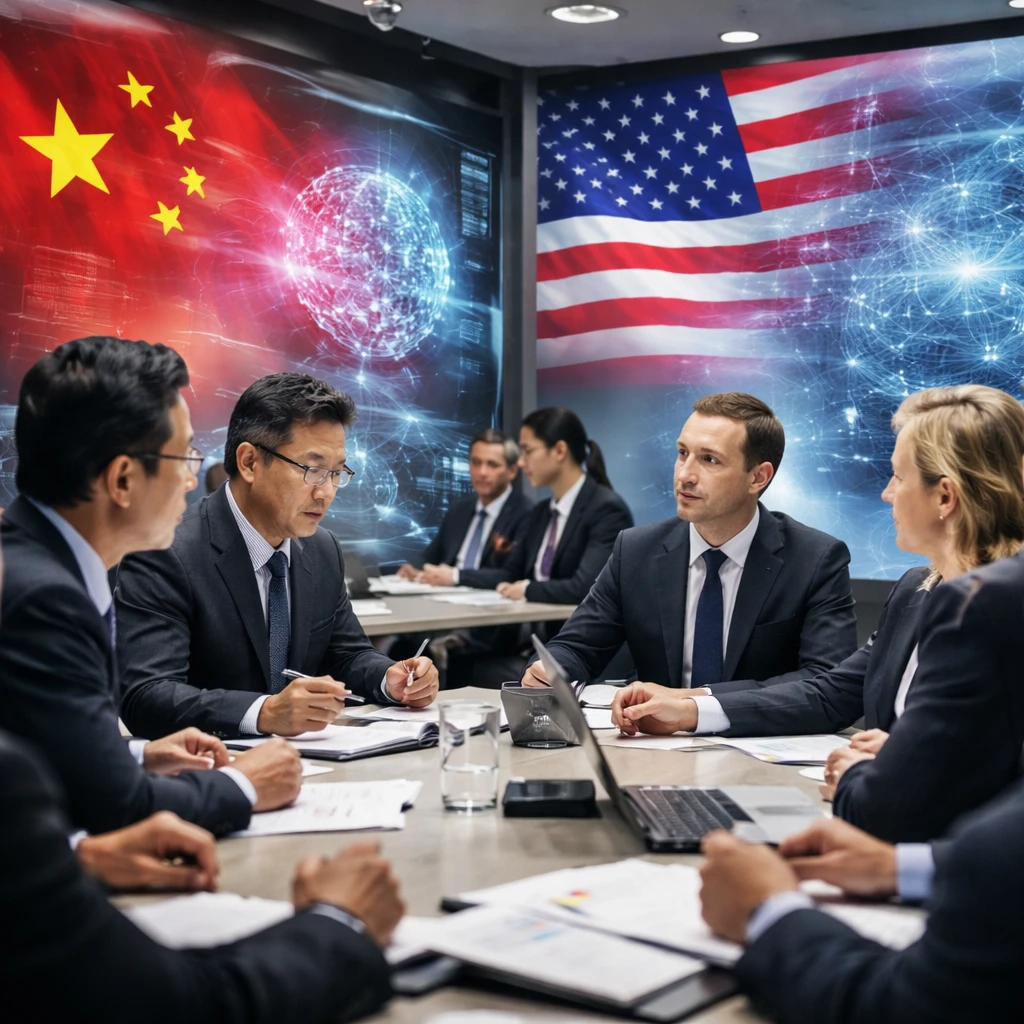
Beijing has escalated its investigation into Meta Platforms Inc's $2 billion acquisition of Manus, an AI startup, signaling increased regulatory vigilance over the transaction. Sources familiar with the matter, as reported by Bloomberg, indicate that Chinese authorities are probing possible infringements concerning cross-border currency flows, tax compliance, and overseas investment regulations.
The initial focus of the inquiry was whether the December 2025 purchase of Manus, a company specializing in agentic AI and originating from Beijing and Wuhan, posed any threat to Chinese technological assets or national security. Key concerns center on whether sensitive data proprietary to Manus was inappropriately transferred to the U.S.-based Meta.
Under the direction of CEO Mark Zuckerberg, Meta committed substantial capital during 2025 to accelerate its AI capabilities, prioritizing acquisitions like Manus and investments in AI infrastructure. The acquisition highlights Meta's strategic emphasis on self-directed AI technologies. The sizable financial commitment has, however, drawn scrutiny within China, where there are apprehensions regarding U.S. firms gaining control over advanced AI technologies reminiscent of the domestic open-source success, DeepSeek.
Regulatory attention was further piqued when Manus relocated its personnel to Singapore in July, raising confidential concerns about the transfer of data across borders. This shift illustrates a broader industry phenomenon known as "Singapore-washing," whereby companies with Chinese origins move their headquarters to Singapore to better support global market expansion. Despite Manus targeting international markets from its early stages and never offering its primary AI products within mainland China, regulators initially withheld launching a formal investigation, presuming that close ties with the company’s Chinese roots would be maintained.
The inquiry remains in its early stages. Given the complexities involved in recovering investments from stakeholders, unwinding the acquisition could present substantial practical challenges for Beijing. Nevertheless, this increasingly comprehensive review highlights significant geopolitical obstacles confronting American technology firms as they acquire entities with connections to China.
Following the emergence of the regulatory scrutiny, Meta's stock registered an initial decline during Friday trading, reflecting investor sensitivity to the potential impact of the investigation on a deal considered critical to the company's AI ambitions. Subsequently, shares rebounded and rose over 2%, as market participants appeared to discount the likelihood of regulatory actions reversing the acquisition.