
Stock Markets March 25, 2026

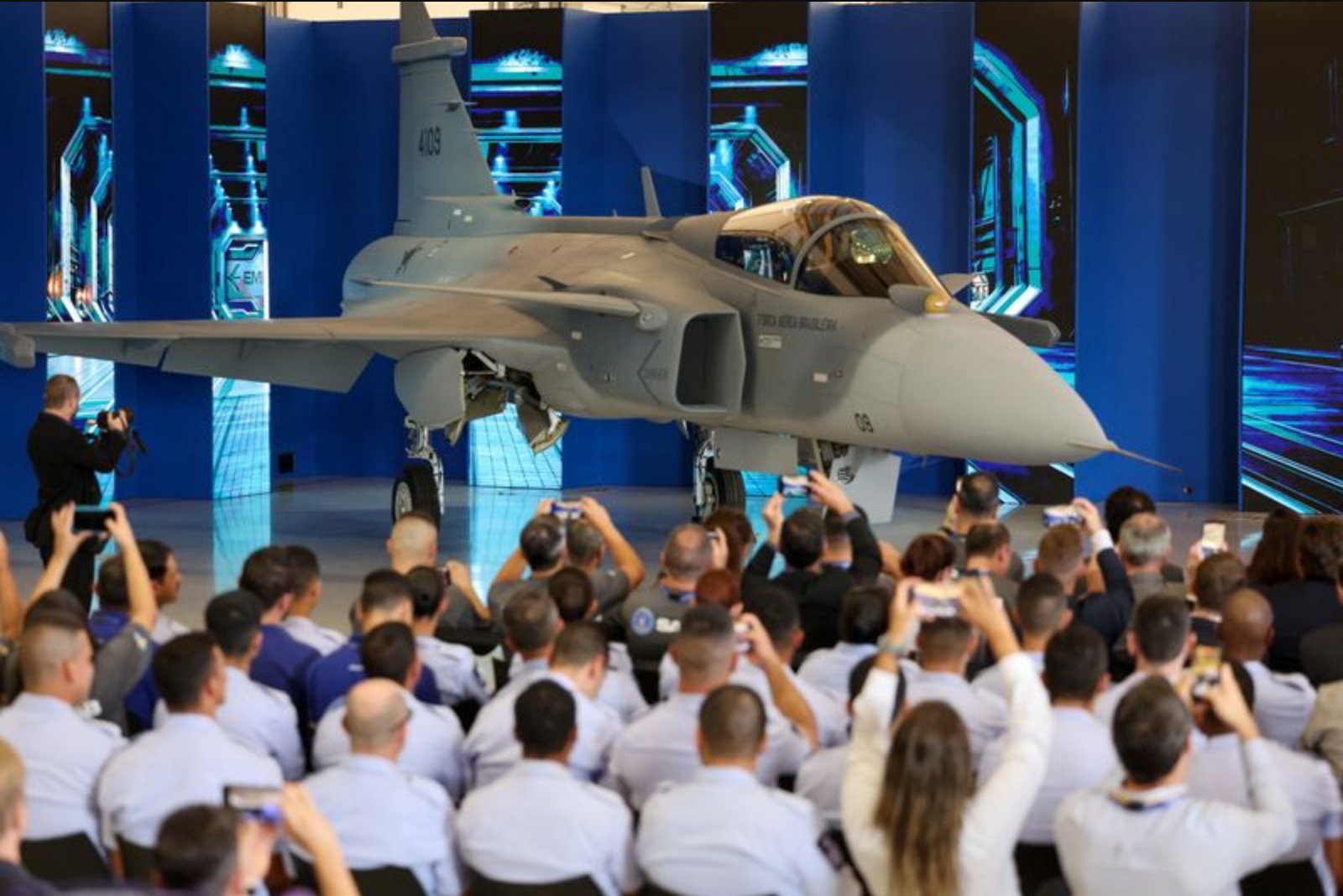
Brazil Unveils First Locally Assembled Gripen Fighter, Marking a Domestic Milestone

Assembly at Embraer’s Gaviao Peixoto line advances Brazil’s ambitions in military aircraft production and export readiness

By Marcus Reed
Brazil Unveils First Locally Assembled Gripen Fighter, Marking a Domestic Milestone

Brazil on Wednesday revealed the first supersonic Gripen fighter jet assembled in the country, making it the first Latin American nation to produce a supersonic combat aircraft. The aircraft is part of a 36-jet contract with Saab, under which 15 will be built at Embraer’s Gaviao Peixoto facility in Sao Paulo state through a technology transfer agreement. Saab said it plans to position the Brazilian production line as an export hub, a plan strengthened by a recent agreement for Colombia to acquire Gripen fighters.

Key Points

  • Brazil unveiled the first Gripen fighter assembled in the country, becoming the first Latin American nation to build a supersonic fighter jet.
  • The Gripen contract, signed in 2014, covers 36 jets; 15 are to be produced locally at Embraer’s Gaviao Peixoto facility under a technology transfer agreement, affecting defence manufacturing and aerospace export sectors.
  • Saab intends to use the Brazilian production line as an export hub, a plan reinforced by a deal for Colombia to acquire Gripen fighters, with potential implications for regional defence procurement and aircraft supply chains.

Brazil has taken a significant step in military aviation with the public unveiling of the first Gripen fighter jet assembled domestically. The aircraft comes from a contract signed in 2014 for Saab’s Gripen, a deal that was selected over competing offers from Boeing and Dassault to renew Brazil’s aging fighter fleet.

Under the terms of the agreement with Swedish defence group Saab, a total of 36 Gripen jets are on contract, and 15 of those jets will be produced at Embraer’s production site in Gaviao Peixoto, Sao Paulo state. Production at the Brazilian plant proceeds under a technology transfer arrangement agreed as part of the purchase.

Saab has signaled an intention to use the new Brazilian production line not only to supply the domestic programme but also as an export hub. That objective received a practical boost from an agreement reached last year for neighboring Colombia to acquire Gripen fighters, which Saab said strengthens the export case for Brazilian-built jets.

Commenting on the milestone, Saab CEO Micael Johansson said, "This is the first time since 1937, when Saab was founded, that a fighter aircraft is manufactured outside Sweden." The statement highlights the historic nature of the production shift and the role of the Swedish company in enabling manufacturing beyond its home country.

The emergence of a Brazilian-assembled supersonic fighter places the country alongside other nations that build supersonic combat aircraft, including established Western powers and several major developing economies. The project is part of a broader push in Brazil’s defence and aerospace sectors.

Embraer’s broader portfolio is also noted in the announcement: the C-390 Millennium cargo aircraft is cited as gaining commercial traction among buyers in Europe, underscoring continued activity in Brazil’s aerospace exports and production capabilities.


Context

  • The original contract for Gripen was signed in 2014.
  • 36 jets are under contract, with 15 slated for production at Embraer’s Gaviao Peixoto plant under a technology transfer agreement.
  • Saab expects the Brazilian line to serve as an export hub, supported by a deal for Colombia to acquire Gripen fighters.

Risks

  • The role of the Brazilian production line as an export hub is presented as an expectation rather than a guaranteed outcome; export success depends on future deals.
  • Local production depends on the effective execution of the technology transfer agreement, which introduces implementation and integration risks for Embraer and Saab.
  • The project’s benefits for aerospace exports hinge in part on external purchases such as the Colombia agreement; sustained export momentum requires continued demand from other buyers.

More from Stock Markets

Denali Shares Rise After FDA Grants Accelerated Approval to AVLAYAH for Hunter Syndrome Mar 25, 2026 Belgian Equities Advance as Technology, Materials and Healthcare Drive Gains Mar 25, 2026 Paris Markets Close Strong; CAC 40 Gains 1.33% on Broad Sector Strength Mar 25, 2026 Frankfurt closes higher as tech, chemicals and industrials lead gains - DAX up 1.34% Mar 25, 2026 Helsinki Stocks Close Higher as Telecoms, Utilities and Industrials Lead Gains Mar 25, 2026