
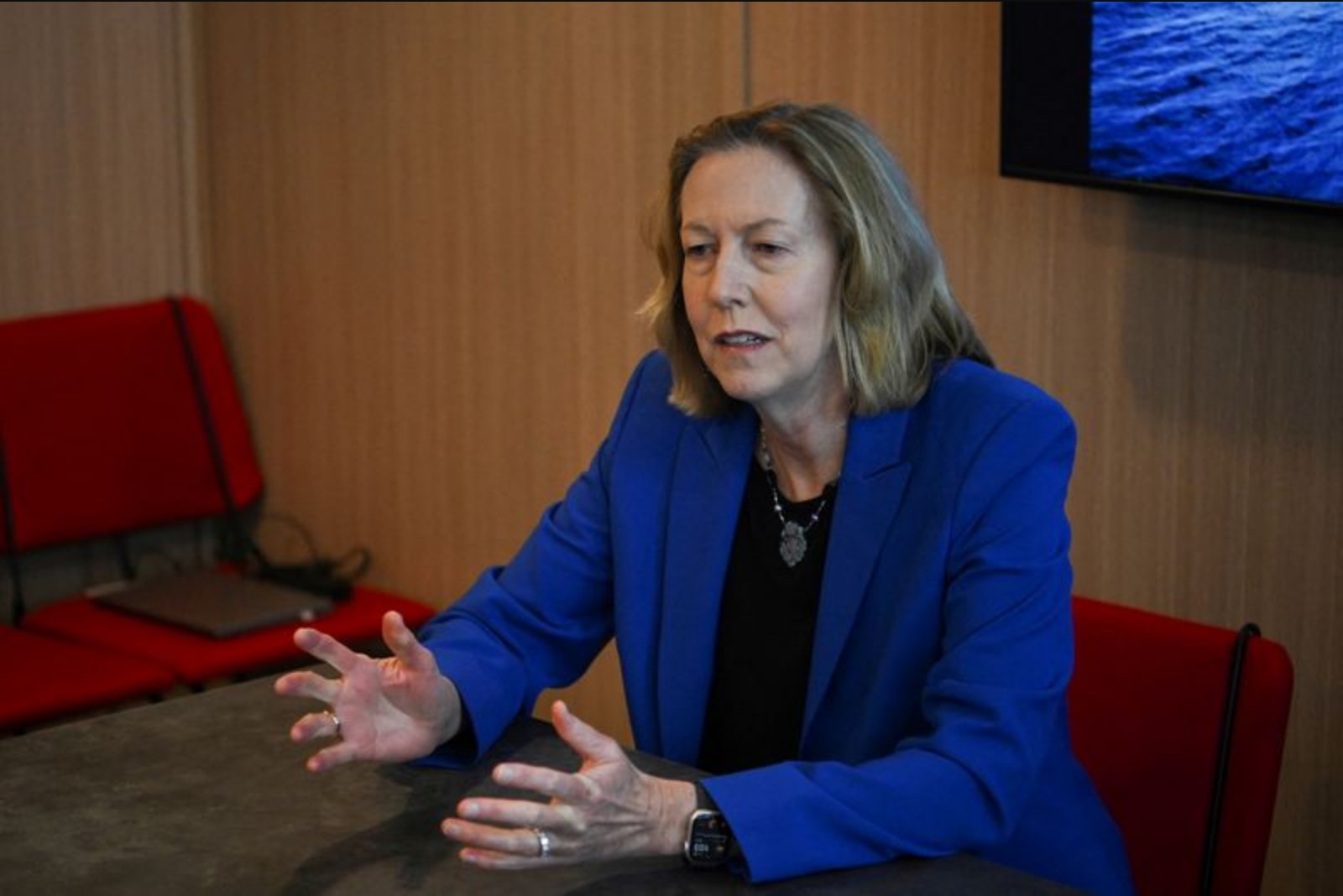
LONDON, April 1 - Meg O'Neill started as BP's chief executive on Wednesday, telling employees in a staff note that she intends to deliver consistent leadership while stepping up the group's performance. The message comes as BP pursues a strategic reset focused on oil and gas after retreating from earlier renewables initiatives, according to the staff note.
O'Neill is the fourth person to occupy the BP chief executive role since 2020 and the first individual appointed from outside the company in more than a century. She is also the first woman to lead a top-five oil major. Her prior roles include positions at Australia's Woodside Energy and at Exxon Mobil.
In her note to staff, O'Neill wrote that she believes BP can "safely accelerate performance and drive innovation, sustainability and growth." She added that she is "committed to providing clear direction and consistency so we can move forward together with confidence," signaling an emphasis on steady management and a focus on execution.
Her arrival aligns with a governance reset at the top of BP. She joins Albert Manifold, who became chairman in October and has advocated reshaping BP's portfolio to lift profitability. Manifold has faced pressure from Elliott Investment Management, one of BP's largest shareholders, which has called on the company to confront perceived shortcomings.
As part of the board-level changes, Manifold announced a smaller board and identified departures including Simon Henry, the former chief financial officer of Shell. The rationale presented for trimming board size was that fewer directors would enable faster decision-making and tighter oversight as BP implements its reset.
On the strategic front, BP has scaled back planned spending on renewable energy projects by billions of dollars and committed to divesting $20 billion of assets by 2027. The company has also set targets to reduce debt and lower costs. Net debt declined to $22 billion from $26 billion in the fourth quarter last year, and BP reiterated its goal of reaching a net debt range of $14 billion to $18 billion by 2027.
To prioritize debt reduction and redirect capital toward oil and gas projects, BP suspended share buybacks in February. The move is presented as part of a broader effort to refocus investment toward higher-priority areas of the business while strengthening the balance sheet.
The staff note and the contemporaneous governance and portfolio actions underscore a continued strategic shift at BP, where management is emphasizing profitability, capital discipline and swifter oversight as the company adjusts course.
Summary
Meg O'Neill has taken over as BP's CEO, promising steady direction and accelerated performance as the company pivots away from earlier renewables commitments and concentrates on oil and gas, asset sales, debt reduction and tighter board oversight.
Key points
- Leadership change - Meg O'Neill started as BP CEO, the company's first external hire for the role in over a century and the fourth CEO since 2020.
- Strategic reset - BP has cut billions from planned renewable projects, pledged to divest $20 billion by 2027, and is prioritizing oil and gas investments.
- Financial focus - Net debt fell to $22 billion from $26 billion in the fourth quarter last year, with a reiterated target range of $14 billion to $18 billion by 2027; share buybacks were suspended in February to concentrate on debt reduction.
Risks and uncertainties
- Shareholder pressure - Ongoing activist investor pressure from Elliott Investment Management could influence board and strategic decisions, impacting corporate governance and strategic flexibility.
- Portfolio transition - The shift away from planned renewables spending and toward oil and gas carries execution risk as BP seeks to reshuffle assets and capital allocation.
- Debt reduction targets - Achieving the stated net debt range requires continued discipline on spending, divestments and cost management; failure to meet targets could affect investor confidence.