
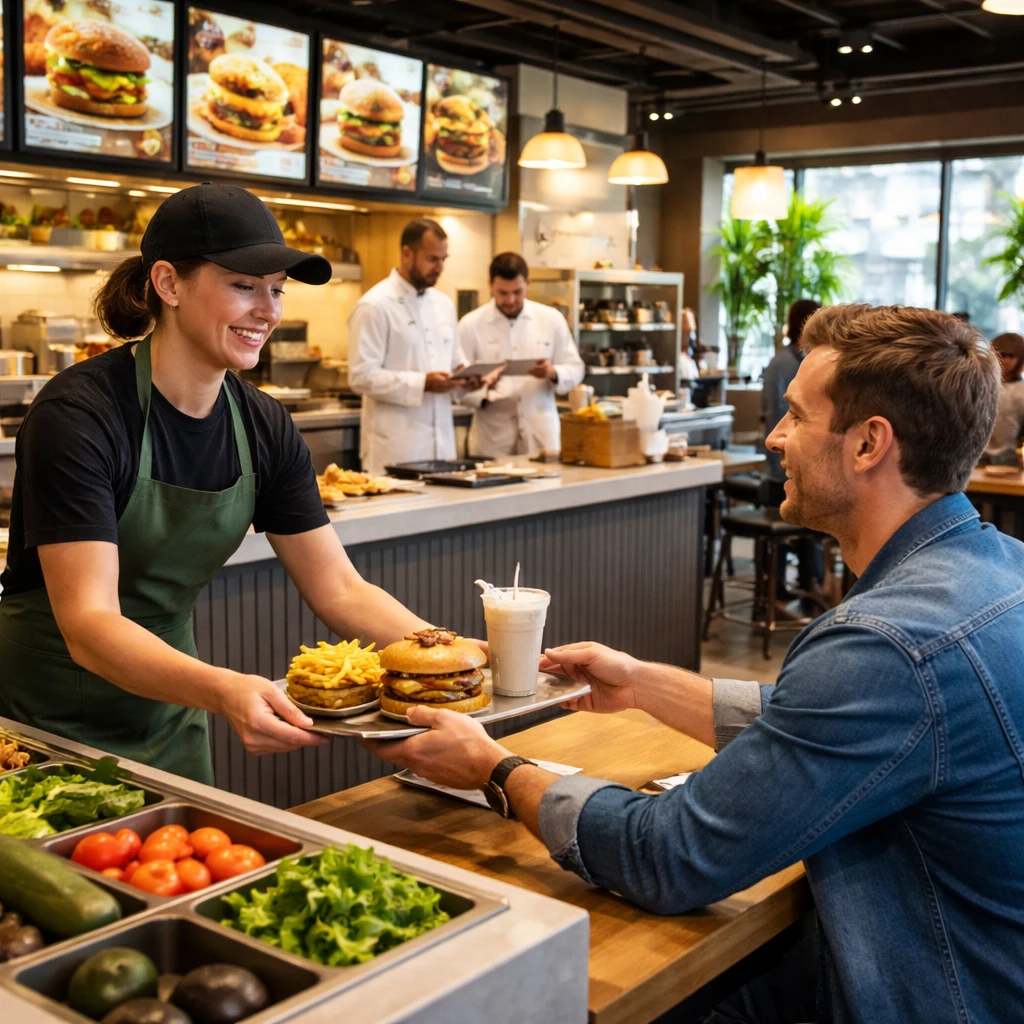
Bank of America Securities elevated its rating on Shake Shack to Neutral from Underperform and raised the firm's price objective to $101 from $88. The upgrade, announced Tuesday, came alongside an assessment that a combination of menu experimentation and supply-chain initiatives is helping the fast food operator navigate a pressured consumer environment.
Shares of the burger chain rose nearly 3% in premarket trading on the news.
Menu experiments and value offers
Analysts Sara Senatore and Isiah Austin pointed to several specific product moves as evidence of momentum. The company has rolled out new offerings developed through its internal stage-gate testing process, including a "Dubai shake" and a Korean menu. In addition to these test-market items, Shake Shack has a featured value menu consisting of $1-$3-$5 items available through its app. The firm says these initiatives are contributing to more stable same-store traffic after a period of declines.
The analysts also referenced Bank of America Institute card data indicating that younger consumers - a demographic to which Shake Shack overindexes - are increasing restaurant spending, a trend that could further support sales.
Supply chain and margin opportunity
Supply-chain improvements were highlighted as a key lever for margin enhancement. BofA compared the potential benefit of supply-chain work to the gains Shake Shack achieved from labor scheduling improvements over the past two years, which the analysts estimate added roughly 300 basis points to margins.
To structure the effort, BofA outlined five areas of opportunity: supplier diversification, geographic diversification, product optimization, transportation and logistics, and technology deployment. The analysts noted that beef accounts for a larger share of Shake Shack's cost of goods sold than peers - around 30% - and said that supply-chain savings should help moderate the inflationary impact. As a result, BofA expects COGS inflation at Shake Shack to remain in the low single digits, compared with mid-single-digit inflation for the underlying inputs.
Unit growth assumptions and financial outlook
On expansion, BofA expressed confidence that Shake Shack can maintain a mid-teens net restaurant growth rate for at least the next five years. After a deceleration in openings to 12% in 2024 - when the company closed nine underperforming locations - the chain expanded its domestic footprint by 13% in 2025 and is targeting roughly 15% growth, or 55 to 60 net new stores, in 2026.
BofA's modeling assumes a 15% compound annual growth rate in the domestic store base to reach 884 units by 2031, with average unit volumes rising at a 2% CAGR and restaurant-level margins expanding to 22.8%.
Reflecting these assumptions, the bank raised its fiscal 2026 adjusted EPS estimate to $1.59 from $1.41 and its 2027 estimate to $1.94 from $1.63.
Analysts retain a cautious stance
Despite the upgrade and higher earnings projections, the analysts kept a measured view. Their Neutral rating reflects the expectation that the broader operating environment will remain challenging, with ongoing pressures on consumer spending and heightened competition on value. They said Shake Shack's initiatives should help sustain same-store sales and support earnings growth that is in line with expectations, but did not signal a return to aggressive upside assumptions.
This assessment leaves investors with an improved set of assumptions around product and cost initiatives while acknowledging the persistent macro and competitive headwinds that could temper performance going forward.