
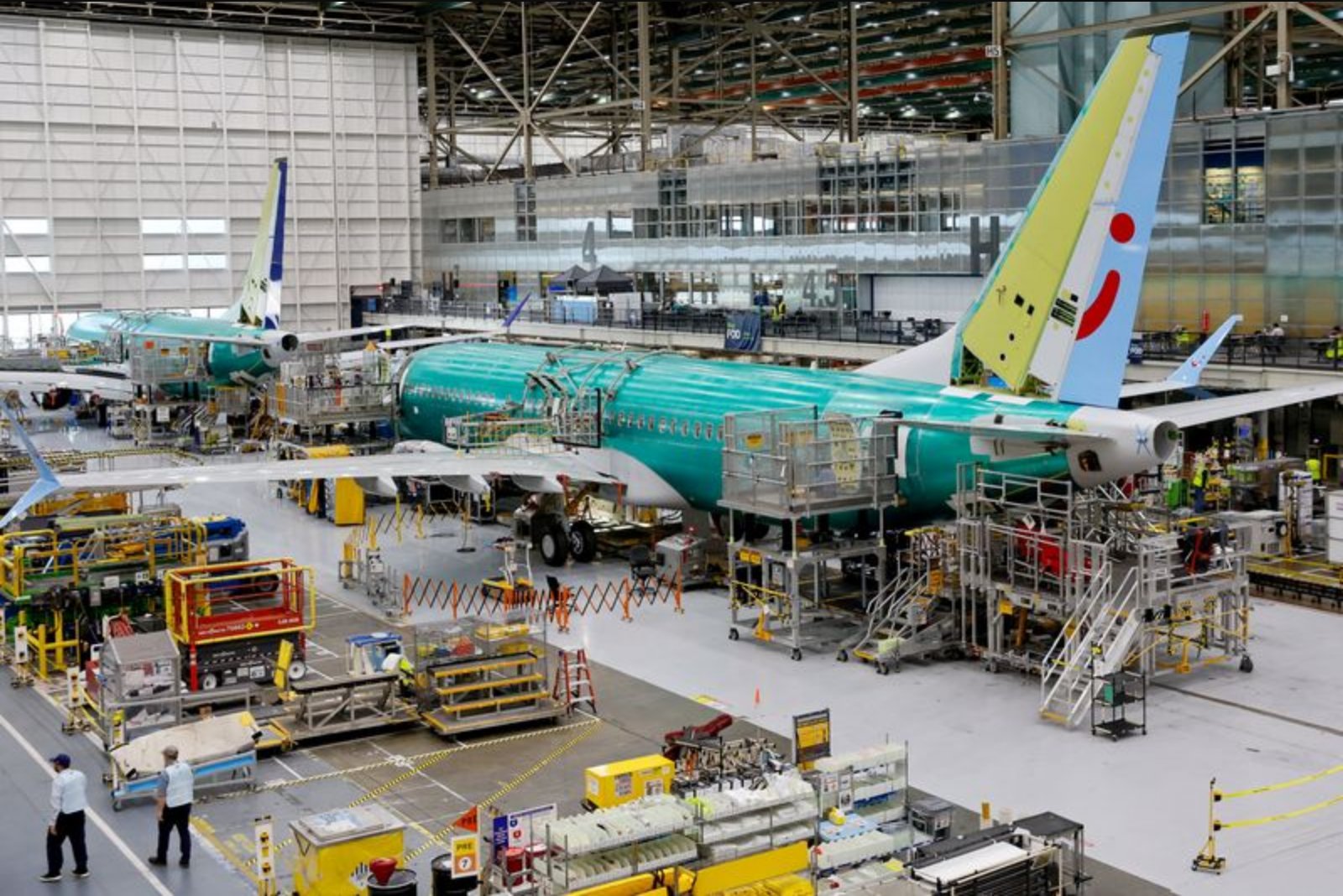
Boeing has instructed suppliers involved in its commercial programs to disclose any work carried out in the Middle East and to report operational impacts by March 9, according to a company communication seen by Reuters. The outreach underscores mounting industry anxiety that a war now in its third week between the U.S.-Israeli coalition and Iran could further constrain aircraft production if disruptions persist.
The message to suppliers said: "As we continue to monitor the situation in the Middle East, we are assessing potential impacts to the stability of our supply chain." Boeing declined to comment on the request.
Although the Middle East is not generally viewed as a major manufacturing hub for components used in new commercial airliners, some regional suppliers do contribute parts. The United Arab Emirates-based firm Strata, for example, produces components for Boeing's 787 Dreamliner. Boeing also sources certain parts, such as the vertical fin, from other manufacturing sites. Strata was not immediately available for comment.
Industry participants say the conflict has already affected transport routes and schedules. The fighting has pushed oil prices to around $100 a barrel and interrupted flights and shipping lanes, with delays reported in moving aircraft parts to carriers in the Middle East. A senior supply-chain source warned that if the war persists beyond a few weeks, the disruptions at a global transit node could begin to affect not only Boeing but also European rival Airbus.
An Airbus spokesperson said the company is in close dialogue with customers and suppliers across the region as it monitors the situation.
Brazilian planemaker Embraer has likewise queried its suppliers about the conflict's effects on production and transport costs, a source familiar with the matter said. In response to inquiries, Embraer pointed to comments by CEO Francisco Gomes Neto, who told analysts on March 6 that the company was "taking care of our suppliers, both direct and indirect in the region" and that it had not seen any "impact in deliveries or even short-term sales."
While the aerospace sector has so far seen limited material disruption to output, analysts caution that a prolonged conflict keeping oil prices elevated could weigh on demand for new aircraft, particularly in the Gulf where several carriers are major purchasers of wide-body jets from both Boeing and Airbus. "What I'm really more concerned about is long-term demand for jets in the region," said Richard Aboulafia, managing director at U.S. consulting firm AeroDynamic Advisory.
Manufacturers and business jet makers worldwide are currently increasing production to address a supply shortfall relative to demand, a dynamic that has swollen order backlogs. That expansion is occurring even as supplier networks face rising demand from the defense sector, adding further strain.
A separate industry source said some planemakers are also considering the potential that the U.S. administration could invoke the Defense Production Act to require suppliers to accelerate output to support defense needs tied to the conflict. If applied broadly, such a measure could have spillover effects on commercial aerospace since many suppliers serve both defense and civilian programs.
Context and implications
The supplier outreach by Boeing is part of a broader industry response in which major commercial airframers and their suppliers are actively assessing exposure and short-term operational risk tied to a conflict that has affected fuel prices and transit routes. Aircraft makers are monitoring both immediate logistics impacts and the potential for a longer-term dampening of regional demand if the conflict endures.
Given the intertwined nature of civil and defense supply chains, any policy action to prioritize defense production could also influence civilian aircraft output, industry sources said.