
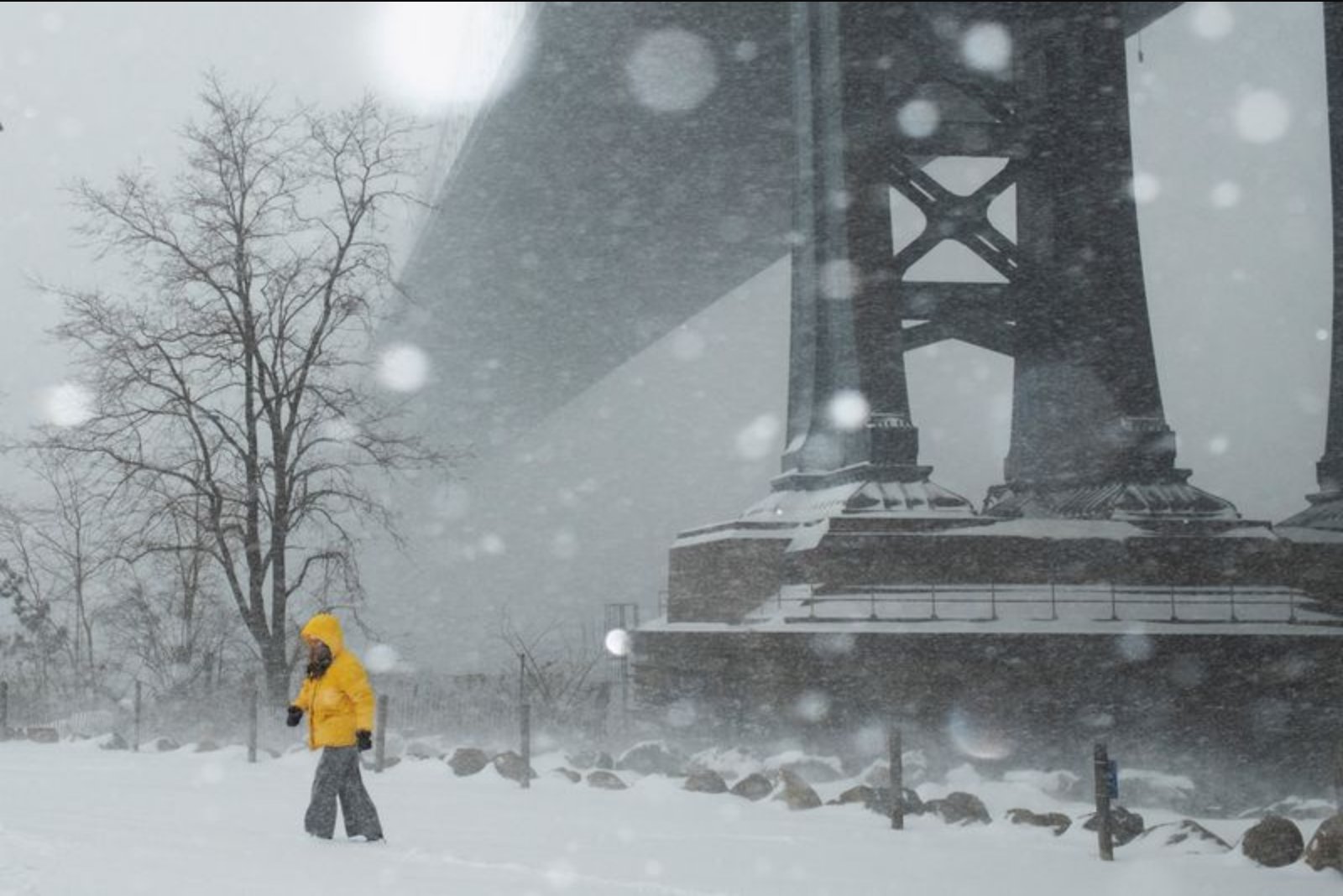
Tens of millions of people across the United States either stayed home or ventured out to assist neighbors on Monday as a sweeping winter storm dumped heavy snow, slick ice and freezing rain over a large swath of the country. Conditions ranged from deep snow in the Northeast to rare, thick ice in parts of the South, producing dangerous travel and widespread service disruptions.
States and cities from New York and Massachusetts in the Northeast down through Texas and North Carolina in the South saw roads rendered treacherous - frozen slick with ice in some places and buried beneath often more than a foot of snow in others. In several southern locations, residents experienced winter conditions not seen in decades, including branches coated in inch-thick ice that brought down trees and power lines.
Air travel was hit especially hard by the storm. An industry tracking service reported that major carriers were forced to cancel more than 11,000 U.S. flights scheduled for Sunday. Ground conditions were also difficult: schools were closed in many areas and volunteers staffed emergency shelters to provide warmth and basic needs for people without heat or shelter.
Some people took it upon themselves to find and help those most at risk. Ryan DuVal, who owns a vintage firetruck, drove through frozen streets of Tulsa, Oklahoma, looking for people who needed assistance. He described his motivation plainly: "I just saw a need for getting people out of the cold," he said. DuVal offered rides, warmth inside the truck, water and a meal to anyone who accepted, describing the effort as giving back to the community.
Authorities issued widespread warnings. Winter storm warnings covered 118 million people, while an estimated 157 million were urged to bundle up against cold temperatures. The range of cold stretched from sub-zero Fahrenheit readings - described as -18 Celsius in the report - near the Canadian border, to below-freezing conditions reaching as far south as the Gulf of Mexico.
Officials moved to respond to the emergency. New York Governor Kathy Hochul announced the mobilization of National Guard troops in New York City, Long Island and the Hudson Valley to help with the state's storm response. New York City closed schools for a remote school day, with the city’s mayor, Zohran Mamdani, offering a lighthearted comment to students: "I know that this may disappoint some students, so if you do see me, feel free to throw a snowball at me."
Power outages affected large numbers of customers across a broad southern band. As of 4 a.m. EST (0900 GMT), more than 820,000 electricity customers were without power across states stretching from Texas to Virginia, according to PowerOutage.us. Tennessee accounted for nearly a third of those outages and was among the hardest hit.
The storm prompted federal emergency action. President Donald Trump approved federal emergency disaster declarations for a dozen states, mostly in the mid-South, calling the system "historic" in his description of the event. While forecasts suggested the main storm system would move away from the East Coast into the Atlantic on Monday, meteorologists warned that another surge of Arctic air would follow, prolonging bitter cold and icy conditions for several days.
Despite the hazards and disruptions, many people also took advantage of the snow for outdoor recreation where it was safe to do so. In Washington, D.C., a large crowd gathered at Meridian Hill Park for an impromptu and raucous snowball fight, with one man in the crowd wearing an astronaut suit. Families brought sleds to Capitol Hill, and children were seen racing down the steep slope below the Capitol dome. A man pushing his daughter down the hill on a purple plastic sled described the conditions: "It’s beautiful. It’s so fun to go down Capitol Hill. It was great powder this morning. Getting a little sleety now but we’re having a great time!"
Context and immediate effects
The storm created a mix of heavy snow, thick ice and strong winds across a geographically diverse portion of the United States, producing acute impacts on travel, power infrastructure and daily life. Emergency shelters and volunteer efforts were mobilized to support vulnerable populations, and government resources including the National Guard were deployed in some regions to aid response and recovery.