
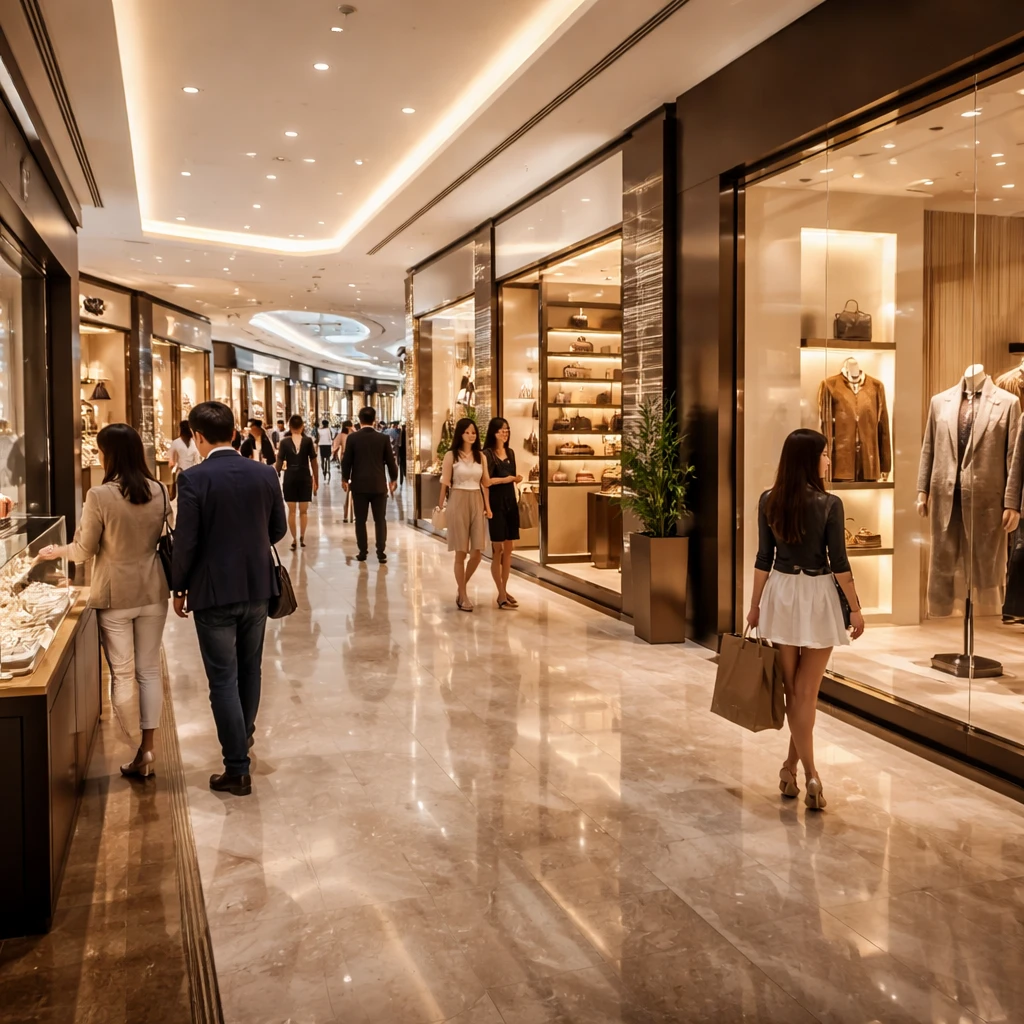
Bernstein's most recent mall traffic fieldwork across several major Chinese luxury hubs — Beijing, Shanghai, Hong Kong and Chengdu — paints a picture of a recovery that is far from uniform. The firm’s observations indicate that a small group of luxury houses is pulling away from the rest on the basis of customer visits, pricing strength and longer-term brand durability.
At the top of the list sits LVMH. Bernstein's street-level checks found Louis Vuitton and Dior drawing the most sustained customer interest at the sampled luxury destinations in China, underpinning the conglomerate’s status as the benchmark equity in the sector. The analysis highlights LVMH’s breadth across fashion, leather goods, jewelry and beauty as a stabilising factor as overall luxury demand normalises.
Bernstein also notes that valuation multiples for the sector have moved lower from prior peaks following a broader correction, and that investors increasingly view LVMH as a relatively safe long-term compounder within global luxury on that basis.
Richemont was flagged as the momentum leader in Bernstein’s survey. The firm recorded accelerating foot traffic at Cartier and Van Cleef & Arpels locations, which it interprets as evidence that Richemont is a clear beneficiary of strengthening jewelry demand in China. Importantly, Bernstein characterises this uplift as brand-driven rather than the result of currency arbitrage or temporary price distortions, suggesting a deeper consumer preference for hard luxury.
As jewelry outperforms some softer discretionary categories worldwide, Bernstein suggests Richemont’s portfolio mix looks increasingly compelling for investors seeking a blend of growth and defensive attributes.
Burberry was another name identified as gaining momentum. Although Bernstein’s most recent observations recorded a modest sequential slowdown in traffic during the survey period, overall visitation levels remain materially above Burberry’s 2025 average. The report interprets this as early evidence that the company’s brand reset and operational self-help initiatives are starting to resonate with shoppers.
Because market expectations for Burberry are still relatively muted versus larger peers, Bernstein views the stock as one of the more convincing European luxury recovery stories; continued operational execution could, the firm notes, translate into meaningful upside from current price levels.
Brunello Cucinelli emerges in the survey as an exemplar of high-quality luxury growth. The Italian cashmere house benefits from an ultra-premium positioning, a resilient wealthy customer base and sustained brand desirability even when broader luxury spending softens. Bernstein’s mall traffic checks suggest visitation has returned to or exceeded earlier peak benchmarks, reinforcing the notion that Brunello occupies a particularly resilient niche in aspirational luxury.
Bernstein acknowledges that Brunello trades at premium multiples, yet investors continue to reward the company for disciplined expansion, consistent pricing power and strong brand equity.
What the survey shows
- LVMH leads in consumer attention across major Chinese luxury nodes, with Louis Vuitton and Dior particularly dominant.
- Richemont’s jewelry brands are seeing accelerating traffic, pointing to a brand-driven upswing in hard luxury demand.
- Burberry’s recovery appears to be gathering steam despite a small sequential dip, with traffic still well above its recent average.
- Brunello Cucinelli’s ultra-premium positioning supports footfall at or above prior peaks, underscoring strong brand resilience.
The on-the-ground traffic data from Beijing, Shanghai, Hong Kong and Chengdu indicate a hierarchy forming within the global luxury market as demand normalises unevenly. Bernstein’s read is that a concentrated group of names is showing clearer operational and brand advantages that are translating into real-world consumer engagement.