
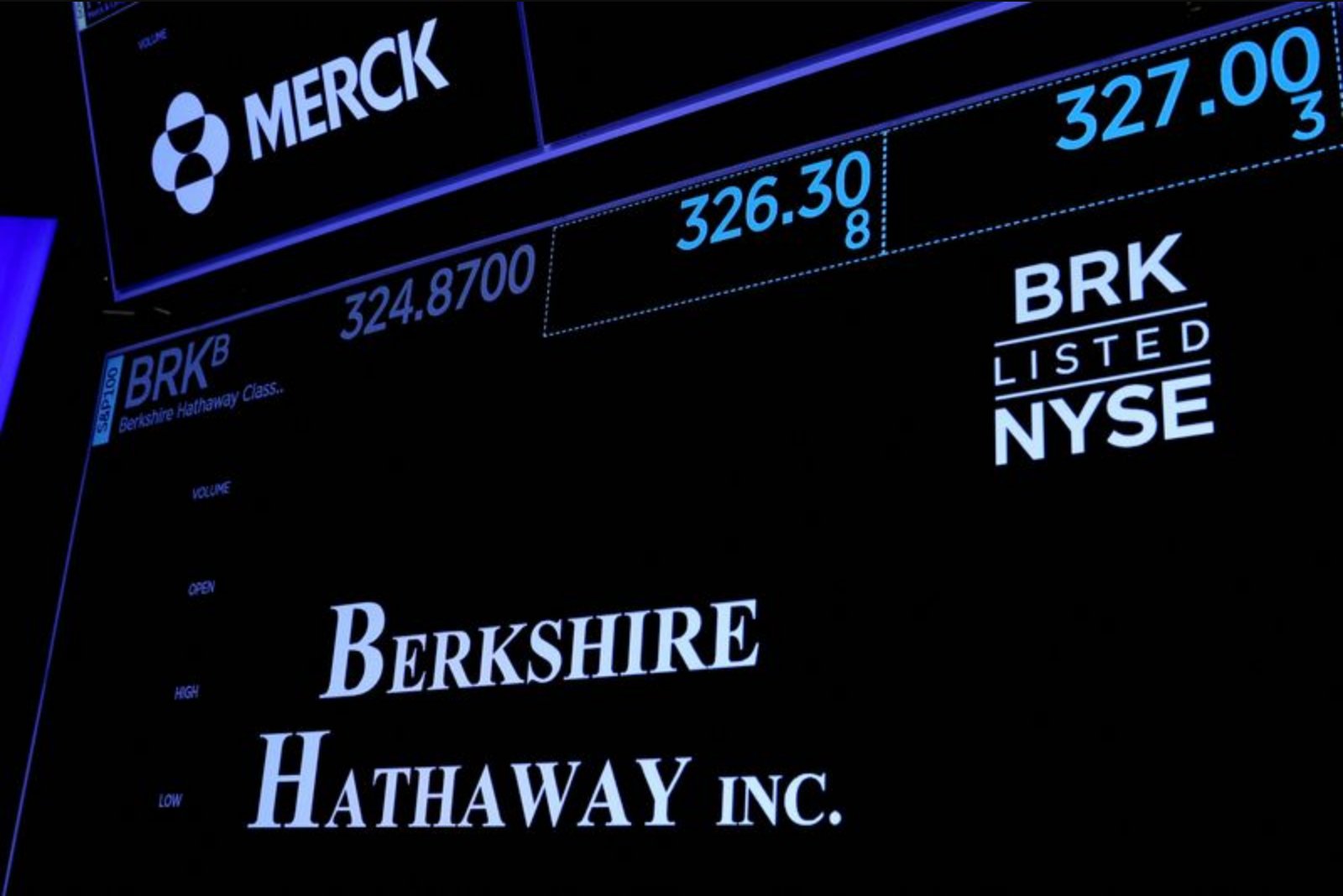
Berkshire Hathaway said operating profit for the fourth quarter fell sharply, reflecting lower contributions from its insurance operations and a significant writedown tied to its investment in Occidental Petroleum. The results mark the final quarter under Warren Buffett’s stewardship as chief executive; Greg Abel has taken over the CEO role while Buffett remains chairman.
For the quarter, Berkshire recorded operating profit of $10.2 billion, down about 30% from $14.53 billion a year earlier. Measured on a per-share basis, that equates to roughly $7,092 for each Class A share. Much of the reduction stemmed from a 38% decline in insurance profit, driven by a mix of lower interest income on Berkshire’s cash holdings as rates eased and pricing dynamics that constrained growth at Geico and in the company’s reinsurance operations.
Net income for the quarter fell 3% to $19.2 billion from $19.69 billion, the company said. That decline reflected the Occidental writedown and weaker operating profit, partially offset by the value of Berkshire’s holdings in Apple, American Express and other stocks. For the full year, operating profit slipped 6% to $44.49 billion while net income dropped 25% to $66.97 billion.
Balance sheet and capital deployment
Berkshire closed 2025 with $373.3 billion of cash on hand. The company continued a trend of selling more equity than it bought - the 13th consecutive quarter of net stock sales - and it recorded a sixth straight quarter with no share-repurchase activity. That cash position gives the new CEO substantial dry powder to pursue large-scale acquisitions, a capability highlighted by the company’s reported liquidity.
Occidental writedown and other investment impairments
The company took a $4.5 billion writedown on its 26.9% stake in Occidental Petroleum, saying the decline in Occidental’s share price was not viewed as temporary. Despite the impairment, Berkshire said it does not intend to sell its Occidental shares. The Occidental charge was the second writedown in 2025; earlier in the year Berkshire recorded a $3.76 billion impairment on its investment in Kraft Heinz.
Insurance operations and underwriting
Geico reported that pretax underwriting profit nearly halved in the fourth quarter as higher accident claims and increased advertising expenditures weighed on results. The combination of softer pricing for new business and pressure on underwriting margins in reinsurance contributed to the significant drop in insurance earnings for the period.
Commenting on prospects, analysts noted top-line growth remains a challenge. Cathy Seifert of CFRA Research said reinsurance and commercial insurance growth may be nonexistent in 2026, echoing concerns about revenue momentum across insurance lines.
Operating performance across businesses
Among Berkshire’s other major operations, profit at BNSF increased 6% in the fourth quarter, while profits from the conglomerate’s energy operations fell 5%. Manufacturing, retail and service businesses collectively posted a 3% increase in quarterly profit and a 4% gain for the year, although several consumer-facing units experienced full-year revenue declines amid sluggish demand. Companies called out for softer sales included Duracell, Fruit of the Loom and Jazwares, maker of Squishmallows.
Lower gains tied to foreign currency movements also subtracted from operating profit for the period.
Leadership transition and shareholder message
In his first annual letter to shareholders as CEO, Greg Abel paid tribute to his predecessor, describing Buffett as a "remarkable CEO" and "arguably the greatest investor of all time," and committed to preserving the discipline applied to Berkshire’s capital allocation. Abel acknowledged that some businesses need stronger operational performance and signaled a more hands-on approach in addressing those weaknesses, while preserving the day-to-day autonomy of subsidiary managers.
Abel wrote that Berkshire is committed to upholding the legacy built by Buffett and Charlie Munger, noting the importance of doing so with a continued emphasis on excellence. He also recognized shareholders’ desire for the company to succeed and pledged to pursue that outcome "in the right way." The letter underscored that the company would focus on strengthening operations where needed rather than altering the overall decentralized management structure.
Market performance
Berkshire’s shares have lagged the Standard & Poor’s 500 by more than 27 percentage points since Buffett announced on May 3 that he was stepping down as CEO. Both Berkshire stock and the S&P 500 have recorded gains of less than 1% so far in 2026.
The quarterly results highlight a company balancing significant cash resources and entrenched investments with near-term pressures in insurance underwriting, energy exposure, and some consumer-facing units. Management is signaling a focus on improving operating performance while preserving the investment discipline that has characterized the business.