
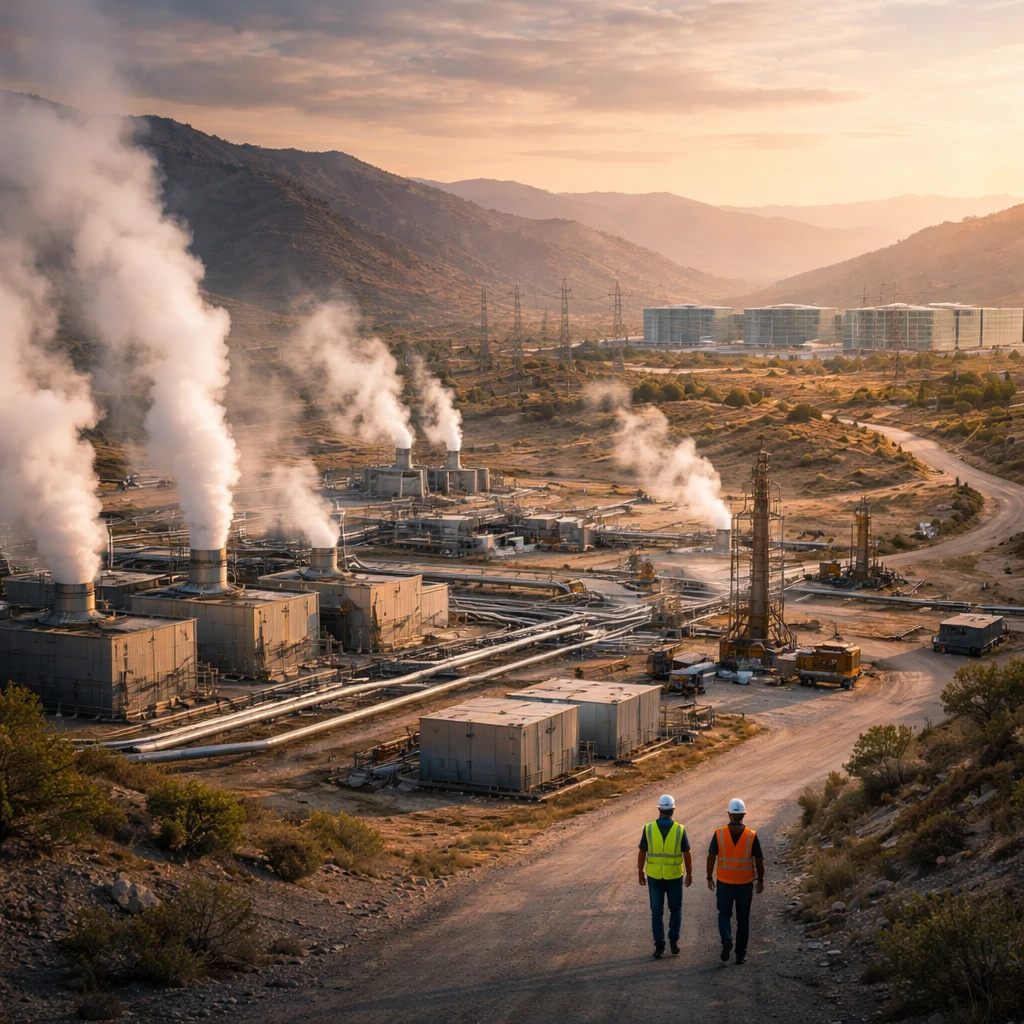
Barclays has flagged geothermal energy and related service providers as strategically positioned to help meet a growing power demand driven by expanding artificial intelligence computing infrastructure. The bank's technology analysts estimate that annual AI infrastructure spending by Western hyperscalers and AI laboratories could surpass $1 trillion on an annual basis before peaking in 2028 - a forecast the firm says exceeds current consensus by more than $300 billion.
Big-picture projection and caveats
Barclays' thematic investing team views both compute and power demand as a key growth theme tied to AI expansion. At the same time, the firm warns that several practical constraints may complicate the ability to ramp up digital infrastructure quickly. Specifically, Barclays highlights power delivery limitations, permitting hurdles and labor shortages as material risks that could slow deployment of new computing facilities and their supporting generation capacity.
Geothermal names highlighted by Barclays
In a thematic review, Barclays listed five public companies it believes are well placed to address aspects of the power needs arising from the AI build-out. The firms span technology and service providers, power plant operators and drilling contractors.
- SLB - Barclays notes SLB combines reservoir expertise with drilling technologies to help accelerate commercial-scale deployment of Enhanced Geothermal Systems. Following the company's first-quarter results, several analyst firms - including Argus, BMO Capital and TD Cowen - issued price target upgrades, citing strength in SLB's offshore and international businesses.
- Baker Hughes - The bank calls out Baker Hughes for its equipment role on Fervo's 500 megawatt Cape Station geothermal project in Utah, supplying components for five power plants. Baker Hughes also reported first-quarter 2026 revenue and earnings that beat consensus estimates, driven by strong order intake in its Industrial & Energy Technology segment, which prompted multiple analysts to lift price targets.
- Halliburton - Barclays highlights Halliburton for delivering specialized drilling fluids, cementing services and magnetic ranging tailored to high-temperature geothermal applications. Halliburton recently agreed with Greenland Energy Company to provide integrated consulting and logistical support for a 2026 drilling campaign, and the company posted first-quarter 2026 results that exceeded expectations.
- Ormat Technologies - Ormat is described as a developer, owner and manufacturer of geothermal power plants, operating a global generating portfolio of roughly 1.6 gigawatts. The company reported first-quarter 2026 revenue and earnings per share that surpassed market expectations and reaffirmed its full-year 2026 guidance.
- Helmerich & Payne - Barclays notes Helmerich & Payne supplies high-spec drilling rigs used by unconventional geothermal developers and holds direct equity positions in next-generation technology firms. The company reported fiscal second-quarter 2026 results that included a wider-than-expected adjusted loss per share and revenue below analyst forecasts.
Market implications
The Barclays analysis links these corporate developments to broader concerns about whether power infrastructure can scale quickly enough to supply a rapid expansion of AI computing. The bank suggests that sovereign AI initiatives and activity in China could further raise spending before any potential slowdown in AI training requirements occurs later in the decade.
Conclusion
Barclays' thematic view casts geothermal-related companies and certain energy service providers as potential beneficiaries of a wave of power demand from AI. However, the bank is explicit that realizing that potential depends on overcoming practical barriers in permitting, labor and power system capacity - constraints that could affect deployment timelines and market outcomes for power, energy services and data-center buildouts.