
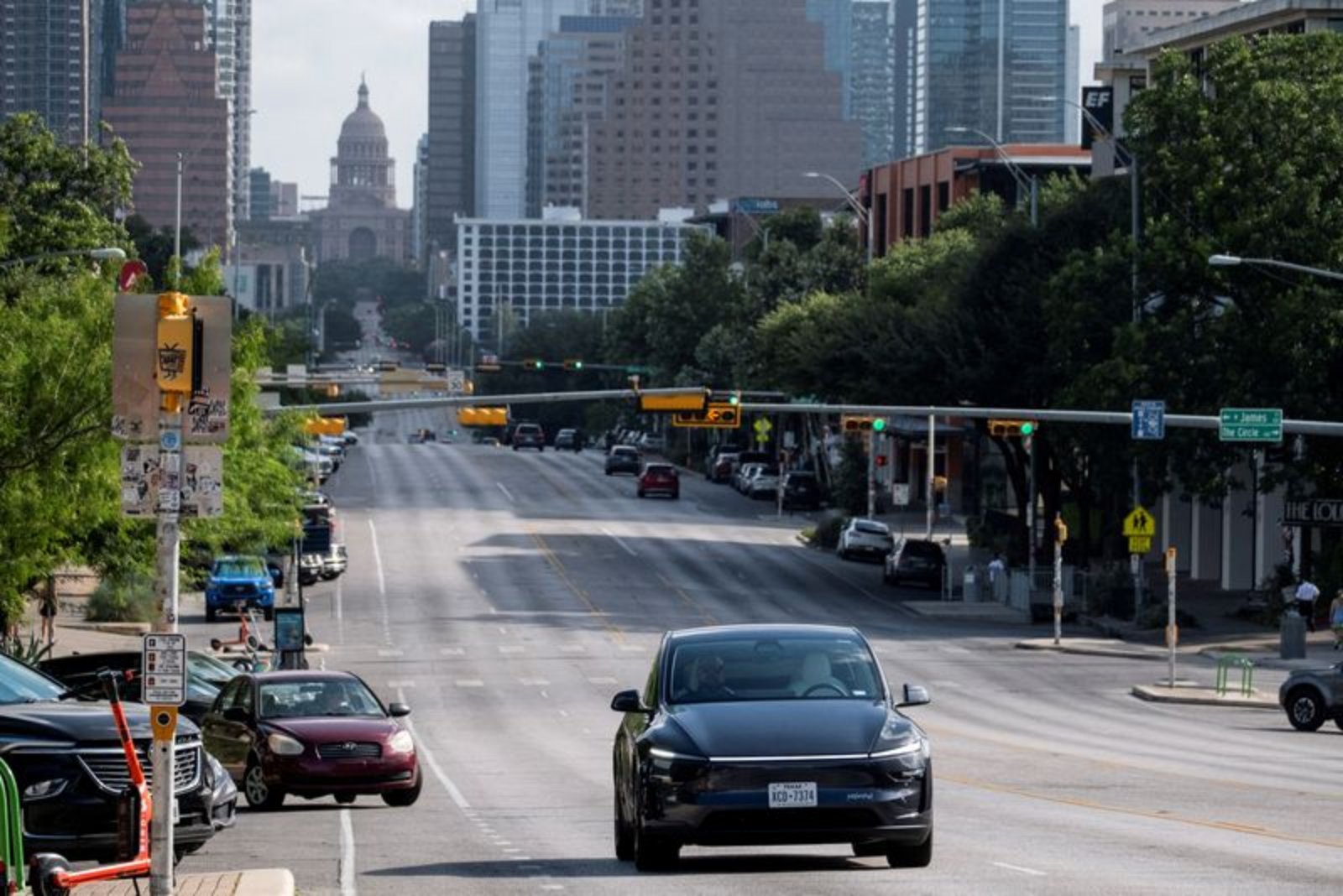
Automakers are moving closer to a capability many have long promised but few have delivered: systems that permit drivers to look away from the roadway for short periods while the car controls steering and speed, until it signals the driver to resume control. This function, known in the industry as Level 3 autonomous driving, represents a material step beyond today’s driver-assistance tools, which generally require continuous human supervision.
Vehicle manufacturers have spent years upgrading assisted-driving features that help manage speed and steering. For some companies, enabling a driver to perform secondary tasks while the vehicle is temporarily in control could provide a path to monetize investments in autonomy, turning technical advances into tangible consumer conveniences. Doug Field, Ford Motor’s chief electric vehicle, digital and design officer, described the benefit as immediate time savings delivered in an affordable package. Ford plans to offer an eyes-off system on lower-cost electric models beginning in 2028, company executives have said.
Still, a growing debate within the industry questions whether Level 3 is practical or desirable. Some executives and safety experts argue that systems which require intermittent handoff between automated driving and a human operator are inherently problematic - from both a safety and liability perspective. Others doubt that consumers will pay enough to offset the substantial development costs.
Paul Thomas, president of Bosch’s North America business, expressed that uncertainty, saying he does not know whether Level 3 ever makes financial sense. That view reflects broader skepticism among some suppliers and automakers.
Where Level 3 fits on the automation spectrum is between basic driver aids and fully driverless vehicles. Automated driving is commonly classified on a scale from Level 1, which comprises basic features such as cruise control, to Level 5, which denotes full autonomy under all conditions. At present, most market offerings, including well-known systems like Tesla’s Full Self-Driving, are categorized as Level 2 and require drivers to monitor the road and remain prepared to intervene.
A number of major manufacturers have announced intentions to introduce eyes-off Level 3 capabilities. Alongside Ford, General Motors and Honda have signaled plans to develop such systems. But the technical and financial hurdles are steep. A recent survey of industry participants by consultancy McKinsey found that developing a Level 3 system for highway operation can cost as much as $1.5 billion, roughly double the investment needed for Level 2 systems capable of handling city street environments.
Those who have trialed Level 3 systems have encountered limits that temper expectations. John Krafcik, former CEO of Waymo and currently a board member at Rivian, observed that both automakers and consumers who have tried Level 3 systems are often concluding that the benefits do not justify the expense and complexity. McKinsey has noted some companies have stepped back from Level 3 work and instead are expanding the capabilities of lower-cost Level 2 systems.
Mercedes-Benz, which to date is the only automaker to have rolled out Level 3 technology in the United States, paused its program after finding that constraints such as limited permissible speeds, narrow operating conditions and geographic boundaries dampened customer demand. The company said it is shifting focus to advanced city-street features that continue to require driver oversight, while planning an upgraded Level 3 system for release in a few years.
Stellantis has also curtailed its Level 3 development, reportedly citing cost, technological hurdles and doubts about consumer uptake. Meanwhile, Tesla’s Full Self-Driving product operates on city streets but still mandates driver attention, and the company has not introduced an eyes-off Level 3 system for personal vehicles. Instead, Tesla is pursuing fully autonomous driving and has launched a limited robotaxi service, with plans to expand to several U.S. cities by the first half of 2026, positioning it as a competitor to Waymo, which is owned by Alphabet.
Designing Level 3 systems poses a particular technical challenge: the vehicle must reliably detect circumstances that require human intervention, deliver a clear and timely request to the driver, and safely maintain control for the period between the alert and human takeover. Bryant Walker Smith, a law professor specializing in autonomous-driving regulation, described the required transition window in operational terms, noting regulators will reasonably expect substantial margins of safety when automation hands control back to a human.
Analysts and strategists emphasize the cost and legal exposure that accompany hands-off functionality. Joel Johnson, a strategist who has advised General Motors on autonomy programs, said automakers have limited incentives to deploy expensive autonomous systems except to counter competitors such as Waymo or to create new revenue streams through higher upfront prices or subscription fees.
Moving from driver-supervised systems to eyes-off automation also shifts potential liability in collisions. Experts argue that adoption of Level 3 could increase the likelihood that manufacturers, rather than drivers, would face legal responsibility in crashes. A recent article in the Fordham Intellectual Property, Media and Entertainment Law Journal warned that absent a broadly accepted regulatory approach, Level 3 technologies may struggle to reach the market.
Adding pressure on traditional carmakers is accelerating progress among Chinese manufacturers. In December, a vehicle equipped with Level 3 capability received clearance from China’s authorities for the first time. Chinese brands such as Leapmotor and BYD are already embedding advanced Level 2 driver-assistance features into the base prices of their cars, rather than locking certain functionality behind subscriptions. That strategy could fuel a global pricing contest if buyers in the United States and Europe come to expect similar features without recurring fees.
In short, automakers face a complex calculus. Some are pushing forward with eyes-off technology as a near-term product differentiator and potential revenue source. Others are retreating from ambitious Level 3 plans because of cost, operational limits and concerns about consumer interest. Meanwhile, legal and regulatory ambiguities around responsibility for accidents involving higher levels of automation remain unresolved.
How the industry balances these technical, commercial and legal trade-offs will determine whether Level 3 becomes a mainstream option, remains a niche feature, or is bypassed in favor of either enhanced Level 2 systems or substantial investments in fully driverless capabilities under clearly defined operating regimes.