
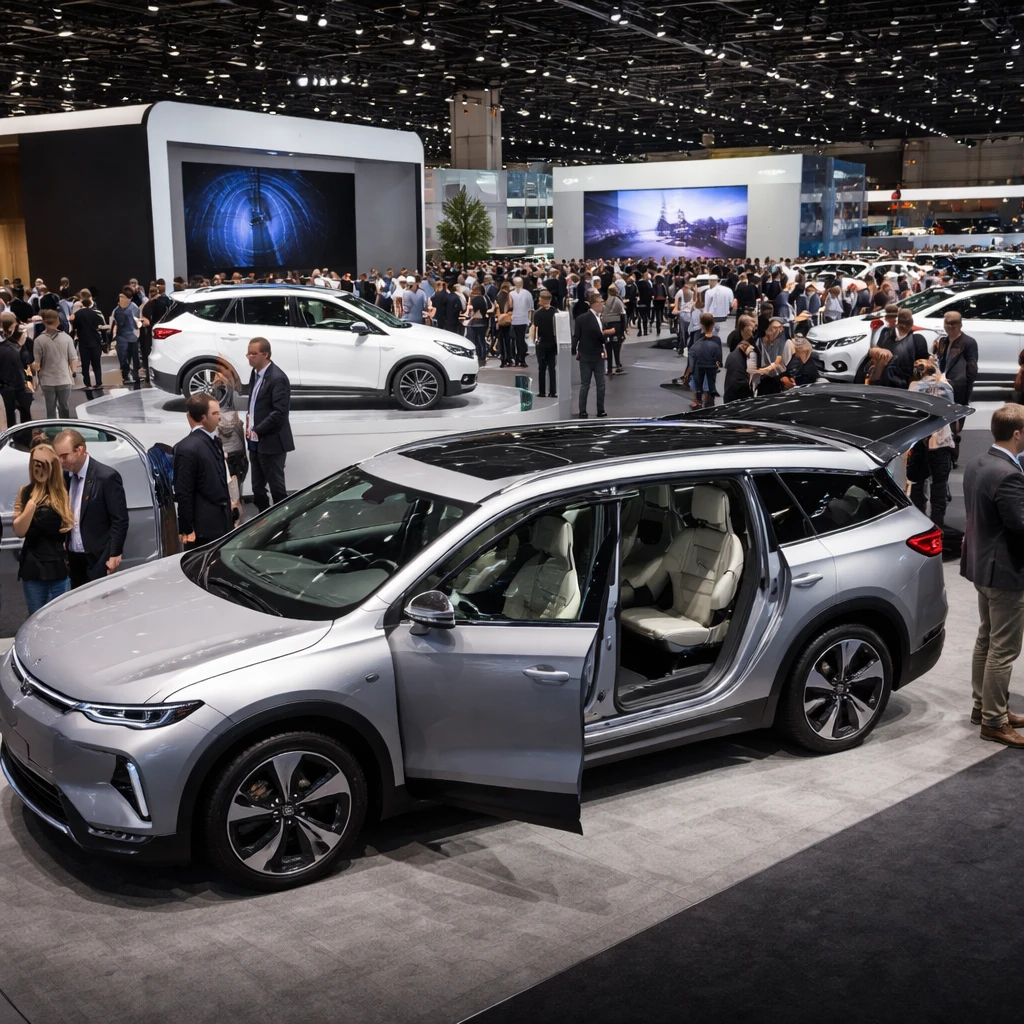
At the New York Auto Show on Wednesday, several large automakers showcased new electric vehicles for the U.S. market even as consumer interest and sales have cooled in recent months following the expiration of a federal EV tax credit.
Kia confirmed plans to bring a more affordable model, the EV3, to the United States later this year. The company’s marketing lead for the U.S. emphasized a belief that the market will recover over time, saying the U.S. EV market could return to prior levels within three to four years. "The market is going to come back for EVs - maybe not as quickly as we all would have liked," the executive added, underscoring Kia’s ongoing commitment to electric vehicles.
Subaru used the show to introduce a three-row electric SUV dubbed the "Getaway," a seven-seat family vehicle that the company said will arrive in the U.S. either later this year or in the following year. Subaru noted this will be its fourth EV model to reach the U.S. market.
General Motors recently began retailing a redesigned Chevrolet Bolt EV with a starting price of $27,600 after discontinuing the previous generation in 2023. The company’s move reflects efforts to offer lower-priced EV options amid a softer sales environment.
The Alliance for Automotive Innovation - a trade group representing a broad set of automakers - reported that EVs comprised 9.6% of total U.S. vehicle sales in 2025, but that share dropped to 6.5% in the latest three-month period. The group noted that the decline coincided with the expiration of a $7,500 EV tax credit on September 30, and described the 6.5% share as the lowest level since early 2022.
Several industry leaders at the show described the current U.S. EV market as markedly weaker. The chairman of Nissan Americas observed that demand has largely evaporated, estimating EVs represent roughly 7% of the market and that much of that figure is driven by heavy incentives rather than organic consumer interest. "When you look at the EV market right now, there’s no demand," he said.
Executives also highlighted the impact of recent gasoline price increases on consumer behavior. Hyundai Motor’s CEO pointed to rising fuel costs, particularly in California, as a factor that has led to increased EV purchases that are "not driven by regulation, but driven by the market conditions." As a result, Hyundai has adjusted its production plans to include more hybrid models.
On longer-term expectations, Hyundai’s chief executive suggested a gradual growth path for EVs, forecasting that electric vehicles may climb to roughly 10-15% of the market over time rather than reaching the much higher penetration rates some have projected. "I think we’re going to see an evolution where, step by step, EVs will increase a little bit, let’s say maybe 10-15% of the market, but not like 50 or 60%," he said.
Toyota Motor North America’s general manager for the Toyota Division said the automaker plans to introduce three electric models in the U.S. during the year and that higher gasoline prices should provide some uplift to EV demand. He cautioned, however, that any boost is unlikely to return the market to the levels seen when government incentives were in place, while still expecting an increase versus a scenario without the recent rise in fuel costs.
Broader industry figures cited at the event underscored the still-narrow footprint of EVs within the U.S. vehicle fleet: electric vehicles now account for 2.5% of total light-duty vehicles in operation in the United States. By comparison, EVs made up 10.2% of total vehicle sales in 2024.
Separately, the article noted shifts in federal policy that affect the industry. It said the U.S. president has implemented measures intended to reduce incentives for electric vehicle purchases and production while easing conditions for the manufacture of internal combustion engine vehicles.
Contextual note: The show highlighted a tension in the industry - firms continuing to launch new EV products even as short-term sales are constrained by the loss of a major federal incentive, while higher pump prices are creating intermittent pockets of renewed demand.