
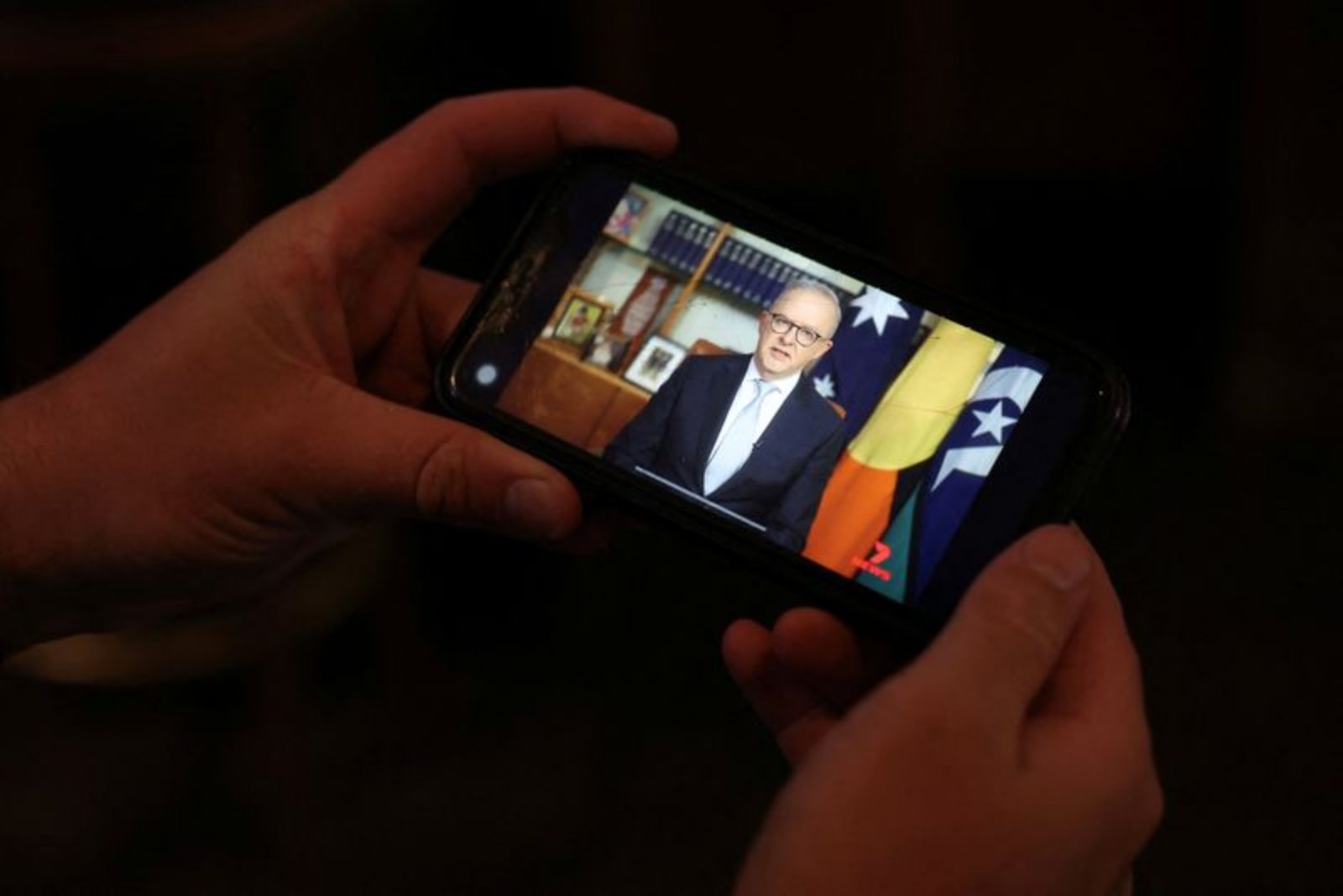
Australia will introduce stricter rules on gambling advertising that prohibit the use of celebrities and sports stars in promotions, restrict online ads to adults logged into accounts, and place limits on the volume and timing of broadcast advertising, the government said on Thursday.
The package, which Prime Minister Anthony Albanese described as "the most significant reform on gambling that has ever been implemented," is intended to reduce children’s exposure to gambling promotion and address rising public health concerns. The suite of measures will not be implemented immediately; they are scheduled to come into force in 2027.
Under the new rules:
- Online gambling advertisements will be allowed only for internet users who are logged into accounts and who are over 18 years of age.
- Gambling promotions that feature celebrities or sports stars will be banned.
- Gambling branding will be prohibited at sports venues and on the uniforms of players and officials.
- Broadcast advertising will be limited to a maximum of three gambling advertisements per hour between 6 a.m. and 8:30 p.m., with an outright ban on advertising during live sports broadcasts within those hours.
- Radio advertising for gambling will be banned during school drop-off and pick-up times.
The government framed the measures as responses to a surge in gambling-related harms and to the volume of advertisements young people encounter. The restrictions are the government’s response to an earlier review, conducted nearly three years ago, which had recommended a total ban on online gambling advertising after estimating a sharp increase in public health costs.
That earlier review projected significant public health costs related to gambling. Government critics argue that the new rules fall short of the earlier recommendation for a comprehensive online-ad ban. Crossbench MPs have said the administration has been slow to act on gambling issues despite commanding a record majority in parliament.
"Not a single parent in this country would opt in to their kids seeing gambling ads," said Tim Costello, chief advocate at the Alliance for Gambling Reform, criticizing a feature of the new law that requires internet users to opt out if they do not want to see ads.
Costello argued the burden should rest with gambling companies and the platforms that distribute their ads, rather than on parents to opt out. His remarks underscore ongoing disagreement over the adequacy of the government's approach.
The announcement singled out several segments of the gambling and media industries that are likely to be affected. Free-to-air television networks and sports broadcasters, which derive significant revenue from gambling advertisers, already operate under existing restrictions on the timing and frequency of such ads. The new rules further tighten those limits and add venue and uniform branding prohibitions.
Market reaction included a decline in shares of Tabcorp Holdings, which fell 1.9% in afternoon trading, a drop steeper than the ASX200 index’s 1.1% decline on the same day. The government cited harms from gambling that were forecast to cost Australians A$34 billion last year, a figure noted in the review that recommended stronger controls.
International operators with large footprints in Australia were highlighted as likely to feel the impact of the measures. The government named London-listed Flutter Entertainment PLC, owner of the Sportsbet app, and Entain PLC, owner of the Ladbrokes app, as examples of companies the changes are expected to affect.
Prime Minister Albanese said the package is aimed at "tackling the community and public health concerns associated with gambling" and stopping the "deluge of advertisements" encountered by children. Advocates and some parliamentarians, however, view the reforms as an insufficient response to the inquiry’s recommendation for a full online advertising ban.
The rules represent a middle path between existing broadcast restrictions and the total ban sought by public health advocates. They increase regulatory constraints on how and when gambling companies can market their products while stopping short of the broad prohibition urged by the earlier government review.