
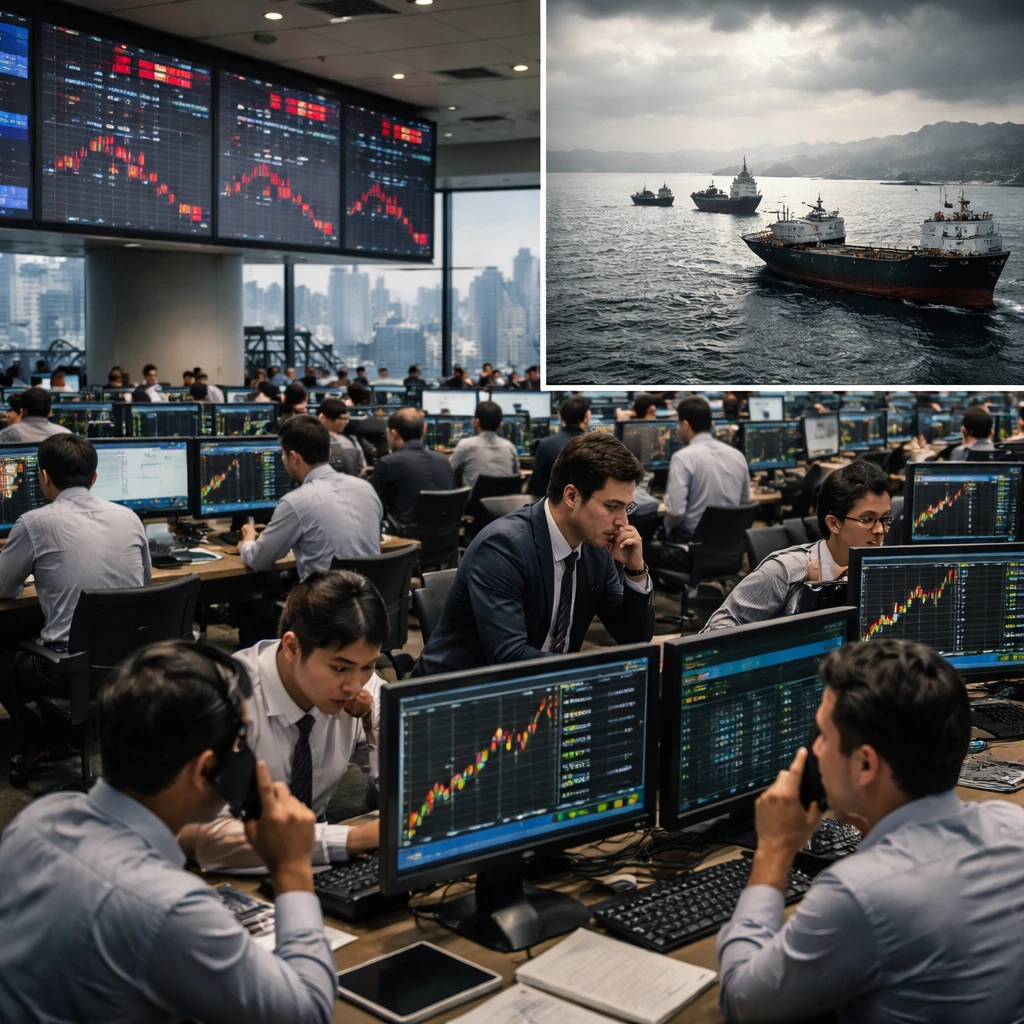
Asian equities exhibited limited direction on Thursday as traders digested mixed developments on the Iran conflict and the market impact of a rebound in crude prices. Sentiment was muted despite earlier positive cues from U.S. markets, with energy-related concerns contributing to downward pressure on several regional benchmarks.
Wall Street had given modest support overnight but failed to hold gains, with major U.S. indexes ending well below intraday highs. S&P 500 futures were down 0.1% by 22:15 ET (02:15 GMT), a sign that optimism about a quick de-escalation had not taken firm root.
Market movers and regional performance
South Korea saw the sharpest drop, with the KOSPI falling 2.8%, while Hong Kong's Hang Seng slipped 1.4%. Other markets also moved lower or traded flat as the conflict in the Middle East continued to cloud investor appetite. Australia’s ASX 200 lost 0.2%, and China’s Shanghai Shenzhen CSI 300 and Shanghai Composite indexes each declined about 0.3%. Singapore bucked the broader weakness, with the Straits Times rising 0.4%.
Several markets were coping with weeks of losses tied to persistent uncertainty over the war, which entered its fourth consecutive week and showed little sign of easing. Hostilities between Iran, the U.S., and neighbouring Middle Eastern countries were ongoing.
Ceasefire proposals and diplomatic signals
Diplomatic developments produced mixed signals. The U.S. forwarded a 15-point ceasefire proposal to Tehran, which Tehran initially rejected but later said it would review. Iran also put forward its own five-point ceasefire plan. Despite that exchange, Iran explicitly stated it had no intention of conducting direct ceasefire talks with Washington.
That diplomatic ambiguity has left markets cautious, as investors balance the potential for talks against statements indicating a reluctance to engage directly.
Energy supply disruption and policy implications
A central factor weighing on market sentiment was the continued disruption to oil and gas flows. Iran has effectively blocked the Strait of Hormuz, cutting off roughly 20% of the world’s oil and gas supplies, a development that has contributed to the rebound in oil prices and heightened concern about inflationary pressures.
Japan’s equity benchmarks moved lower after reversing earlier gains, with the Nikkei 225 down 0.2% and TOPIX off 0.6%. Japanese media reported that Tokyo has started releasing oil from its national emergency reserves to help offset supply disruptions tied to the conflict. Prime Minister Sanae Takaichi said earlier this week that Japan plans to release about 80 million barrels of stockpiled oil to local refiners.
The release from Japan’s reserves follows similar moves by other major economies aimed at easing energy market stress. Market participants remain focused on the potential for an energy-driven rise in inflation to both slow growth and prompt more hawkish stances from central banks. Several major central banks, including the Reserve Bank of Australia and the Bank of Japan, had previously warned about inflationary effects stemming from the conflict.
Overall, regional markets are monitoring both diplomatic signals and tangible supply responses as they assess the likely path for energy prices and policy. Several Asian economies are seen as particularly exposed to energy disruptions because of their high dependence on imported supplies, a vulnerability that continues to influence investor positioning.