
SYDNEY, March 30 - Asian equity futures opened lower on Monday as investors reassessed the economic fallout from a conflict in the Gulf that has driven energy prices sharply higher and amplified concerns about global inflation and a potential recession.
Diplomatic signals emerged over the weekend, with Pakistan saying it was preparing to host "meaningful talks" aimed at ending the dispute around Iran in coming days. Those moves came even as Tehran accused Washington of preparing a land assault while the U.S. military continued to move additional forces into the region. In parallel, Yemen’s Iran-aligned Houthis carried out their first attacks on Israel since the conflict began.
Market watchers highlighted how Tehran’s strategic position and military capabilities alter the balance of incentives in the conflict and could prolong hostilities. "Iran’s control of the Strait of Hormuz, capacity to disrupt global energy and food markets, and sustained missile and drone capabilities give it little incentive to concede, pressuring the U.S. to escalate," said Madison Cartwright, senior geo-economics analyst at CBA. Cartwright added that expectations were for the war to continue at least into June, with the risk skewed toward a longer duration.
The squeeze on transit through the Strait has already pushed up prices across a wide set of commodities. The clampdown has lifted costs for oil, natural gas, fertiliser, plastics and aluminium, and has also boosted fuel costs for aviation and shipping. The knock-on effect is expected to put upward pressure on prices for food, pharmaceuticals and petrochemical goods.
Those price pressures are particularly significant for Asia where many economies are heavily reliant on energy supplies from the Middle East.
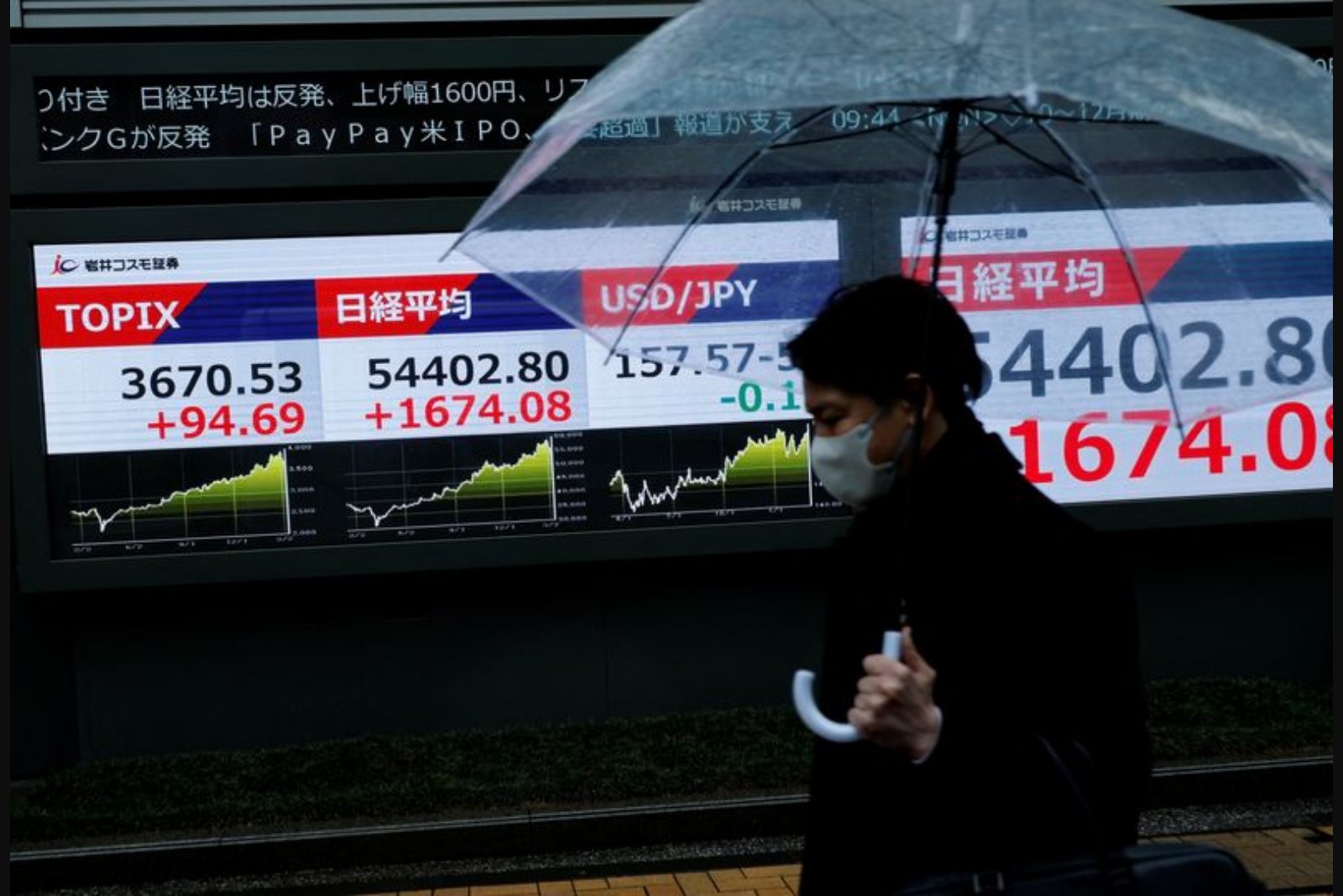
On the markets, futures for Japan’s Nikkei were trading at 50,870, signaling a steep fall from Friday’s close of 53,373. S&P 500 futures were down about 0.6% and Nasdaq futures had declined roughly 0.7%.
Oil benchmarks climbed further. Brent crude rose 2.4% to $115.33 a barrel, taking its monthly gain to 59% - a rise that eclipses the jump seen after Iraq invaded Kuwait in 1990. U.S. crude climbed 3.0% to $102.52 a barrel, marking a 53% increase for the month so far.
Bank of America’s global head of economics at JPMorgan, Bruce Kasman, warned of more severe moves if disruptions continued. "The longer the Strait remains closed, the sharper the drawdown in buffer supplies that could spark dramatic increases in the price of crude oil, natural gas and other commodities," he said. Kasman noted that an additional month of closure would be consistent with oil prices rising toward $150 per barrel and with constraints on industrial users of energy.
The prospect of sustained inflation from higher energy and commodity costs has prompted markets to adjust expectations for monetary policy around the world. Investors now price in roughly 12 basis points of additional Federal Reserve tightening this year, a marked change from just a month ago when markets were looking for some 50 basis points of cuts.
Fed Chair Jerome Powell was scheduled to speak later on Monday, while the influential New York Fed president John Williams was also due to address markets. Attention will also fall on U.S. economic reports this week - including retail sales, manufacturing data and payrolls - which will help gauge the health of the economy and the likely path for interest rates.
Economists expect payrolls to increase by 55,000 in March, following February’s unexpectedly large drop of 92,000, and to leave the unemployment rate unchanged at 4.4%.
In Europe, data due on Tuesday were forecast to show headline annual inflation jumped to 2.7% in March from 1.9% the prior month, while core inflation was expected to be steadier. The combined effect of a looming energy shock, higher borrowing costs and added defence spending needs has pressured sovereign bond markets.
U.S. Treasury yields have risen notably this month, with ten-year yields up roughly 47 basis points to 4.428% and two-year yields climbing about 54 basis points. The surge in volatility has typically benefited the U.S. dollar as investors seek the most liquid reserve currency. The dollar was trading slightly firmer around 160.42 yen early on Monday, having breached the 160 level last week for the first time since July 2024, a threshold that prompted Japanese intervention at that time.
The euro was hovering at $1.1492, near its March low of $1.1409. In commodities, gold was little changed at $4,487 an ounce, and has so far provided limited support as a haven or inflation hedge amid the recent market moves.
Key takeaways
- Geopolitical escalation in the Gulf has driven Brent and U.S. crude sharply higher, with Brent up 59% for the month and U.S. crude up 53%.
- Asian markets face pressure due to the region’s reliance on Middle East energy, while higher energy costs are lifting inflationary risks globally and affecting sovereign bond yields.
- Investors are recalibrating Fed expectations and watching U.S. data and central bank commentary closely for guidance on interest-rate paths.
Risks and uncertainties
- The duration and intensity of the conflict - including disruptions to the Strait of Hormuz - could extend inflationary pressures and further strain energy and commodity markets, affecting industry users of energy and manufacturing sectors.
- Higher borrowing costs and increased defence spending could weigh on sovereign bond markets and fiscal budgets in Europe and elsewhere, creating volatility in fixed-income markets.
- Economic data deviating from expectations, particularly U.S. payrolls and retail sales, may prompt swift revisions to policy expectations and market positioning.