
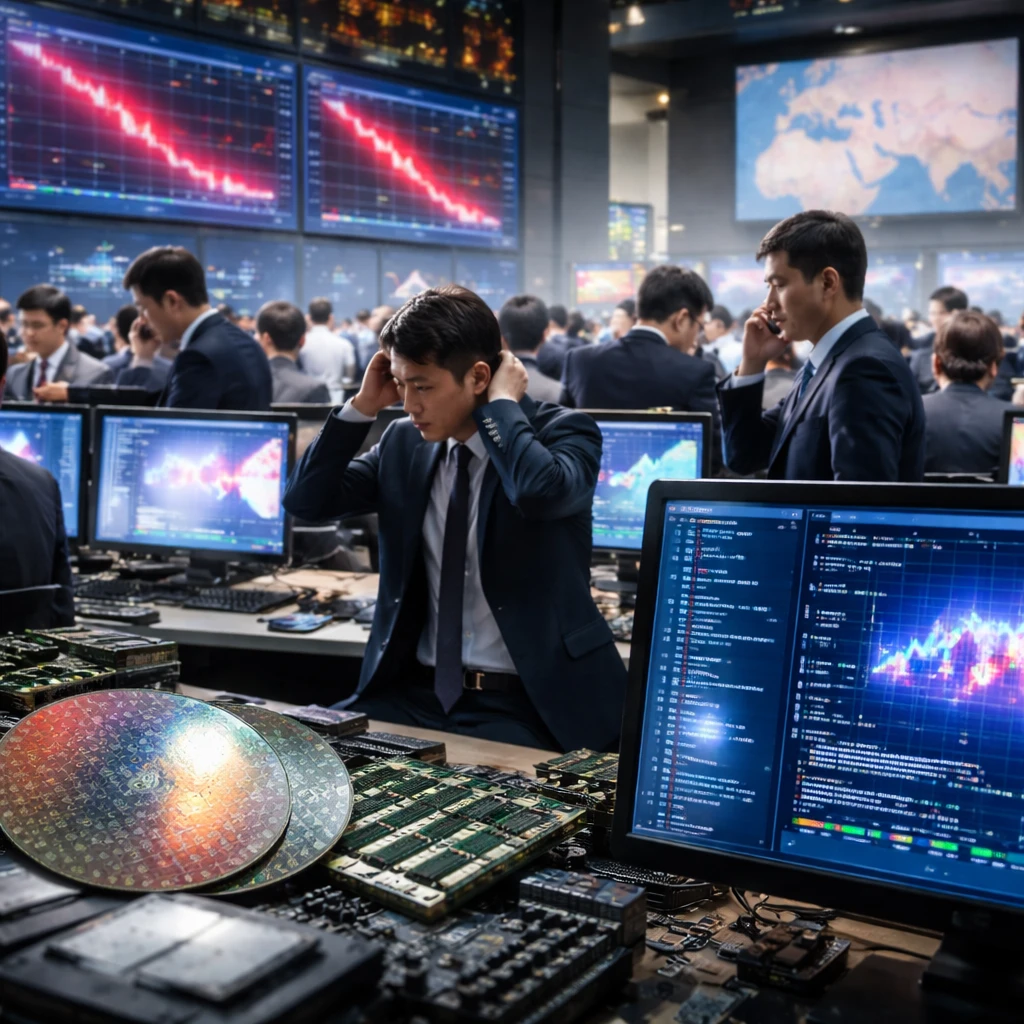
Asian equities moved in a muted to softer range on Friday as traders digested a mixture of short-term relief and lingering uncertainty. U.S. President Donald Trump’s decision to postpone planned strikes on Iran provided some respite, but investors remained cautious amid signs that the broader conflict may not be abating.
Markets in the region also followed a cautious lead from Wall Street, where stocks fell sharply on Thursday amid heightened ambiguity over the Iran situation, including Tehran ruling out direct negotiations with Washington. Still, S&P 500 futures recovered modestly, rising 0.3% by 22:17 ET (02:17 GMT) after the president postponed a deadline for strikes on critically important Iranian energy infrastructure by over a week and signalled progress in talks with Tehran.
South Korea bears the brunt
South Korea’s KOSPI underperformed major Asian peers, plunging as much as 3% on Friday amid an extension of losses in local chipmaking stocks. Two of the nation's largest memory producers, Samsung Electronics Co Ltd (KS:005930) and SK Hynix Inc (KS:000660), declined about 4% and 4.5%, respectively, on the day as concerns persisted over AI-driven demand for memory.
Those declines mirrored additional overnight weakness in U.S.-listed chip firms after Alphabet’s Google introduced a new compression algorithm, TurboQuant. Google researchers said the algorithm could greatly reduce working memory requirements for AI programs, a development analysts flagged as a potential headwind to long-term memory chip demand.
For the week, Samsung and SK Hynix were trading down 13.2% and 11%, respectively. Those cumulative losses left the KOSPI on track for an 8.1% weekly decline, positioning it as the worst-performing major Asian index for the period.
Regional markets show mixed moves but head for weekly losses
Beyond South Korea, broader Asian stock markets were mostly subdued on Friday, with many regional bourses set to finish the week lower as uncertainty tied to the Iran conflict persisted.
- Japan’s Nikkei 225 fell 0.8% and the TOPIX declined 0.3% on the day, leaving the Nikkei down about 0.3% for the week.
- Mainland China’s Shanghai Shenzhen CSI 300 and the Shanghai Composite both inched higher on Friday, but each remained down for the week by roughly 1.7% and 1.5%, respectively.
- Hong Kong’s Hang Seng added 0.2% on the session but was down about 1.4% across the week.
- Australia’s ASX 200 slipped 0.4% on Friday, though it retained small weekly gains helped by local energy names benefiting from higher oil prices.
- Singapore’s Straits Times rose 0.3% on Friday and was marginally down on the week.
- Futures for India’s Nifty 50 climbed 0.4%; the underlying index had gained about 0.8% for the week after suffering four straight weeks of heavier losses previously.
Conflict developments and market implications
The week featured volatile trading as markets reacted to a stream of mixed messages about progress toward de-escalation. U.S. officials publicly cited progress in negotiations, but Iranian responses largely rejected those assertions even as Tehran said it was reviewing a 15-point ceasefire proposal from Washington. On Thursday evening, President Trump said he would extend a deadline for U.S. strikes on Iran’s energy infrastructure by 10 days and noted some progress in talks aimed at ending the hostilities.
Despite those statements, reports of continued attacks in the Middle East persisted into early Friday, underscoring that military activity in the region had not definitively subsided. That combination of intermittent diplomatic signals and ongoing hostile incidents left investors wary, keeping broader equity sentiment under pressure.
What is clear and what remains uncertain
What is clear from the market reaction is that two forces are currently shaping investor behaviour in Asia: geopolitical risk tied to the Iran conflict and a technology-specific concern around artificial intelligence reducing demand for memory capacity. The latter is tied to recent technical developments in AI model efficiency, which analysts say could meaningfully influence longer-term chip demand.
What remains uncertain is how durable the recent signalled progress in talks will prove and whether attacks in the Middle East will taper. Those unknowns will likely continue to be primary drivers of near-term volatility in Asian equities.
Note: This article reports market moves, company stock changes and official statements as described above. It does not speculate beyond the information presented here.