
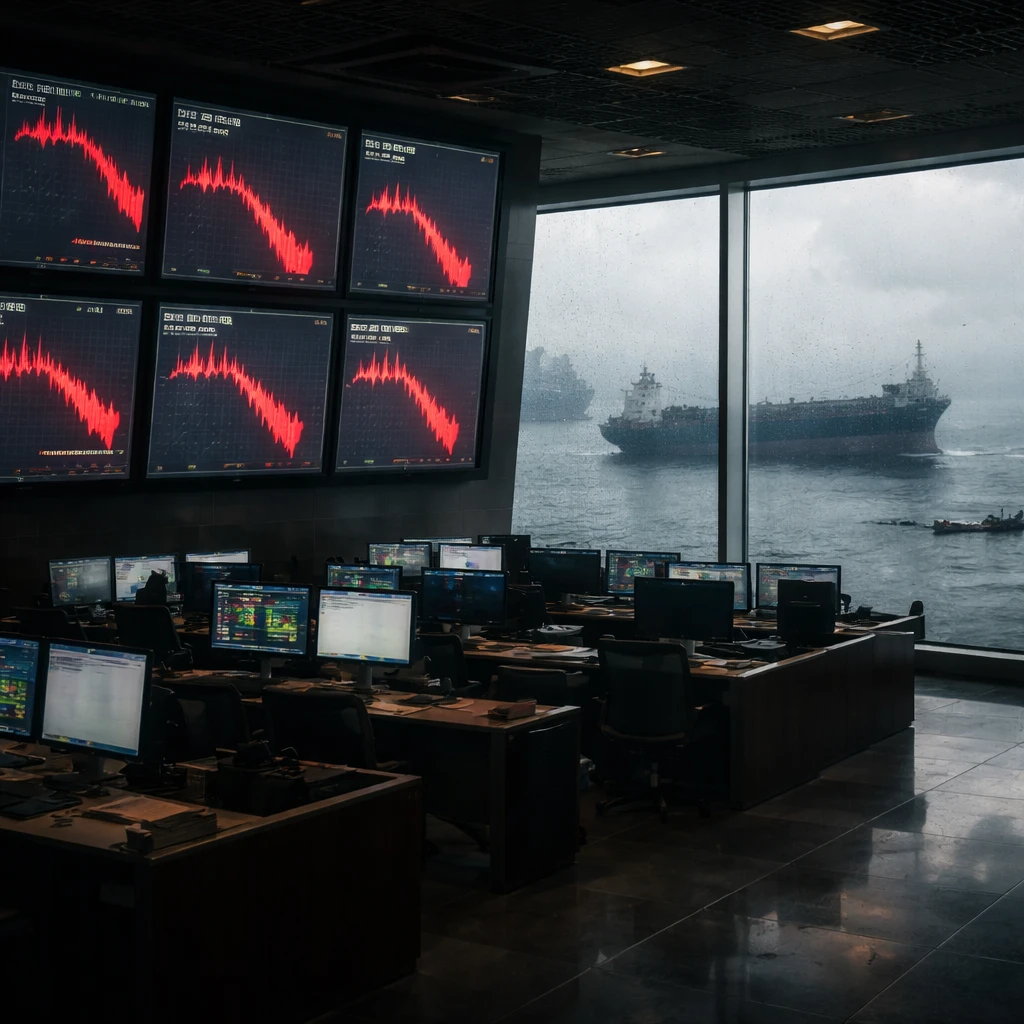
Asian stock markets were subdued on Thursday, with most indices either flat or modestly down as uncertainty over a tenuous U.S.-Iran ceasefire and a rebound in oil prices combined to sap investor risk appetite.
Regional trading gave back some of the prior session's gains. The ESM26 fell 0.2% as market participants reacted to mounting questions about the terms of a Pakistan-brokered ceasefire between the U.S. and Iran.
Oil prices moved off earlier losses after the Strait of Hormuz - a crucial maritime route for oil and gas supplies to Asia - showed scant signs of reopening following actions that had effectively blocked the channel. The rebound in crude kept traders cautious, given the waterway's importance to regional energy flows.
Market performance by benchmark
- South Korea's KOSPI was the weakest performer in the region, falling 1.3% as chipmaking stocks reversed recent gains.
- Japan's Nikkei 225 fell 0.4% and the TOPIX dropped 0.6%.
- Mainland Chinese indexes also retreated, with the Shanghai Shenzhen CSI 300 and the Shanghai Composite each down about 0.5%.
- Hong Kong's Hang Seng slipped 0.5%, pressured in part by a 3% decline in Alibaba Group (HK:9988) after Jefferies lowered its price target on the company.
Investors grew more cautious after Iranian officials described the ceasefire talks as "unreasonable" and demanded that Lebanon be included in their proposal - a demand that the U.S. and Israel largely denied. Reports indicated that only a very small number of ships had passed through the Strait of Hormuz since the ceasefire announcement, suggesting the channel remained largely closed.
U.S. and Iranian representatives are scheduled to meet in Pakistan later this week, but the principal agenda and further details on any ceasefire terms remain largely unclear, leaving market participants with limited clarity to price in future developments.
OCBC analysts observed that the initial ceasefire news had triggered a risk-on rally, but cautioned that "fragile negotiations and lingering geopolitical risks" have constrained further upside in markets. They also highlighted that continued monitoring of oil flows through the Strait of Hormuz will be central to market focus over the coming days.
Elsewhere in the region, broader markets showed mixed movement amid elevated caution. Singapore's Straits Times index fell 0.3%, while Australia's ASX 200 was effectively unchanged. Futures for India's Nifty 50 edged down slightly after the index had rallied nearly 4% on Wednesday; India is among the countries most exposed to disruptions in oil and gas supplies resulting from the Iran conflict.
Overall, markets remained on edge as geopolitical uncertainty and the status of energy transit routes continued to influence investor positioning across Asian equities and commodity-linked sectors.