
Overview
The four astronauts of the Artemis II mission are underway on the return leg of a milestone flight, speeding toward Earth inside the gumdrop-shaped Orion crew capsule known as Integrity. Mission planners have scheduled a sequence of events that begins with the capsule separating from its service module and culminates in a parachute-assisted splashdown in the Pacific Ocean off the coast of Southern California.
The crew - three U.S. astronauts and one Canadian - are expected to be afloat in the capsule shortly after 8 p.m. ET (0000 GMT) as they arrive at the designated splashdown zone near San Diego. The homebound leg follows a 10-day mission that launched from Cape Canaveral on April 1 aboard NASA’s Space Launch System rocket.
Flight profile and timeline
The final sequence of the mission begins with the physical separation of Orion’s crew module from its service module. After separation, the capsule will begin its descent toward the top of Earth’s atmosphere and then re-enter at very high speed. Mission planners expect a six-minute period of radio silence while the capsule is passing through the most intense portion of re-entry, followed by parachute deployment and splashdown.
NASA flight rules call for several course-correction burns using Orion’s jet guidance thrusters to achieve the precise descent trajectory and re-entry angle required. The crew was scheduled to complete the third and final propellant burn roughly five hours before the planned splashdown. From the moment Orion reaches the top of the atmosphere, less than 15 minutes pass before parachutes slow the capsule and it settles into the ocean.
Heat shield test and altered trajectory
A central engineering focus for the return is the performance of Orion’s heat shield. Engineers saw a higher-than-expected level of scorching and stress on the heat shield during an uncrewed test flight in 2022, prompting changes to this mission’s descent geometry. To reduce thermal loading - and the associated risk of the capsule overheating - NASA adjusted the re-entry trajectory for Artemis II.
Even with that recalibration, Orion will slam into the atmosphere at roughly 25,000 miles per hour, producing external temperatures approaching 5,000 degrees Fahrenheit. The modified final descent path has the trade-off of narrowing the size of the potential splashdown zone, limiting alternate landing options in the event of inclement weather at sea. As of Thursday, NASA reported favorable forecasts for its preferred splashdown area.
Crew and mission significance
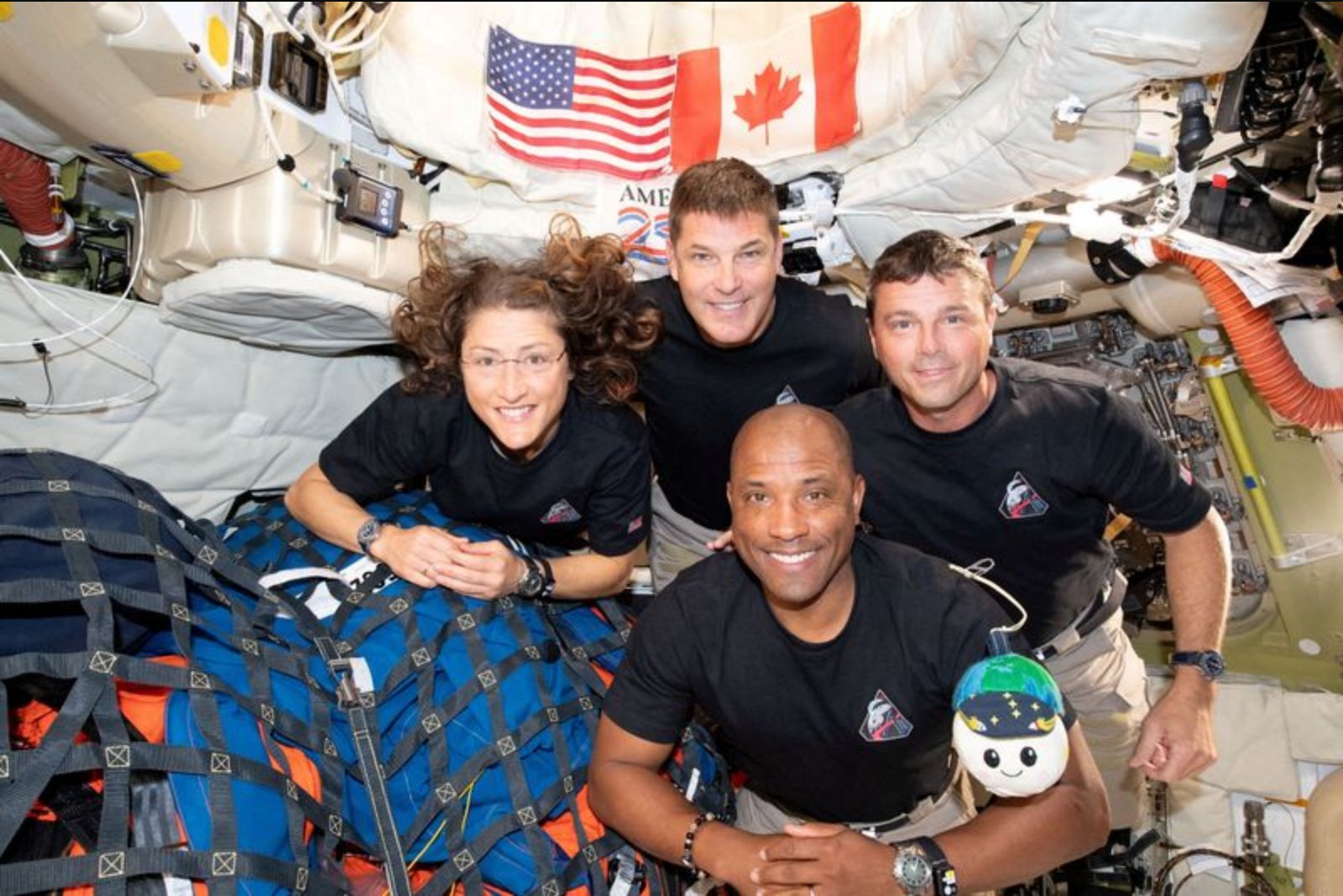
The crew of Artemis II includes Reid Wiseman, Victor Glover and Christina Koch of the United States, and Jeremy Hansen of Canada. Together they represent a set of firsts for modern lunar flight: they are the first people to fly in the moon’s vicinity since the Apollo missions of the 1960s and 1970s, and among them are the first Black astronaut, the first woman and the first non-U.S. citizen to participate in a lunar mission.
The flight built on the uncrewed Artemis I test in 2022 and served as an important dress rehearsal for future ambitions to place astronauts on the lunar surface later this decade. The Artemis program’s stated long-term objective is to build a sustainable presence on the moon as a step toward eventual human missions to Mars.
Operational recovery
Following splashdown, recovery teams will secure the capsule, hoist it onto a recovery vessel and assist the astronauts in exiting the spacecraft one at a time. NASA expects the capsule to be aboard the recovery ship and the crew assisted out approximately an hour after the splashdown event.
At the mission’s midpoint, the crew reached a maximum distance from Earth of 252,756 miles, a range that exceeded a previous human-flight record of roughly 248,000 miles set during the Apollo 13 mission in 1970.
Public response and context
The mission has unfolded against a backdrop of political and social turbulence, including a U.S. military conflict that has been unpopular domestically. For many observers worldwide, the flight reaffirmed technological achievement at a time when public trust in large technology companies has frayed. Opinion polling indicated broad public support for the aims of the mission.
What remains critical
Beyond the heat shield, the mission’s success hinges on achieving the planned descent path and re-entry angle through precise use of Orion’s maneuvering thrusters, the timely execution of parachute deployment and the effective performance of the recovery teams. The narrowed splashdown footprint means fewer alternate landing sites are immediately available should sea conditions worsen.
As the capsule makes its final approach, mission controllers, engineers and recovery crews will be focused on those interlocked technical and operational tasks that determine whether the flight concludes with the astronauts safely bobbing in the Pacific as planned.