
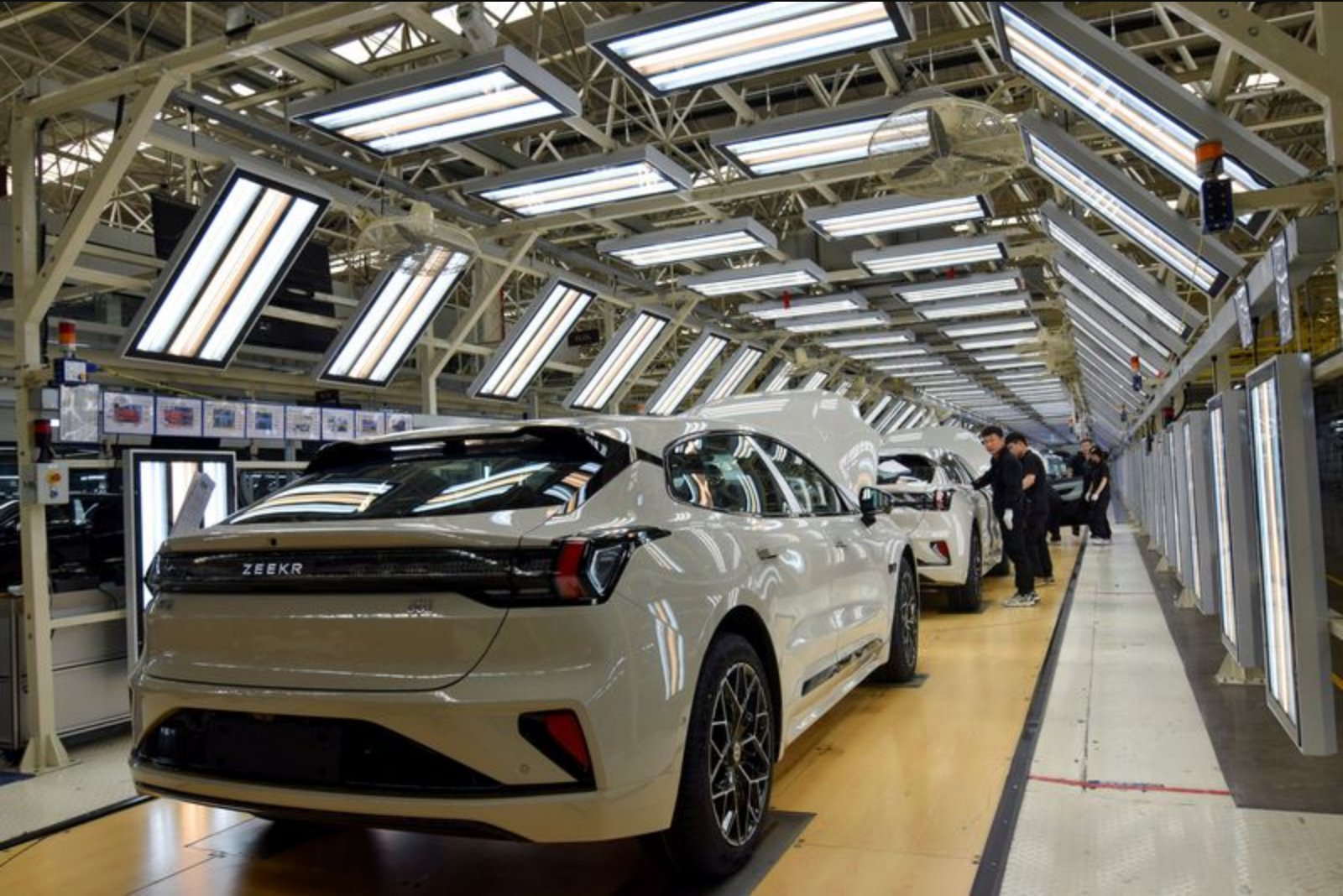
Sooren Moosavy, a 28-year-old Baltimore resident, is seeking a more affordable electric car and has narrowed his shortlist to three compact models produced by Chinese brands BYD, Geely and Zeekr. He is drawn by the vehicles' smaller footprints, plush interiors and low sticker prices, and says he would welcome the chance to test-drive or purchase one in the United States.
Moosavy's sentiment echoes a broader consumer curiosity as new vehicle prices in the U.S. climb toward an average of $50,000. More buyers are open to the idea of cheaper Chinese-made cars, even as U.S. policymakers and industry groups resist their entry.
In other parts of the world Chinese electric vehicles are already competing on price and feature sets. In markets such as Europe and Latin America, several Chinese EVs are sold for under $30,000 and frequently come equipped with amenities that include advanced driving assistance systems, compact convenience features and in some cases unconventional entertainment options.
Clint Simone, senior features editor at Edmunds, said he was surprised by the breadth of technology available at those price points after driving a number of Chinese models at the CES trade show earlier in the year. "The technology they offer for those lower price tags was astounding," he said.
Despite the apparent market appeal, Chinese-made cars face significant barriers to widespread distribution and ownership in the U.S. The federal government has effectively blocked the vehicles through tariffs that exceed 100%, citing concerns about data security and the protection of American jobs. Because of regulatory and trade policies, Chinese EVs cannot be purchased through normal dealer channels in the United States.
Canada has recently moved to lower tariffs for imports of Chinese EVs, cutting duties to 6.1% for an initial annual allowance of 49,000 vehicles, and Mexico is already importing the cars in volume while Chinese manufacturers look for local factory space. Those shifts have increased cross-border access for some consumers.
Political rhetoric around the subject is mixed. U.S. President Donald Trump told a Detroit audience in January that Chinese automakers could enter the U.S. market provided they employ American workers. Yet auto industry trade groups have urged government officials to keep Chinese carmakers out, citing competitiveness concerns. At a Ford Motor plant event in January, Republican Senator Bernie Moreno of Ohio said "as long as I have air in my body, there will not be Chinese vehicles sold in the United States of America."
China's embassy in Washington has dismissed critics' arguments, noting that Chinese-made cars have gained consumers' favor because of perceived quality and technological innovation.
Dealers and consumers show a mixture of interest and caution. Rhett Ricart, an Ohio-based dealer who sells brands including Ford, Chevrolet and Hyundai, indicated he believes customers would buy Chinese vehicles if they were available. But dealer surveys show reluctance to enable that availability. A recent Cox Automotive survey found just 15% of U.S. dealers supported the entry of Chinese auto brands into the domestic market, and only 26% trusted that those brands would meet U.S. safety standards.
Regulatory compliance is a central issue. One practical reason Chinese EVs cannot be owned permanently by many American buyers is that they may not meet U.S. safety rules. That regulatory gap reinforces dealer hesitancy and shapes public policy discussions.
At the consumer level, surveys reveal mixed but notable openness. A Cox Automotive survey of 802 U.S. consumers who expect to buy a car within two years found that 49% rated Chinese cars as offering very good or excellent value, and 40% expressed support for Chinese brands selling in the U.S. market. Separate polling from The Harris Poll and Cox showed consumers also have reservations about data security and the effect on U.S. businesses.
Enthusiasts and independent reviewers have amplified interest in Chinese models. Rich Benoit, whose YouTube reviews of Chinese vehicles attract millions of views, told reporters the primary attraction is price. "That's what a lot of people are looking for: efficient, quiet and low cost," he said. He added that many buyers simply need reliable transportation rather than high-performance vehicles. Benoit is considering buying a BYD in Mexico and driving it across the border, calling that the only current way to own a Chinese EV in the United States.
The result is a curious disconnect: a segment of American buyers who are eager for lower-cost, well-equipped electric cars remain unable to legally and easily acquire them at home. While Chinese automakers expand exports and secure footholds in other countries, regulatory, political and dealer-level resistance in the United States keeps the cars largely out of reach.