
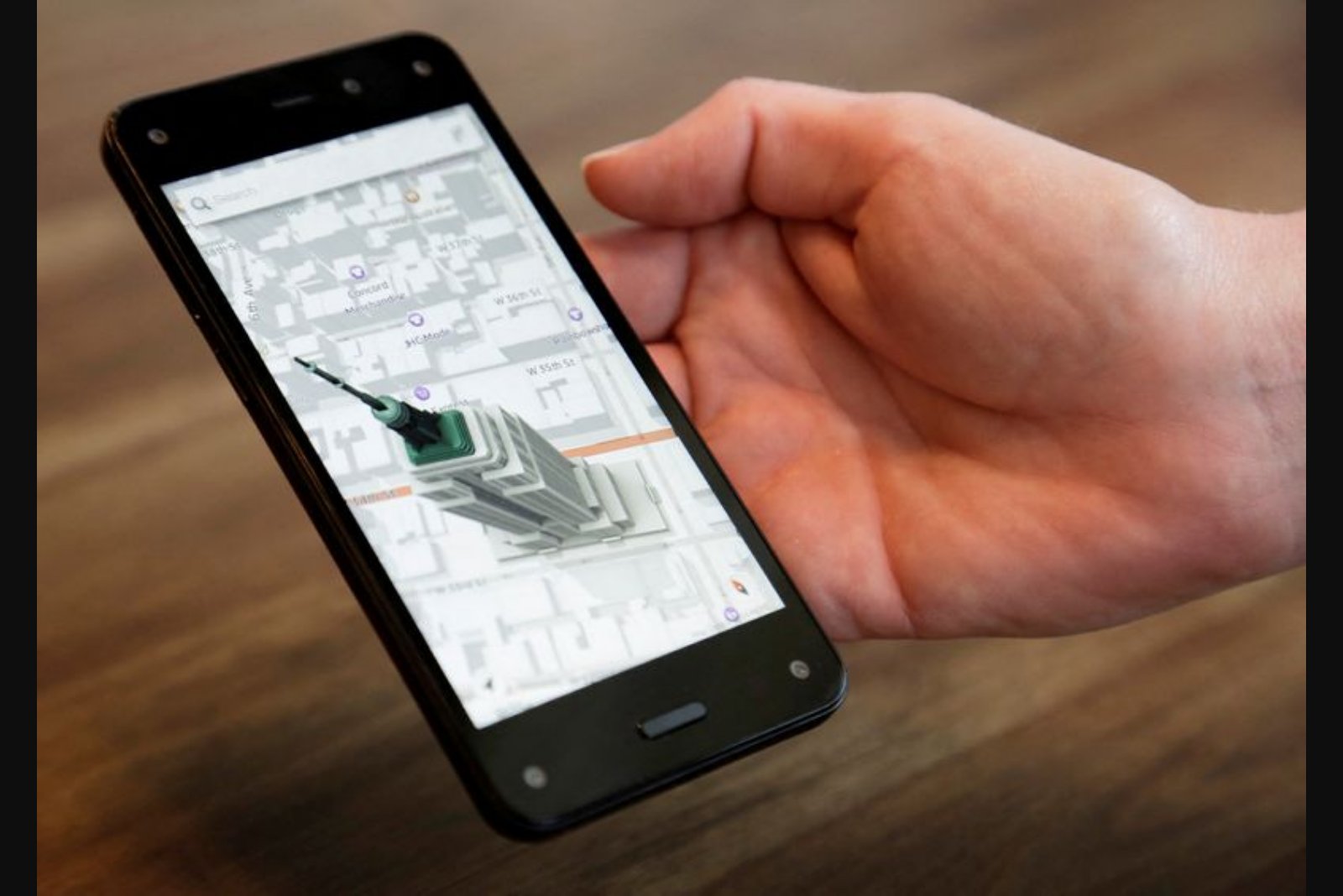
SAN FRANCISCO, March 20 - Amazon is once again working on a smartphone, reviving an ambition that dates back to its 2014 Fire Phone - a product that was discontinued after roughly 14 months and left the company with a $170 million charge for unsold inventory. The new internal project, known inside the company as "Transformer," is being built inside Amazon's devices and services unit and is intended to pair mobile personalization with the company's Alexa voice assistant and its consumer services.
The effort brings together several strands of Amazon's longstanding strategic priorities: better integration of commerce and content, richer data collection from mobile usage, and the broader push toward voice- and AI-driven experiences. According to four people who have spoken about the project but declined to be named because they were not authorized to discuss internal plans, Transformer would function as a mobile extension of Amazon's ecosystem - making shopping, streaming Prime Video and Prime Music, and ordering from food partners like Grubhub easier and more seamless throughout a customer's day.
Those familiar with the initiative say that a major emphasis has been the inclusion of artificial intelligence capabilities directly on the device. The idea is to reduce or remove friction associated with traditional app stores that require users to download and register applications before using them. Alexa is expected to be a central feature of any phone that emerges from the Transformer project, though sources said Alexa would not necessarily be the phone's operating system.
Many specifics about Transformer are not publicly determined. The people familiar with the project said they could not provide details on the device's expected price, the revenue Amazon hopes a phone might generate, or the total financial commitment the company has made. They also cautioned that the project timeline remains unclear and that the venture could be canceled if corporate strategy shifts or fiscal constraints arise. An Amazon spokesperson declined to comment for this story.
The announcement of renewed smartphone ambitions reawakens memories of Amazon's first attempt. The 2014 Fire Phone introduced features such as a camera-based shopping tool that could identify products and add them to customers' online carts. It ran Fire OS and lacked many of the popular apps available through the Android and iOS ecosystems. The handset also incorporated a complex multi-camera screen system to simulate 3D visuals, which consumed significant battery power and contributed to overheating. Despite being bundled with a free year of Amazon Prime at launch, the Fire Phone sold poorly; Amazon reduced its price from $649 unlocked to $159 before discontinuing the product and writing down unsold inventory.
Analysts and industry insiders caution that the company faces considerable obstacles if it hopes to persuade consumers to switch devices. Colin Sebastian, an analyst at R.W. Baird, noted that a prior failure does not prevent a repeat attempt but emphasized the difficulty of convincing users to leave established phones and app stores. "Amazon will have to give consumers a compelling reason to switch phones and people are pretty attached to the existing app stores," he said.
Market conditions amplify that challenge. Apple and Samsung remain dominant players, together accounting for roughly 40% of global sales last year according to Counterpoint Research. At the same time, industry forecasters expect smartphone shipments to decline sharply - with the largest drop on record projected for 2026, when shipments are forecast to fall 13% as rising memory chip prices push up device costs, according to International Data Corporation (IDC).
Amazon's resources in cloud computing and services are central to its case for re-entering the handset market. Its AWS business provides a dominant global cloud infrastructure, and company leaders have been eager to address perceptions that Amazon has lagged in delivering AI consumer applications as competitors move aggressively. Internally, Alexa underwent a multi-year AI-led revamp prior to a new launch in 2025, and Amazon sees Alexa as a critical component of its consumer-facing strategy.
The Transformer project is being developed by ZeroOne, a year-old group inside Amazon's devices organization charged with producing "breakthrough" gadgets. That unit is led by J Allard, a former Microsoft executive associated with products such as the Zune music player and the Xbox gaming console. Panos Panay, head of Amazon's devices and services unit, has been working to return the division to profitability after years of losses. People working on internal hardware projects also referenced a forthcoming tablet that will, for the first time, run Android rather than Fire OS and could be priced around $400.
People with knowledge of Transformer said work is still at the development stage. Amazon has reportedly considered several form factors, ranging from a conventional smartphone to a pared-down "dumbphone" intended to limit features and address concerns about screen time. The company has explored the idea of a simpler handset that could be positioned as a secondary device to complement existing iPhones or Samsung phones, rather than attempting to displace them completely.
One source of inspiration for Amazon's minimal-device concept is the Light Phone, a product priced at about $700 that offers a restricted feature set - camera, maps, calendar - and intentionally omits an app store or full web browser. Industry data cited by people familiar with the project indicate that more limited-capability handsets such as feature phones and some flip phones accounted for 15% of global handset sales in 2025, according to Counterpoint Research.
There is also precedent - and cautionary tales - for AI-first hardware attempts. Recent entrants that have tried to embed generative AI or AI-driven assistants into new device categories include the Humane AI Pin and the Rabbit R1 assistant. Both sought to provide AI services without users needing to log in to a computer or phone, but neither achieved strong critical reception, and the Humane Pin was discontinued. Those outcomes underscore the execution risks facing any company attempting to roll out AI-native devices that depart from the app-driven visual language of traditional smartphones.
Amazon's internal ambitions extend beyond hardware to an ecosystem play: a phone that integrates commerce, content and cloud services could deepen customer engagement and provide Amazon with fresh device-level data linked to purchase history and content preferences. Francisco Jeronimo, vice president of data and analytics at International Data Corporation, wrote in a research note that Amazon "brings together a powerful services ecosystem spanning commerce, content, cloud, and an existing AI foundation with Alexa, along with deep expertise in data-driven customer engagement." He added that the window of opportunity for a successful new entrant is small, because other major players are pursuing similar directions.
Operationally, Amazon has not yet engaged wireless carriers for the Transformer project, according to people familiar with the work. That suggests the company is still shaping product strategy and exploring different go-to-market approaches. The people said Amazon has considered a truly minimal handset that could be marketed primarily as a secondary device for specific users - for example, white-collar workers who want a business phone separate from a personal device, or parents seeking a device for a teenager with limited access to social media.
The Transformer initiative sits at the intersection of multiple corporate priorities: expanding AI consumption among customers, extending Alexa into more personal touchpoints, and finding new pathways to monetize Amazon's commerce and content offerings. Yet the combination of past hardware missteps, fierce incumbent competition, ongoing sector headwinds such as falling shipments and rising component costs, and the mixed reception of prior AI-centric hardware prototypes raises important questions about viability.
For now, Transformer remains an internal project. The company has not released concrete product details or a timeline, and its future may hinge on strategic choices and financial calculations still being weighed by Amazon's leadership.
Summary: Amazon is developing a smartphone project codenamed Transformer within its devices and services unit, aiming to fuse AI personalization and Alexa integration with commerce and media services. Key commercial details and timing remain unclear and the project could be canceled. The plan follows Amazon's 2014 Fire Phone failure and takes place amid a broader industry pivot toward AI-embedded hardware and strong competition from Apple and Samsung.
Key points:
- Amazon's Transformer is intended to be an AI-enabled mobile personalization device that links with Alexa and Amazon services to streamline shopping, media consumption and food ordering.
- The initiative is led by ZeroOne within Amazon's devices unit and overlaps with efforts to make Alexa central to consumer-facing services following a multi-year AI revamp completed before its 2025 relaunch.
- The project faces a challenging market backdrop - Apple and Samsung control about 40% of global smartphone sales, shipments are expected to fall sharply in 2026, and prior AI-native hardware efforts have struggled.
Risks and uncertainties:
- Execution risk from prior failures: Amazon's Fire Phone was discontinued after about 14 months, left unsold inventory that cost the company $170 million, and suffered from poor app support and hardware issues.
- Market and competitive pressure: Incumbent smartphone makers hold sizable market share and other large technology firms are racing to develop AI-embedded devices, narrowing the potential window for a new entrant.
- Project viability and timing: The Transformer team's timeline is unclear, pricing and revenue goals have not been disclosed, and the project could be abandoned if strategic priorities or financial considerations change.