
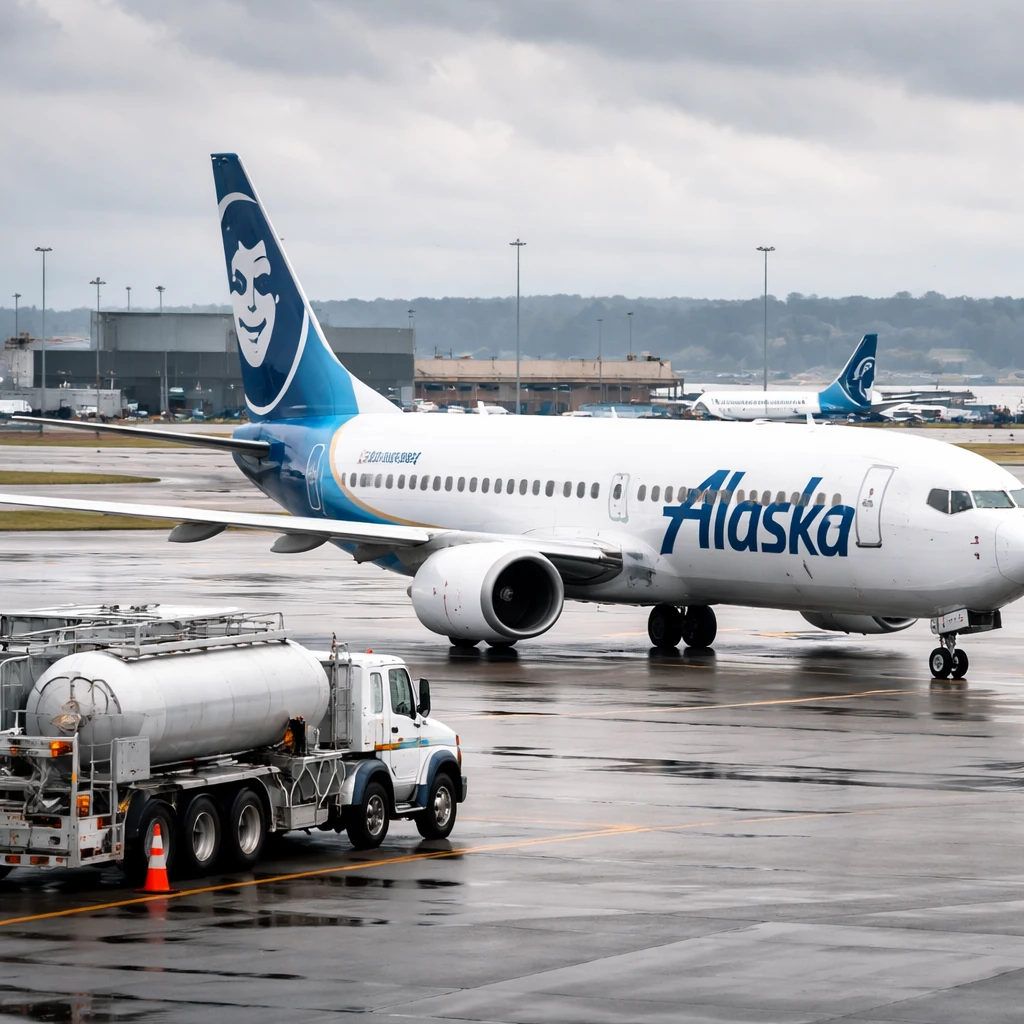
Alaska Airlines has released a cautious financial forecast, anticipating a larger first-quarter loss than initially expected and setting an annual profit outlook below Wall Street consensus. The Seattle-based airline's adjusted loss per share for the first quarter is projected to range from 50 cents to $1.50, compared with analysts' estimates of a 64-cent loss, signaling a challenging start to the year.
For the full fiscal year, Alaska Airlines forecasts earnings per share between $3.50 and $6.50. The midpoint of this range falls short of analysts' average projection of $5.54, based on LSEG data. This tempered outlook stems from factors including seasonal demand fluctuations, the unpredictability of fuel prices, and broader economic risks that continue to influence market dynamics.
In a detailed discussion, Chief Financial Officer Shane Tackett highlighted that the company is adopting a conservative stance on guidance following the volatility experienced during the prior year. Contributing to the instability were significant shifts in demand caused by sweeping U.S. tariffs and the protracted federal government shutdown, the longest in U.S. history, which negatively impacted the airline industry at large.
This cautious approach aligns with similar downward forecast adjustments made by larger competitors such as Delta Air Lines and United Airlines, both reporting full-year outlooks under Wall Street targets. Tackett noted that if market conditions remain consistent "the full-year results could meet the high end of the forecast range," emphasizing that sustaining current momentum is essential without necessitating improvement.
On the demand front, Alaska Airlines is beginning to recover from a substantial revenue loss caused by booking slowdowns last year, which Tackett quantified at approximately $500 million. Since early January, passenger demand has surged with ticket yields exceeding those from the previous year. Corporate travel bookings for this quarter have increased by about 20 percent year-over-year, notably within sectors like technology, manufacturing, and finance. Additionally, growth in loyalty program revenue has been positive, and main cabin ticket revenue—previously lagging across the industry—is projected to reach positive growth within the quarter.
The resurgence in bookings predominantly involves travelers who had postponed travel plans but possess the financial means to resume flying. However, the airline's first-quarter financial performance will not fully reflect this uptick as much of the quarter’s schedule was arranged prior to the January surge in demand, resulting in an estimated $50 million to $100 million of potential revenue left unclaimed.
Tackett elaborated, "The demand wasn’t as strong a month ago when we booked the first quarter compared to what we’re seeing today." This timing disconnect means that although current demand trends are favorable, they will not entirely offset early quarter limitations.
A further challenge for Alaska Airlines lies in its vulnerability to West Coast fuel refining margins. Tackett indicated that a 10-cent change in fuel prices could modify annual earnings per share by roughly 75 cents, illustrating significant earnings sensitivity to fuel cost fluctuations. This has a meaningful impact considering the airline’s operational concentration in West Coast markets.
The first quarter traditionally represents a weak season for Alaska, compounded now by Hawaiian Airlines' similar seasonal profile, as both carriers continue integrating their networks. Additionally, the company is contending with higher labor and real estate expenses that from last year onward have increased operational costs.
Despite these pressures, Alaska Airlines' fourth-quarter earnings surpassed expectations, registering 43 cents per share against an anticipated 12 cents per share by analysts, suggesting pockets of financial resilience.