
Global air travel remains severely disrupted following the escalation of conflict in Iran, which led to the closure of major Middle Eastern air hubs such as Dubai, Doha and Abu Dhabi and left tens of thousands of passengers stranded. Carriers around the world have announced an array of cancellations and reduced services; below is a catalogue of those changes, presented in alphabetical order by airline.
AEGEAN AIRLINES - Greece's largest carrier has cancelled flights to Tel Aviv, Beirut and Amman until April 22, and suspended services to Erbil and Baghdad until May 24. Its flights to Dubai are cancelled until April 19 and services to Riyadh are suspended until April 18.
AIRBALTIC - Latvia's airBaltic reported that all flights to Tel Aviv are cancelled until April 29. The airline also said all flights to Dubai have been cancelled until October 24.
AIR CANADA - The Canadian carrier has cancelled all flights to Tel Aviv until May 2 and all flights to Dubai until March 28.
AIR EUROPA - The Spanish airline has cancelled all flights to Tel Aviv until April 10.
AIR FRANCE KLM - Air France has cancelled flights to Tel Aviv and Beirut until March 28 and cancelled Dubai and Riyadh flights until March 24, including the March 25 departure from Dubai. KLM said its flights to Riyadh, Dammam and Dubai were suspended until May 17, and that flights to Tel Aviv were suspended until April 11.
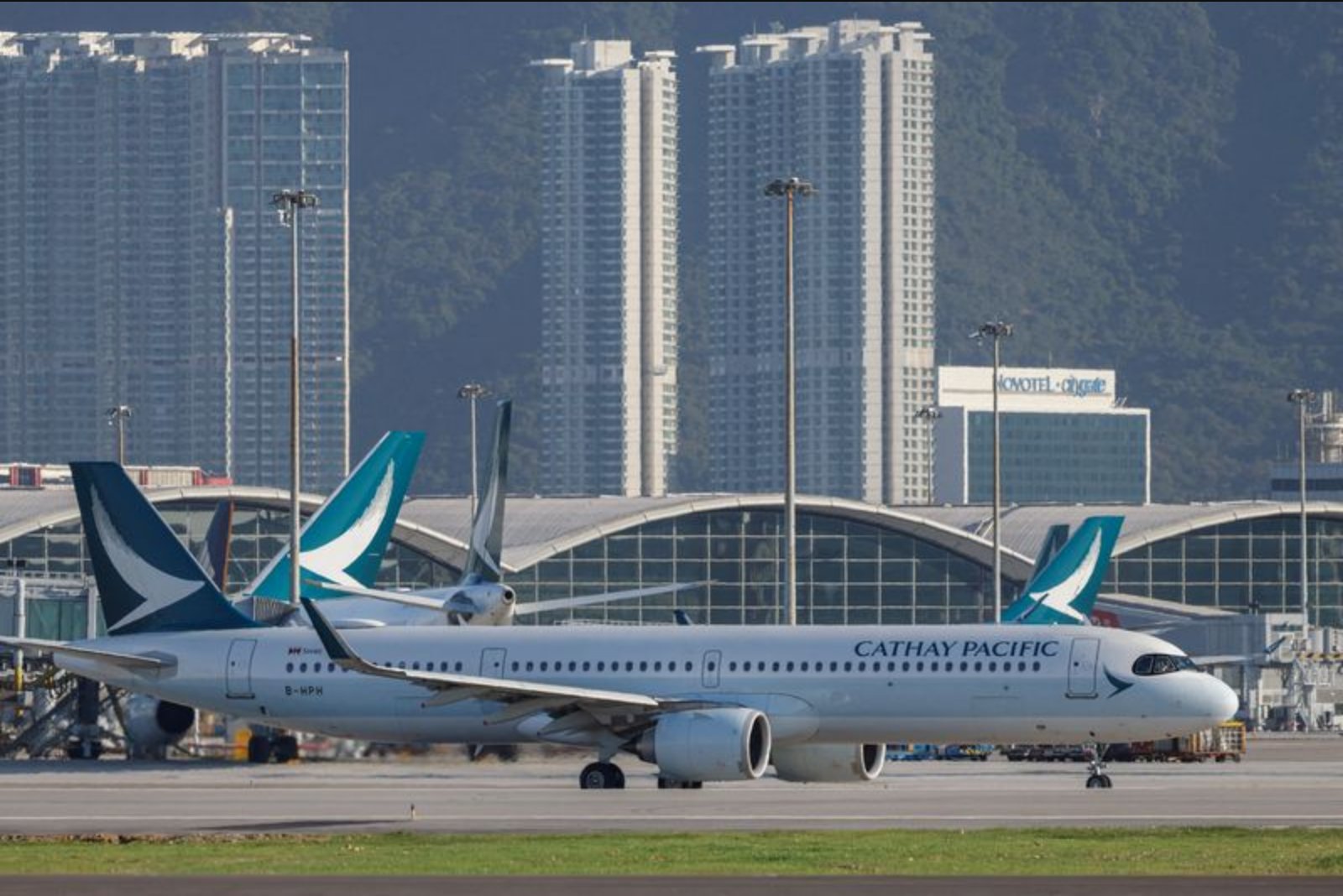
CATHAY PACIFIC - The Hong Kong carrier said it had cancelled all passenger flights to Dubai and Riyadh and had also cancelled cargo freighter flights to those destinations until April 30. The airline said it would add extra services to London to meet market demand between March 21 and March 28.
DELTA - The U.S. carrier cancelled flights from New York to Tel Aviv until May 31 and flights from Tel Aviv to New York until June 1. Delta said the planned restart of its Atlanta-Tel Aviv service has been delayed, with flights to Tel Aviv paused until August 4 and flights from Tel Aviv paused until August 5.
EL AL ISRAEL AIRLINES - The Israeli carrier said operational constraints currently prevent it from operating regular flights from Israel, except in rare exceptional cases. It said it is working to return passengers home within existing limitations and called on authorities to open Ramon Airport near Eilat.
EMIRATES - The UAE airline said it was operating a reduced flight schedule following a partial reopening of regional airspace.
ETIHAD AIRWAYS - Etihad said it was operating a limited commercial flight schedule between Abu Dhabi and a number of key destinations.
FINNAIR - The Finnish carrier cancelled its Dubai flights until March 29 and said Doha flights would be cancelled until July 2. Finnair added that it would continue to avoid the airspace of Iraq, Iran, Syria and Israel.
FLYNAS - Saudi Arabian budget carrier Flynas extended suspensions of flights to Dubai, Abu Dhabi, Sharjah, Doha, Bahrain, Kuwait, Iraq and Syria until March 31.
IAG - IAG-owned British Airways extended cancellations of flights to Amman, Bahrain, Dubai and Tel Aviv until May 31 and suspended services to Doha until April 30. The group said it was adding flights to Bangkok and Singapore. Flights to Abu Dhabi remain suspended until later this year.
INDIGO - The Indian airline suspended operations to Doha, Kuwait, Bahrain, Dammam, Fujairah, Ras Al Khaimah and Sharjah until March 28.
JAPAN AIRLINES - Japan Airlines suspended scheduled Tokyo-Doha flights until March 31 and Doha-Tokyo flights until April 1.
LOT - The Polish carrier said all flights to Dubai were cancelled until March 28 and flights to Tel Aviv were cancelled until May 31. LOT also said flights to Riyadh were cancelled until April 30 and flights to Beirut were cancelled from March 31 to April 30.
LUFTHANSA GROUP - The German airline group, which includes Lufthansa, Austrian Airlines, Swiss, Brussels Airlines and ITA Airways, suspended flights to Tel Aviv through April 9 and suspended services to Beirut, Dubai, Amman, Erbil and Abu Dhabi until March 28. The group also suspended flights to Tehran through April 30 and flights to Riyadh until April 5 for operational reasons.
MALAYSIA AIRLINES - The Malaysian carrier suspended all flights to Doha until March 28.
NORWEGIAN AIR - The low-cost carrier said it now plans to resume flights to Tel Aviv and Beirut from June 15, rather than April 1 and April 4 as previously planned. Norwegian additionally said it had cancelled all flights to and from Dubai for the remainder of the winter season, up to and including April 8.
PEGASUS - Turkey's Pegasus Airlines cancelled flights to Iran, Iraq, Amman, Beirut, Kuwait, Bahrain, Doha, Dammam, Dubai, Abu Dhabi and Sharjah until April 13. Flights to Riyadh were cancelled until March 24.
QATAR AIRWAYS - The carrier said it would operate a revised, limited number of flights to March 28.
SINGAPORE AIRLINES - Singapore Airlines said it would extend the suspension of flights between Singapore and Dubai until April 30. It also said it would add services between Singapore and London Gatwick from March 31 to October 24 and add flights on the Singapore-Melbourne route from March 29 to October 24 to meet higher demand.
TURKISH AIRLINES - Turkish cancelled flights to the majority of its Middle East destinations until the end of March. SunExpress, a joint venture between Lufthansa and Turkish Airlines, cancelled flights to Dubai and Bahrain until March 23.
WIZZ AIR - The low-cost carrier suspended flights to Israel until March 29 and suspended flights to Dubai, Abu Dhabi, Amman and Jeddah from mainland European destinations until mid-September.
Separately, some coverage in industry commentary asked whether investors should be buying shares of LHAG. That coverage described ProPicks AI as evaluating LHAG alongside thousands of other companies using more than 100 financial metrics and noted past winners identified by the AI. It said the AI generates stock ideas based on fundamentals, momentum and valuation and can indicate whether LHAG is featured in current strategy sets. The paragraph referenced past winners and invited readers to explore whether LHAG is featured in ProPicks AI strategies.
The scale and duration of these disruptions remain tied to developments affecting regional airspace and the operational decisions of carriers. For now, passengers and freight customers face a shifting landscape of suspended services, with airlines revising networks, delaying restarts and introducing temporary replacements where possible.