
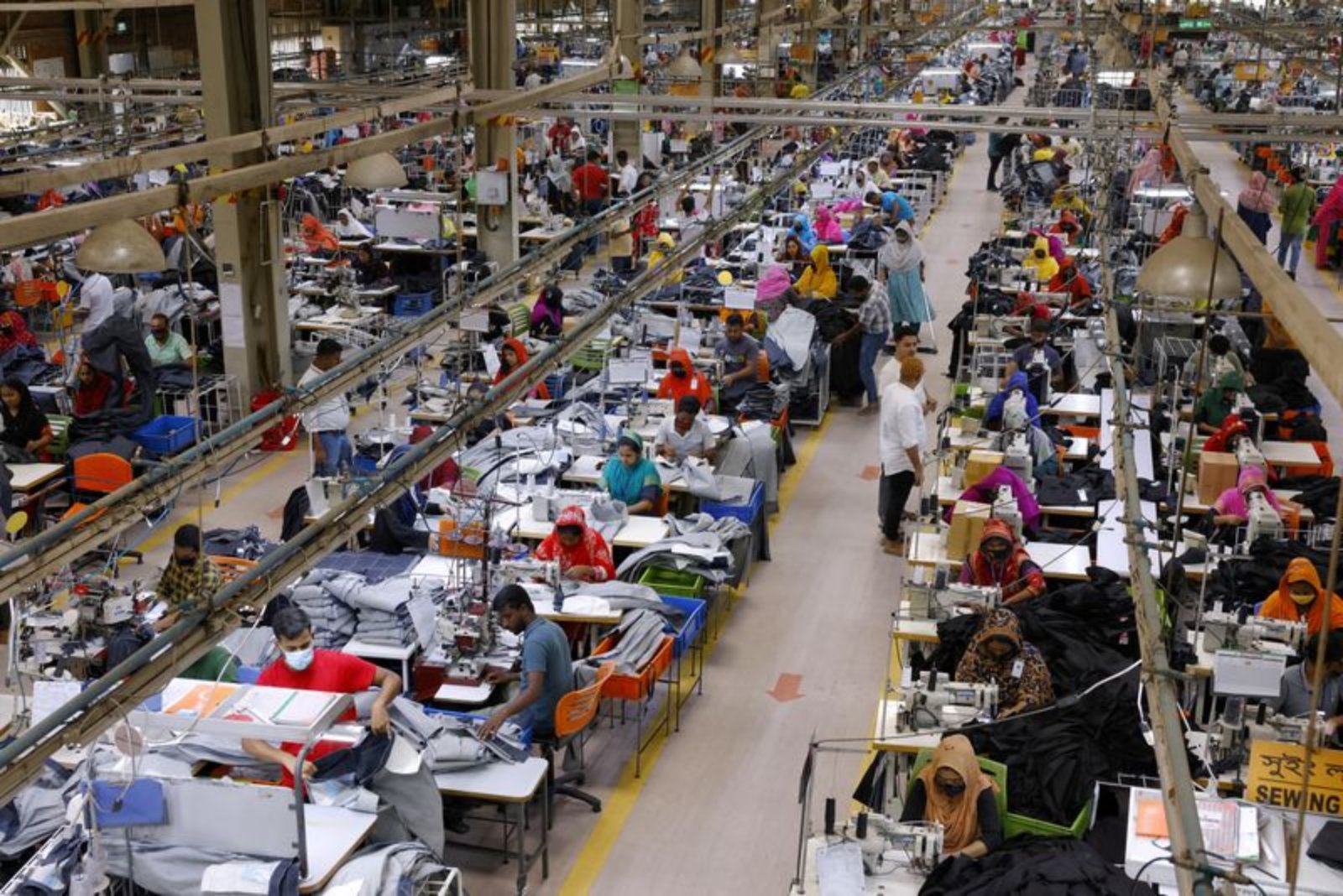
Shipments of clothing destined for major retailers, including pieces for Zara owner Inditex, are currently trapped at airports in Bangladesh and India, three manufacturers said, after airlines such as Emirates and Qatar Airways cancelled services amid the Middle East conflict. The interruption is creating immediate logistical headaches for South Asia's apparel industry, which supplies fast fashion brands worldwide with a steady cadence of T-shirts, dresses and jeans.
"Some of my apparel consignments are currently stuck at Dhaka airport," said Shovon Islam, managing director of Sparrow Group, a manufacturer whose European clients include Inditex, M&S, Next and Primark. "They were supposed to be flown to the UK via Dubai, but with operations at Dubai airport suspended, we are now in a very difficult position. We’re trying to figure out alternative routes, but none of them are simple or cost-effective," Islam added.
Most airspace in the Middle East remains closed since the conflict began last Saturday, a situation that forced Dubai's airport - one of the world's busiest - to shut down for several days and prompted airlines including Qatar Airways, Emirates and Etihad to cancel many flights. That cascade of cancellations has curtailed the usual cargo capacity available to South Asian exporters.
"Much of South Asia relies on Gulf airlines to send cargo, usually in commercial flights with some cargo-only aircraft," said Frederic Horst, managing director at Trade and Transport Group in Sydney. He estimated that more than half of Bangladesh's air cargo passes through the Gulf, and that 41% of India's air cargo follows the same route, with Emirates and Qatar Airways the most important carriers for those flows.
Inditex reported having 150 suppliers in Bangladesh, 122 in India and 69 in Pakistan in its 2023 annual report. Its most recent annual report does not disclose country-specific supplier numbers. The company did not respond to requests for comment about the disruption.
Freight costs spike as capacity tightens
With airlift capacity constrained, prices for available freight have risen sharply. Alexander Nathani, managing partner at Mumbai-based Kira Leder, which manufactures leather jackets for Inditex and for Austrian retailers Cigno Nero, Fussl and Wiedner, said freight charges to fly products from Mumbai to Austria have doubled because of the cancellations.
"The whole freight capacity is being blocked now on the airlines that are flying, so prices are increasing," Nathani said. He described one consignment in Pakistan that remains stuck at the factory and another from Mumbai that was accepted for Swiss Air on Monday, adding: "let’s hope they’re also flying and that it all goes."
Retailers contacted about the impact offered differing perspectives on their shipment modes. Primark, H&M and M&S said the majority of their shipments are transported by sea. Next did not immediately reply to requests for comment.
Sea routes could also be threatened
Industry representatives warned that disruption could extend beyond air corridors if key maritime channels are affected. "The suspension of cargo flights due to airspace closures in the Middle East is already disrupting air shipments," said Mohammad Hatem, president of the Bangladesh Knitwear Manufacturers and Exporters Association. He added that if the Strait of Hormuz - the strategic channel separating Iran from Oman and the UAE - remains closed, the cost of sea transport would also rise.
"All in all, we are worried - we can see another major crisis ahead," Hatem said, framing the concern that a prolonged interruption could translate into higher transport costs and extended delivery times for apparel exporters and their retail customers.
Advertisement-style note on investor queries
Should you be buying NXT right now? ProPicks AI evaluates NXT alongside thousands of other companies every month using 100+ financial metrics. Using powerful AI to generate exciting stock ideas, it looks beyond popularity to assess fundamentals, momentum, and valuation. The AI has no bias - it simply identifies which stocks offer the best risk-reward based on current data with notable past winners that include Super Micro Computer (+185%) and AppLovin (+157%). Want to know if NXT is currently featured in any ProPicks AI strategies, or if there are better opportunities in the same space? See Stocks