
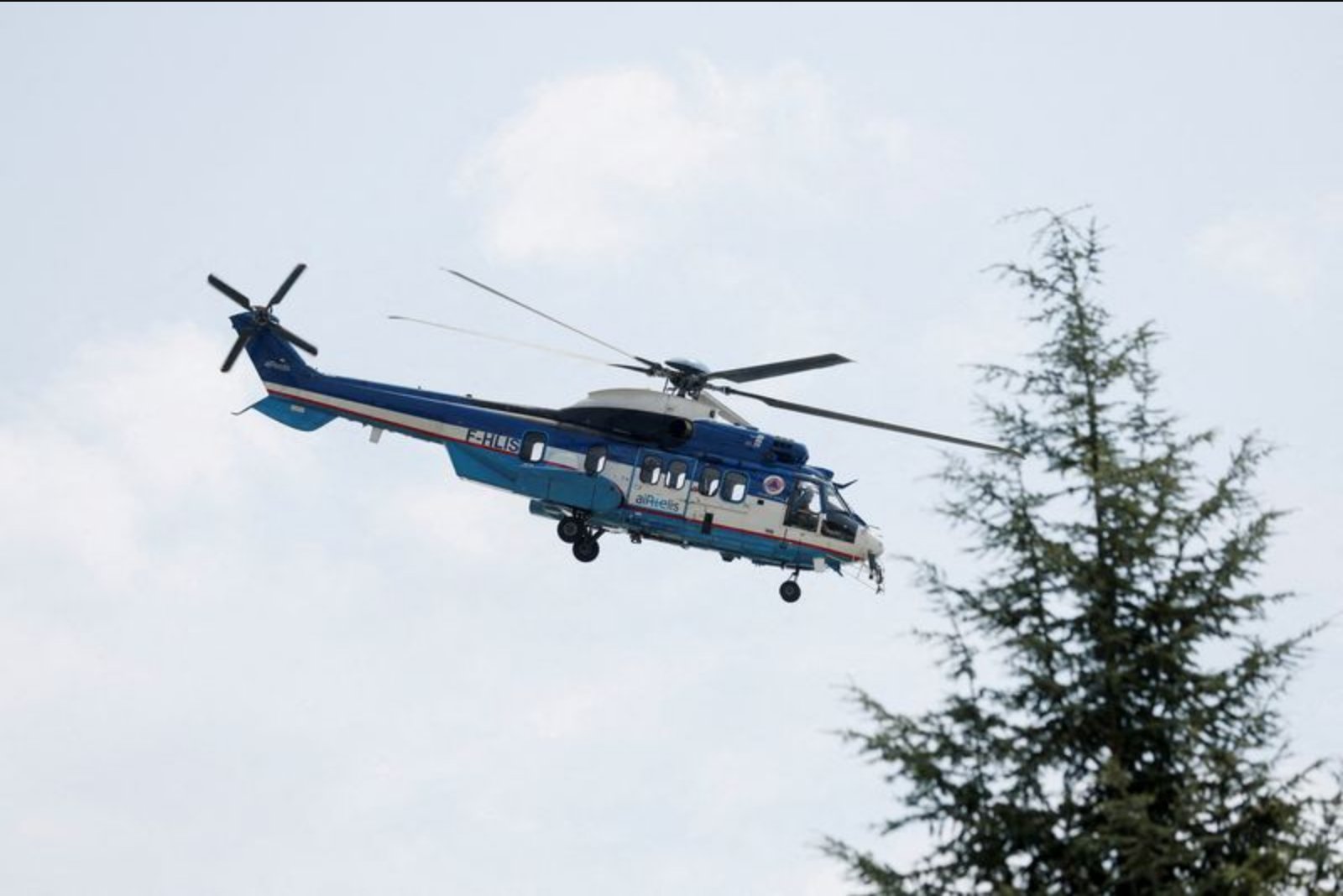
Rising crude prices have the potential to alter economics on marginal offshore fields and, in turn, boost demand for long-range helicopters such as the H225 Super Puma, the outgoing chief executive of Airbus Helicopters said.
The H225 was taken out of service for six months after a 2016 accident in which the main rotor blades separated, killing 13 people who were returning from a Norwegian oil platform. The model has since been redesigned and is now in use by offshore operators in Brazil, Nigeria and parts of Asia, but operators in the North Sea have largely avoided it.
"It is for clients to decide but I am convinced that in coming years it will continue to increase market share in the offshore market," the company chief said, describing a hopeful outlook for the type as oil prices climb. Those prices have surged since U.S.-Israeli attacks began on Iran at the end of February and are on track for a record monthly rise, the executive noted, a development that could make more costly offshore reserves financially attractive to develop.
The chief executive framed the potential revival of the H225 against a broader industry shift toward smaller rotorcraft, while suggesting that the H225 could nonetheless see renewed interest for missions requiring longer range - particularly as the Sikorsky S-92 fleet ages and approaches replacement cycles. He also pointed to continued activity in the H225 supply chain, partly driven by robust demand for military variants.
On the subject of suppliers, he said the company has seen improvement across its supply base, with the share of missing parts falling in 2025 to levels not seen in several years. He nevertheless cautioned that some suppliers still face difficulties and that Airbus Helicopters must remain able to respond to those challenges.
The chief executive, who completes an eight-year tenure at the head of the world’s largest civil helicopter maker this week, leaves after a period in which the company’s order book doubled. He will be succeeded by the firm’s strategy chief, Matthieu Louvot.
Research and development priorities received attention in the interview. Last year the company unveiled the H140, its first entirely new product in a decade and a platform that is expected over time to replace the H135, a model widely used by emergency services. The two types will continue to be sold alongside each other for the foreseeable future, the executive said.
A separate project known publicly for a time under an "X" moniker was described as having evolved into a potential successor to the sibling H145 model, with plans to build a demonstrator. Airbus Helicopters purchased land adjacent to its German factory - the site where the H135 and H145 are assembled - in late 2024. According to a 2025 German filing, that parcel offers "significant potential" for expansion or future projects.
The departing CEO declined to discuss so-called coded research projects in detail. "If there are names beginning with X, it’s possibly because they are not meant to be commented on externally," he said, underscoring the company’s discretion around early-stage work. At the same time he emphasized that demand for the current H145 remains strong.
He also described a broader uptick in R&D spending since 2023 following a prolonged lull, but warned that the company must be careful not to let new initiatives undercut demand for existing best-sellers such as the small H125, a long-serving workhorse in the fleet.
On the topic of what might trigger a replacement for the H125, he listed a combination of developments in engines, aircraft architecture and hybrid power as the most likely catalysts. He suggested the small rotorcraft segment is the one most likely to integrate electric solutions, but added that "I don’t think the conditions are there yet."
Reflecting on his time in the job, he said there was not a single day in his eight years in which he had not considered the successor to each product in the company’s range, signaling constant attention to product lifecycle and future requirements.
Contextual takeaway
Higher oil prices can improve the economics of developing more expensive offshore fields. That change in project viability could lift demand for longer-range transport solutions to support offshore platforms, potentially improving market prospects for the H225 Super Puma. At the same time, the manufacturer is balancing supply-chain recovery, expanding research and development, and careful product transition planning as leadership changes hands.