
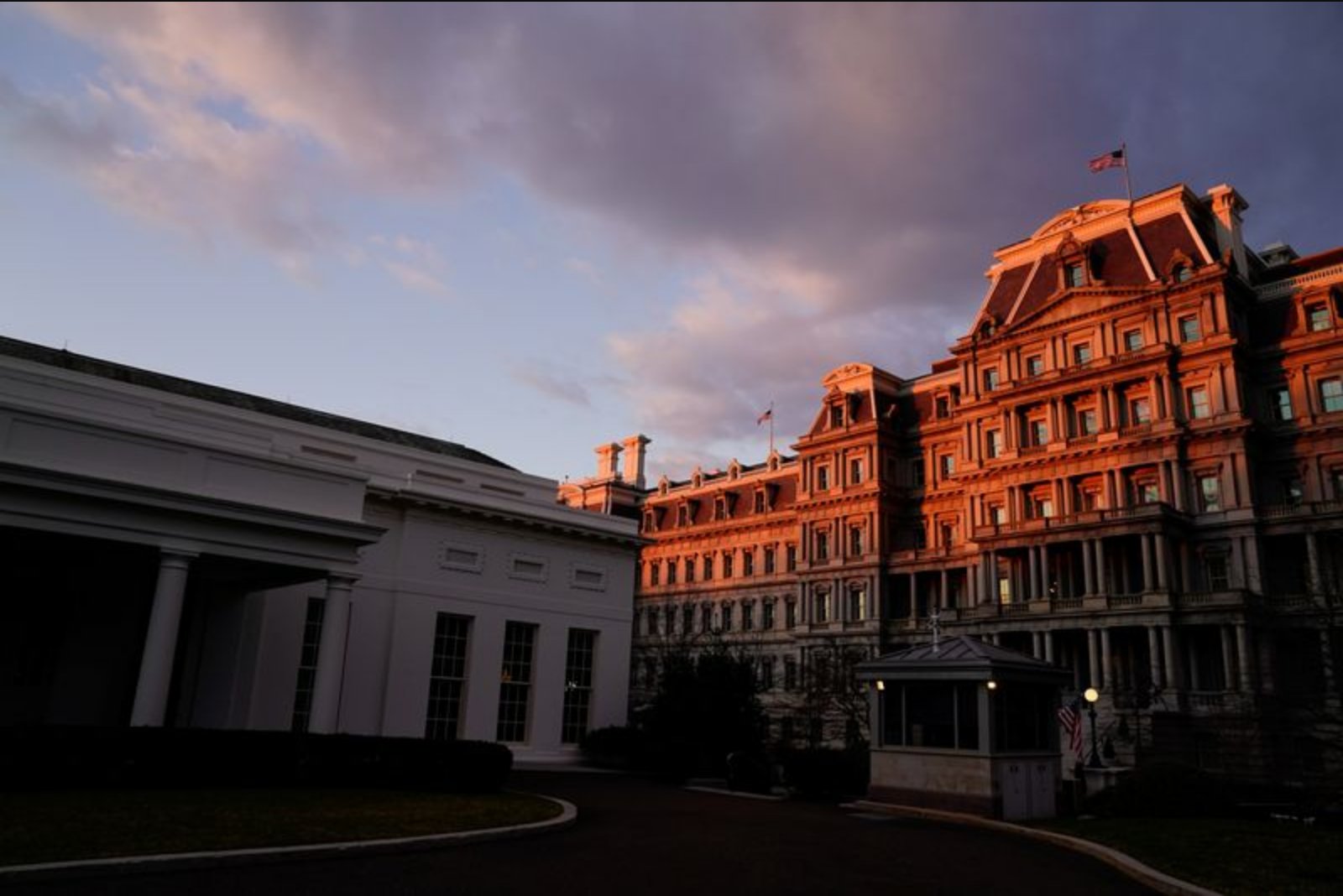
The White House has taken delivery of and installed a statue of Christopher Columbus on its grounds, a step that the administration frames as part of a broader effort to reshape national portrayals of history and culture. The figure now occupies a site on the north side of the Eisenhower Executive Office Building on the White House campus, according to a letter made public on Sunday.
In that letter to the Conference of Presidents of Major Italian American Organizations, the president thanked the group for presenting the statue to the government and described the gift as emblematic of a larger campaign addressing what he characterizes as "anti-American" ideology.
"The statue is now residing on the north side of the Eisenhower Executive Office Building on the White House campus," the president wrote. He also called Columbus "the original American hero and one of the most gallant and visionary men to ever walk the face of the Earth."
The installation is a reconstruction of a monument first unveiled by President Ronald Reagan in Baltimore in 1984. That original bronze was pulled into the city’s harbor by protesters in 2020 during demonstrations that followed the killing of George Floyd.
The events of 2020 prompted a widespread re-examination of public monuments tied to colonialism and slavery. During the Black Lives Matter protests after Floyd’s death, several U.S. cities removed statues of the Italian navigator whose voyages from the 1490s were funded by Spain and helped open the Americas to European conquest. Protesters and activists demanded removal of works they said presented heroic portrayals of Columbus while downplaying or ignoring accounts of cruelty toward Indigenous peoples.
Civil rights advocates have criticized recent federal actions to return or elevate contested monuments, warning such moves may reverse decades of social progress. The administration’s broader campaign has included dismantling certain slavery exhibits and facilitating the restoration or reinstallation of Confederate-era and other controversial statues, actions that have drawn sharp criticism from opponents who see them as undermining efforts to reckon with the nation’s history of racial injustice.
Recent related federal moves include an Interior Department announcement last week that a statue of Caesar Rodney - described in the announcement as an enslaver and a signer of the Declaration of Independence - will be displayed in Washington after it was removed during racial justice protests in Delaware in 2020. Separately, a statue of Confederate General Albert Pike that was overturned during the 2020 protests was reinstalled in Washington last year.
The placement of the Columbus statue on the White House campus is the latest concrete example of the administration’s effort to alter the public presentation of historical figures and contested symbols. The steps have reignited public debate over how the United States acknowledges and interprets its colonial past and the legacy of slavery.