
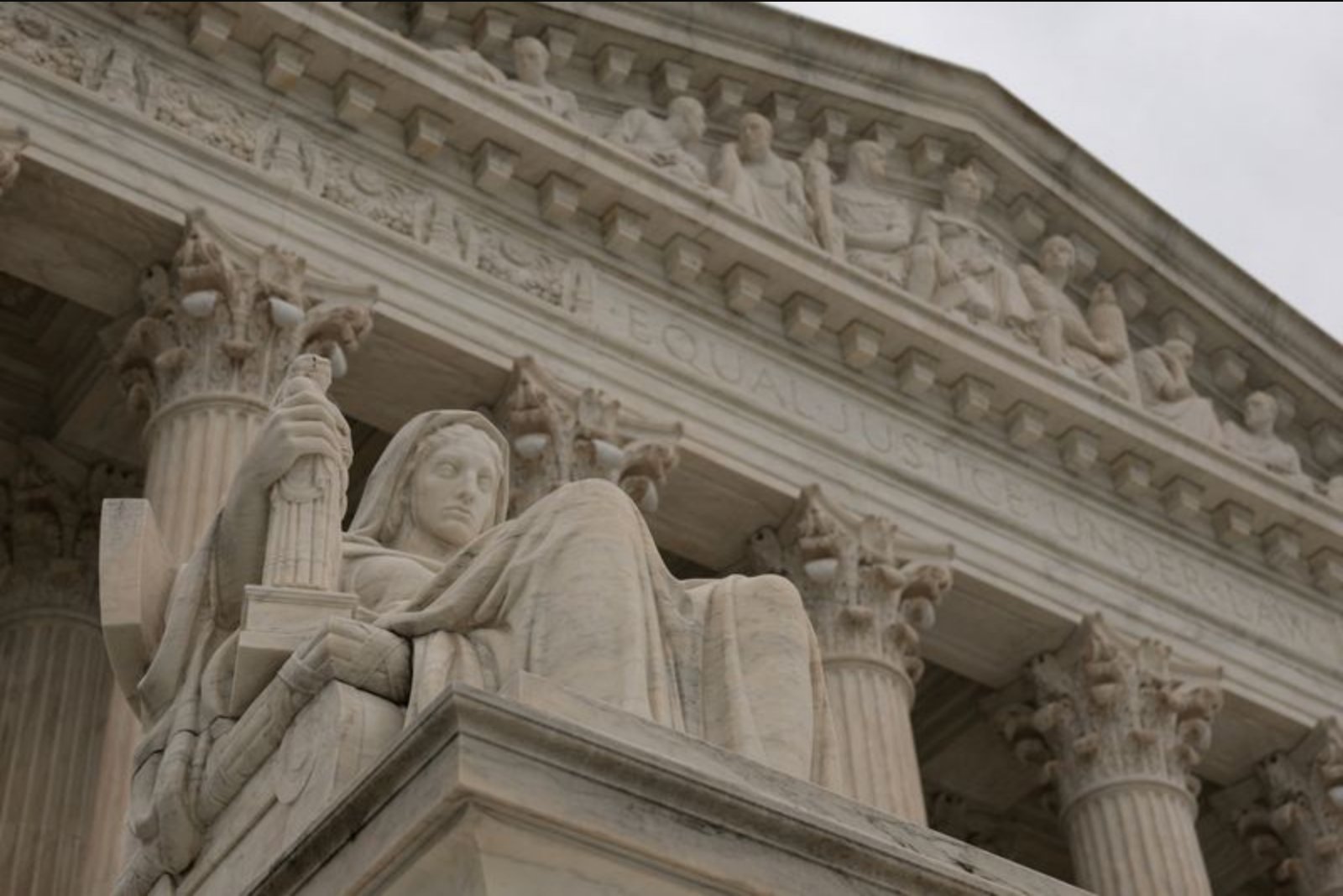
Virginia Democrats have petitioned the U.S. Supreme Court to revive a congressional map that voters approved in April to improve the party’s prospects in the upcoming November midterm elections. The appeal comes after the Virginia Supreme Court on May 8 set aside the new electoral boundaries in a 4-3 ruling that found procedural faults in how the measure was placed on the ballot.
The contested map had been designed to convert four Republican-held U.S. House seats to Democratic control, a change Democrats say would bolster their chances of reclaiming the U.S. House. The Virginia Supreme Court’s decision nullified that path, representing a setback to those Democratic ambitions. Republicans continue to hold a majority in the U.S. Senate.
The case has elevated Virginia into an uncommon mid-decade redistricting confrontation. Courts are now being asked to determine whether state lawmakers may redraw congressional districts outside the customary redistricting cycle that follows the decennial U.S. Census - a question the Supreme Court will confront as part of the dispute. Observers have noted that, with the U.S. House narrowly divided, the outcome could influence which party controls Congress after the November elections.
In its 4-3 decision, the Virginia Supreme Court sided with a Republican challenge to the ballot measure. The court’s majority concluded that Democratic lawmakers had not followed proper procedure when they expedited approval of the referendum last year so it could appear on this year’s ballot. That procedural finding was central to the court’s rejection of the Democratic-backed reconfiguration of the state’s U.S. House map.
Redistricting is the process by which legislative district boundaries are adjusted to reflect population changes captured in the national census conducted every 10 years. Traditionally, state legislatures undertake redistricting at the start of each decade to account for those census results. The effort at issue in Virginia represents a deviation from that conventional timing, creating a legal and political test over mid-decade map changes.
The broader national context has featured reciprocal moves by both parties in recent cycles. The current dispute follows a sequence that began when former President Donald Trump urged Texas Republicans to discard their electoral map and draw new lines intended to flip as many as five Democratic-held seats to Republican control. Advocates of such mid-decade map changes argue they can respond to political realities; opponents say they enable partisan advantage outside the census-driven schedule.
Another development cited by proponents of the Texas and other Republican efforts was a U.S. Supreme Court decision in which the court’s conservative 6-3 majority removed a key enforcement provision of the 1965 Voting Rights Act. That ruling, according to critics, has allowed Republican-led Southern states to dismantle districts that had been configured as majority-Black or majority-Latino. Black and Latino voters have tended to favor Democratic candidates in recent elections, and changes to majority-Black and majority-Latino districts have figured prominently in debates over partisan advantage.
With the issue now before the U.S. Supreme Court, the legal question of whether mid-decade congressional mapmaking is permissible will be central to the resolution. The court’s handling of the Virginia petition will determine whether the map voters approved can be restored in time to affect the November midterms.
Summary
Virginia Democrats asked the U.S. Supreme Court to reinstate a congressional map struck down by the Virginia Supreme Court. The state court found procedural defects in how a referendum to redraw House districts was placed on the ballot; the move had sought to flip four GOP-held seats to Democrats ahead of the November midterms. The dispute highlights an unusual mid-decade redistricting fight and raises legal questions about drawing district lines outside the post-census cycle.