
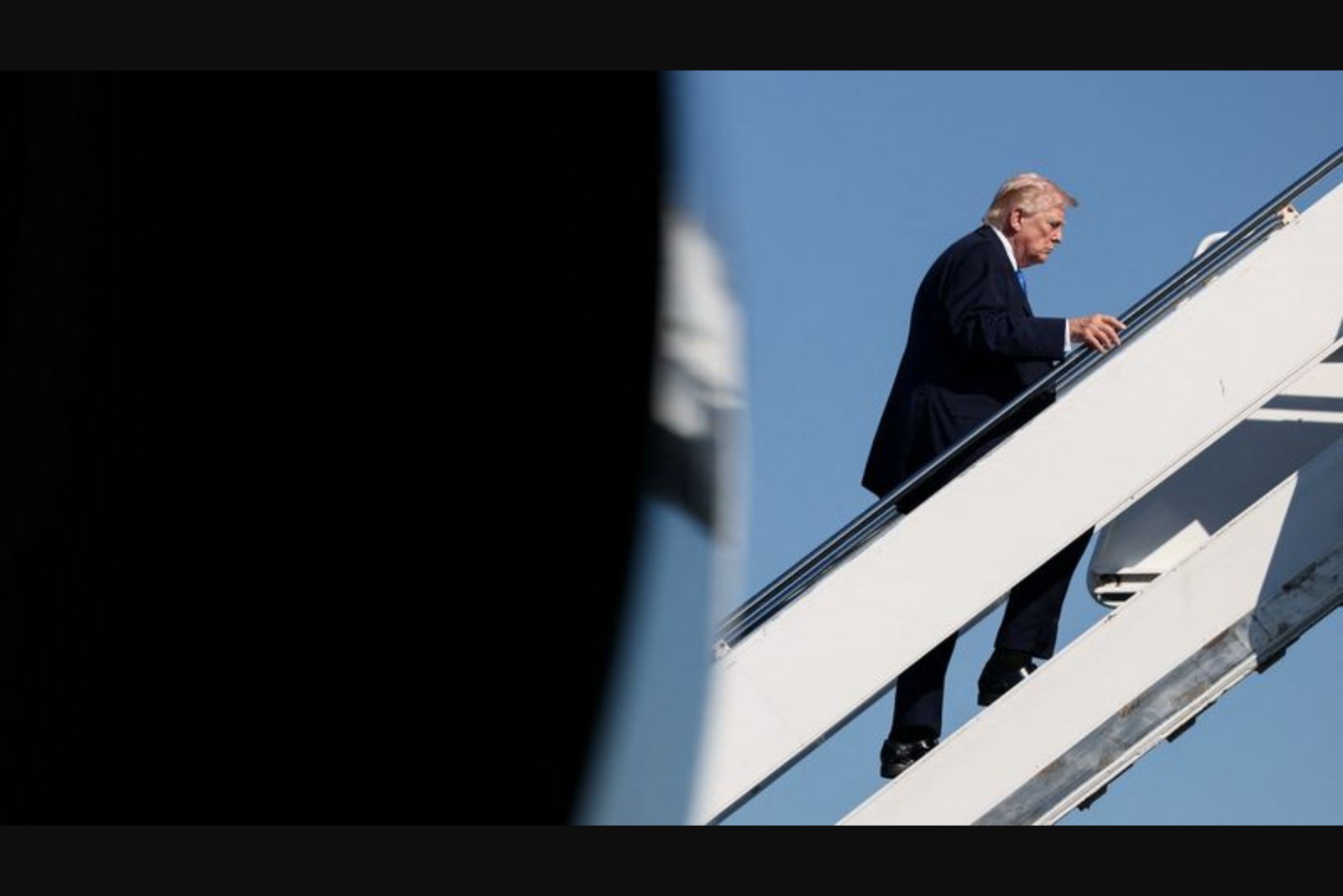
President Donald Trump has pursued an agenda to alter the presentation and stewardship of American history and culture at federal institutions since his return to the White House. Through a mixture of executive orders, administration directives and public statements, he has sought to remove what he describes as "anti-American ideology" from museums, monuments and park exhibits, while supporting the reinstatement of statues and displays removed during 2020 racial justice protests.
Those actions span a range of federal cultural bodies, from the Smithsonian Institution and the U.S. National Park Service to the Kennedy Center for the Performing Arts and smaller agency-run museums. Civil rights groups and racial justice organizations say the effort risks erasing important historical accounts and reversing social advances achieved over recent decades.
MARCH 2025 EXECUTIVE ORDER AND ITS DIRECTIVES
Within weeks of taking office, the president issued an executive order aimed at curbing what he called the spread of "anti-American ideology" at the Smithsonian Institution. The order directed reviews of the museum and research complex and called for the removal of such ideology from exhibits and educational content. It also instructed the Interior Department to restore federal parks, monuments and memorials that administration officials contend were "removed or changed in the last years to perpetuate a false revision of history."
Following the executive order, the Interior Department announced a review of all interpretive signage across the national park system. Interpretive signage includes the plaques, panels and explanatory displays used to contextualize historic sites and public spaces.
REMOVAL AND REINSTATEMENT OF SLAVERY-RELATED EXHIBITS
As part of these shifts, National Park Service staff removed a slavery exhibit on January 22 from a Philadelphia historic site associated with George Washington. The exhibit had included a reference to Washington’s ownership of enslaved people. In mid-February, a U.S. federal judge in Pennsylvania ordered the National Park Service to reinstall the slavery exhibit, a ruling the agency complied with.
Media reporting and statements from civil rights organizations indicate that federal officials have also ordered the removal of multiple signs and displays across national parks that addressed slavery and the mistreatment of Native Americans by settlers. Civil rights advocates argue such removals undermine public acknowledgement of significant and painful chapters in American history. "Stripping enslaved people’s stories from museum exhibits, monuments, and digital archives is not neutrality - it is erasure," the NAACP said in response.
RESTORATION AND DISPLAY OF STATUES TAKEN DOWN IN 2020
The National Park Service said last August it would reinstall a statue of Confederate General Albert Pike that had been toppled and vandalized in 2020 amid racial justice protests. The administration has also directed the display of a statue of Caesar Rodney - a Declaration of Independence signer and enslaver - that was removed in Delaware in 2020.
On March 22, administration officials announced that a statue of Christopher Columbus had been installed on White House grounds. The statue is a reconstruction of one that was thrown into Baltimore’s harbor by protesters in 2020, who criticized traditional heroic portrayals of Columbus for downplaying or ignoring his cruelty toward indigenous people.
SMITHSONIAN UNDER SCRUTINY
The White House publicly criticized the Smithsonian Institution for its exhibitions and historical framing, and suggested the museum complex could face similar scrutiny as colleges and universities that have had funding threatened for policies displeasing to the administration. The Smithsonian, a 180-year-old network that includes 21 museums and galleries and the National Zoo, receives the majority of its budget from Congress but maintains institutional independence over curatorial decisions.
An internal White House review was launched of select Smithsonian museums, focusing on the tone and historical framing of exhibition text, websites, educational materials and digital content. The Smithsonian has said it will engage "constructively" with the review.
KENNEDY CENTER TAKEOVER AND RENAMING
The president appointed himself chairman of the Kennedy Center and filled the institution’s board with allies. In December, the Kennedy Center board voted to rename the institution the Donald J. Trump and the John F. Kennedy Memorial Center for the Performing Arts. The president had previously criticized the center as too liberal.
Following the board’s vote, a number of artists and groups withdrew from scheduled engagements at the center, citing concerns about the change in leadership and direction. Democrats have noted that the center’s name was established by Congress and said the board’s rebranding carries no force of law. John F. Kennedy’s family publicly denounced the renaming as undermining the slain president’s legacy. The president said on February 1 he planned to close the center for two years beginning in July to undertake reconstruction.
OTHER AGENCIES AND INTERNATIONAL ACTIONS
Last April, the administration announced the Environmental Protection Agency would close a one-room museum at its headquarters that documented the agency’s history, citing cost cuts. Last May, the president publicly attacked Kim Sajet, the director of the National Portrait Gallery, calling her partisan; she announced the following month that she would step down. Late last year the White House removed several members of the National Council on the Humanities.
On the international front, the administration has withdrawn the United States from multiple global and United Nations entities, including cultural and refugee agencies, with officials saying these organizations do not benefit the country. Civil rights groups, racial justice organizations and others have criticized these domestic and international moves as eroding recognition of historical injustices and reversing progress in public acknowledgement of those harms.
PUBLIC AND LEGAL PUSHBACK
Several of the administration’s cultural policy changes have drawn legal challenges and public criticism. The federal judge’s order to reinstall the Philadelphia slavery exhibit and reports of artists withdrawing from the Kennedy Center illustrate immediate legal and reputational consequences. Civil rights organizations, including the NAACP and Black Lives Matter, have publicly framed the administration’s comments and policy changes as efforts to roll back social progress and to deny the severity of slavery, respectively.
The administration frames its actions as correcting what it views as historical distortions and as restoring public spaces and cultural institutions to a patriotic narrative. Opponents say the measures amount to erasure of uncomfortable historical truths and a narrowing of public memory.
SUMMARY
The president’s recent directives and public remarks have prompted a sweeping reassessment and, in several instances, alteration of exhibits, statues and institutional leadership across major federal cultural institutions. The moves have produced court rulings, institutional resignations, artist withdrawals and strong public responses from civil rights groups. Debates over historical framing and the role of federal oversight in cultural institutions are ongoing.