
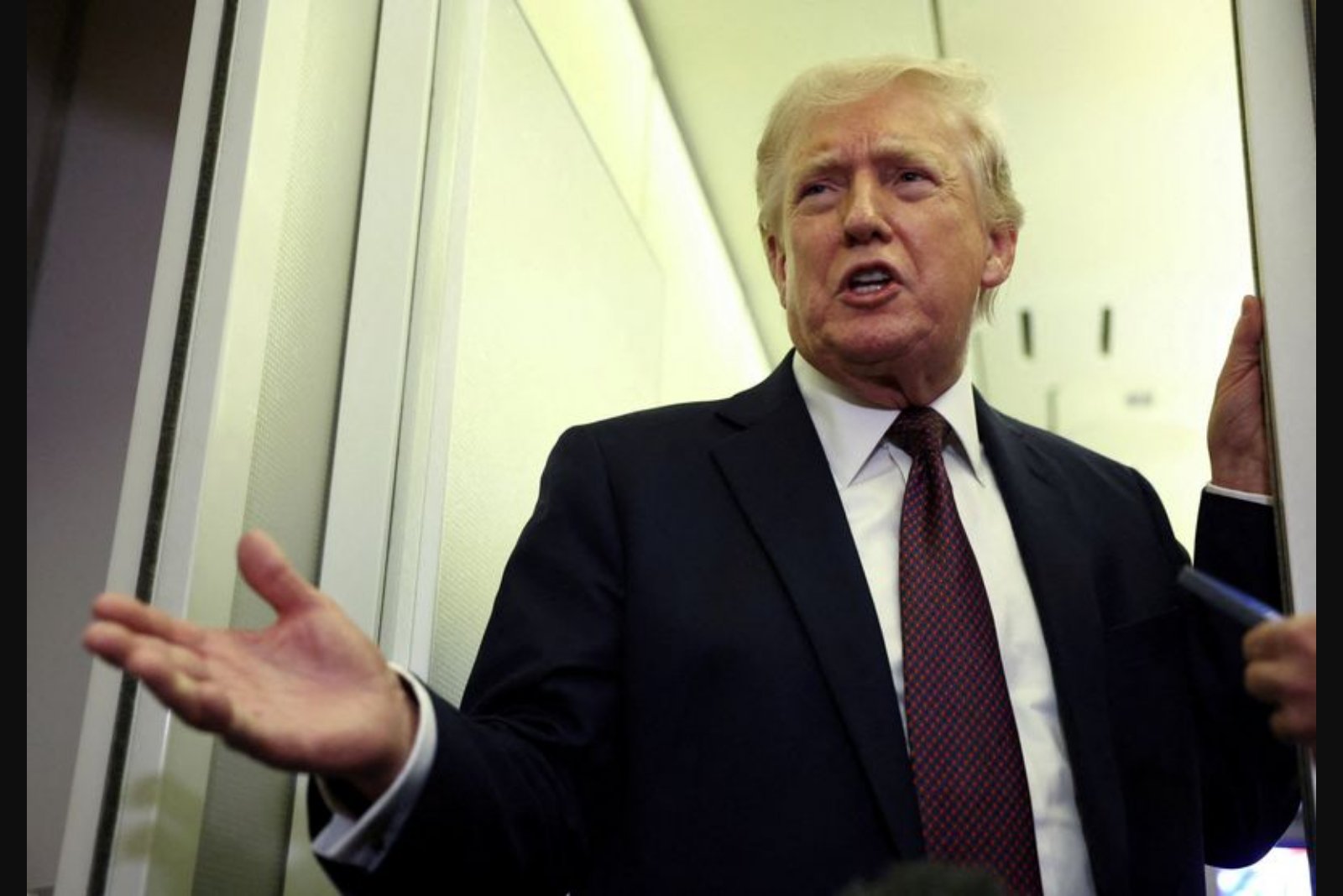
WASHINGTON, March 24 - President Donald Trump utilized a mail-in ballot this week in a Florida special election even as he publicly criticized mail-in voting and advocated for federal changes to how ballots are handled.
County public records show the president voted by mail in the Palm Beach County election held on Tuesday to fill a state senate seat and a state representative post. At an event in Memphis, Tennessee on Monday, he dismissed mail-in voting with direct allegations about fraud.
"Mail-in voting means mail-in cheating. I call it mail-in cheating, and we got to do something about it all. And it’s part of Homeland Security," the president said at a roundtable on crime.
In public remarks and in discussions about upcoming congressional action, the president said his fellow Republicans should withhold agreement on Department of Homeland Security funding until Democrats sign on to the SAVE America Act. That bill, as described by the president, would require people registering to vote to provide proof of U.S. citizenship.
He also sought approval from Democrats for additional provisions he wants attached to that legislation, including a ban on transgender women participating in women’s sports, a prohibition described as outlawing "transgender mutilation of our children," and tighter limits on mail-in voting. Under the exceptions the president has outlined, absentee ballots would remain allowed only for illness, disability, military service or travel.
The White House said the president is a Palm Beach resident who participates in Florida elections but maintains that he lives primarily at the White House. In an email, White House spokeswoman Olivia Wales reiterated the administration's position on mail ballots: "As President Trump has said, the SAVE America Act has commonsense exceptions for Americans to use mail-in ballots for illness, disability, military, or travel - but universal mail-in voting should not be allowed because it’s highly susceptible to fraud."
Election experts, however, say fraud in voting by mail is rare. They note that routine verification methods and the decentralized structure of U.S. elections make it difficult to tamper with mailed ballots, a point that contrasts with the president's public assertions.
This was not the first instance of the president using an absentee ballot. He voted by absentee ballot in the 2018 midterm elections, according to White House statements at the time, and while he had requested an absentee ballot in 2020 he ultimately voted in person.
Context and implications
The episode highlights a discrepancy between the president's personal use of mail-in voting in a local contest and his national rhetoric opposing universal mail ballots. It also reflects a legislative strategy tied to a high-profile federal funding negotiation - a stance that seeks to link Homeland Security appropriations to broader electoral and social policy changes.
Observers and market participants will note that debates over federal funding, voting rules and social policy riders can affect political risk assessments, potential legislative calendars, and government administrative priorities.