
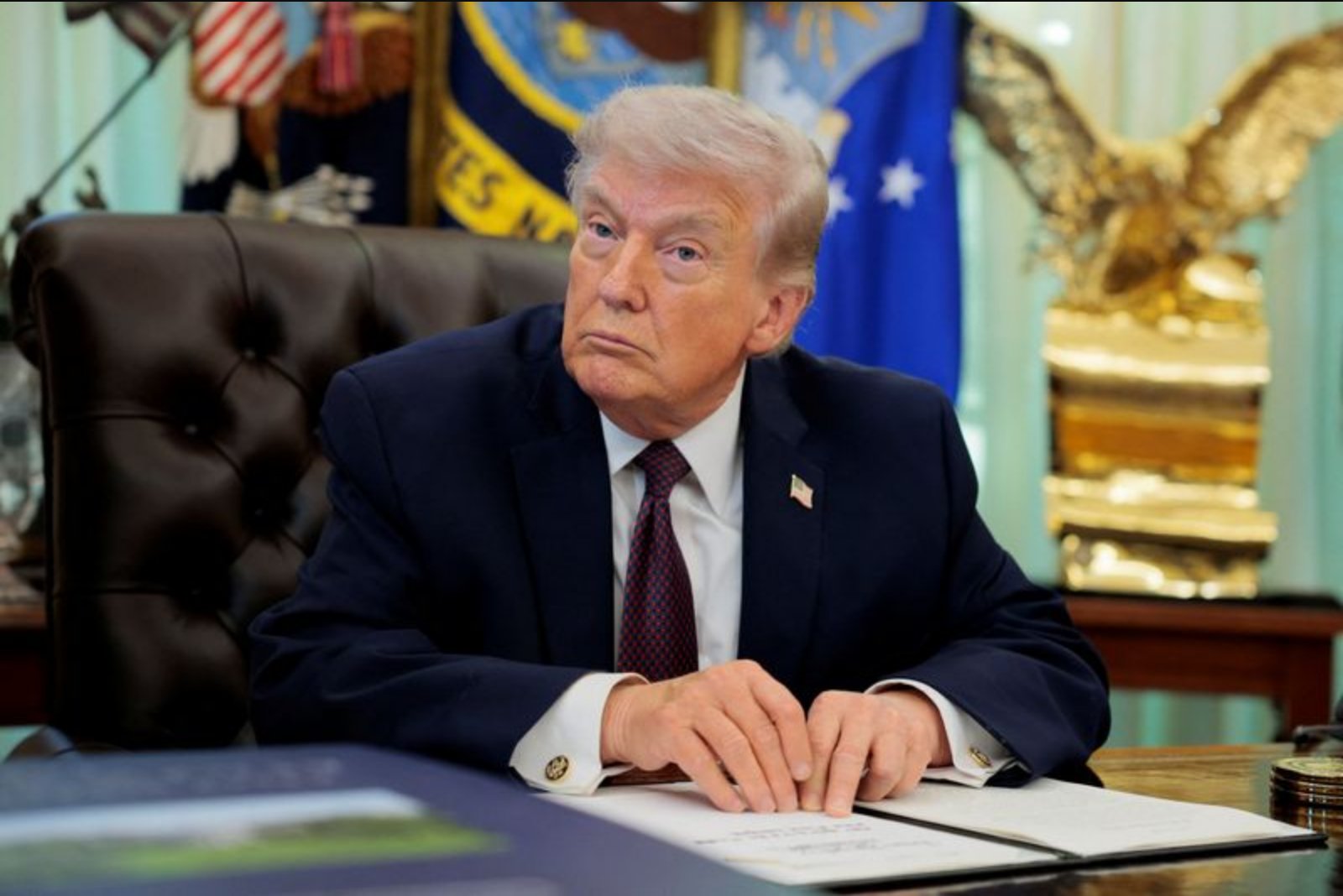
President Donald Trump is scheduled to speak to the country in a prime-time televised address at 9 p.m. EDT (0100 GMT) on Wednesday as his administration signals it is preparing to move toward a potential exit from the month-long war with Iran. A White House official said the president will tell the public that U.S. military goals in the conflict have been accomplished and will restate plans to wind down combat operations within two to three weeks.
The administration's public explanations and timelines for the campaign have shifted since the conflict began, now entering its fifth week. The president is confronting a populace broadly disinclined toward continued military engagement and slipping approval ratings. Officials believe a convincing case that the war is limited in duration and close to an end could reduce public anxiety, particularly as many Americans oppose the conflict and some are angered by higher gasoline prices tied to disruptions in global oil supply.
According to the White House official, Trump will say the U.S. has destroyed Iran's navy as well as its ballistic missile inventory and missile production facilities, and that the administration has ensured Iran cannot obtain a nuclear weapon. In an interview earlier in the day, the president said he would use the address to voice his frustration with NATO, which he blames for failing to support U.S. objectives in Iran.
The president told the interviewer he was "absolutely" considering withdrawing the U.S. from NATO, the treaty organization ratified by the U.S. Senate in 1949. He also said the United States would be out of Iran "pretty quickly," though he left open the option of returning for limited, targeted operations - "spot hits" - if circumstances required.
Public polling shows widespread disapproval of the war, most markedly among independent voters, and allies in Congress and beyond have pressed the administration for a clearer, consistent rationale. A survey conducted Friday through Sunday found 60% of voters disapproved of the war while 35% approved. The same survey showed 66% of respondents thought the U.S. should seek to end its participation quickly, even if that meant the administration did not attain the goals it had set.
Despite the president's stated intent to reduce U.S. involvement, his administration has discussed a range of more aggressive military options. Officials have proposed operations that would seize Iran's remaining stockpiles of highly enriched uranium, and even ground campaigns to capture strategic territory, including stretches of coastline and Kharg Island, the conduit for most of Iran's oil exports. Thousands of additional troops are en route to the Gulf region, a deployment that underscores the administration's desire to keep military options available.
At the same time, senior officials report nascent diplomatic efforts. One White House official said Vice President JD Vance had communicated with intermediaries from Pakistan as recently as Tuesday in early attempts to broker talks aimed at a negotiated settlement. The president has described these outreach efforts as progressing well, while Tehran has denied that direct discussions are underway.
Trump's domestic schedule on Wednesday included a historic visit to the U.S. Supreme Court, where he attended oral arguments over the legality of a directive he signed last year that would limit birthright citizenship. It was the first time a sitting president attended oral arguments. Returning to the White House for an Easter lunch, the president said of the Iran conflict that the administration was "pretty much winding that up," adding, "Have to take a few more hits."
The situation presents a mix of potential de-escalation and continued pressure. Administration officials remain publicly divided on next steps; the president has alternately weighed escalating operations and withdrawing U.S. forces, leaving immediate policy direction uncertain even to some close aides. The presence of additional naval and ground forces moving toward the Gulf suggests the administration is prepared to respond to further contingencies while simultaneously signaling a desire to shorten U.S. involvement.
In outlining the administration's narrative and timetable, the president is attempting to address both domestic political risk and market anxieties. Rising fuel costs tied to disruptions in oil shipments through the region have been a salient concern for many voters, and officials appear aware that convincing Americans the conflict will not be prolonged could blunt economic and political fallout.
As the president prepares to speak in prime time, the administration is balancing competing pressures: a public that, by majorities in polling, favors a prompt end to U.S. participation; military plans that keep a broad set of options available; and diplomatic overtures that remain in preliminary stages. The coming address will be aimed at presenting a concise account that the administration says proves its war aims have been met and that a winding down of operations is imminent.
Summary
President Trump will make a prime-time address at 9 p.m. EDT to declare that U.S. objectives in the month-long Iran conflict have been achieved and to announce plans to wind down operations within two to three weeks. The administration faces public opposition to the war, rising gasoline prices tied to the conflict, and strained relations with NATO over burden-sharing and maritime security in the Strait of Hormuz.