
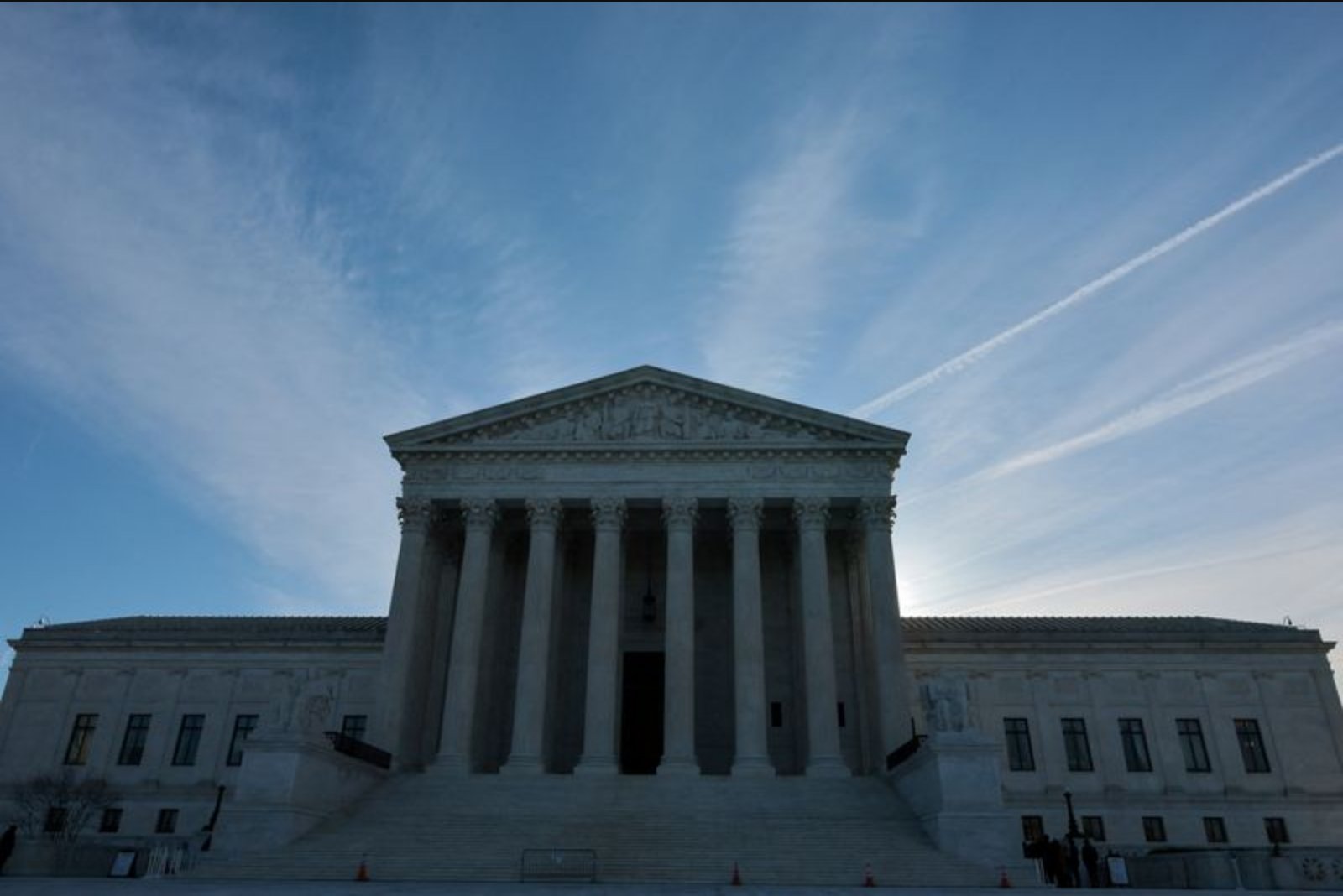
WASHINGTON - President Donald Trump said on Tuesday that it is likely he will attend the U.S. Supreme Court on Wednesday for arguments relating to his administration's effort to limit birthright citizenship.
When asked whether he planned to go to the court on Wednesday, the president replied, "I think so." The Supreme Court is scheduled to hear oral argument on the legality of a directive issued by Trump that seeks to change how a long-standing constitutional provision is interpreted.
The executive order at issue instructed U.S. agencies not to recognize as citizens children who are born in the United States if neither parent is an American citizen or a legal permanent resident - commonly referred to as a green card holder. That directive forms part of Trump’s broader push to tighten immigration policy.
A federal trial court blocked the president's order, issuing an injunction that halted implementation. In that decision the court held that the policy conflicted with the U.S. Constitution's 14th Amendment and with a federal statute that codifies birthright citizenship rights. The injunction followed a class-action lawsuit filed by parents and children whose claims to citizenship would be affected by the order.
The case presents the Supreme Court with a direct challenge to the administration's interpretation of a 19th century constitutional provision and asks the justices to resolve competing legal arguments about the scope of the 14th Amendment and applicable federal law.
Key points
- President Trump indicated he will likely attend Wednesday's Supreme Court hearing on a directive limiting birthright citizenship.
- The executive order directed federal agencies not to recognize citizenship for U.S.-born children whose parents are neither citizens nor legal permanent residents; a lower court enjoined the policy.
- The injunction determined the order violated the 14th Amendment and a federal statute in a class-action lawsuit brought by parents and children affected by the directive.
Risks and uncertainties
- The Supreme Court's ruling is pending - its decision will determine whether the injunction remains in place and how the administration's directive is treated going forward.
- The legal status of children named in the class-action lawsuit remains contested while the courts resolve the constitutional and statutory questions.
Additional context included in the coverage noted questions for investors about identifying opportunities in 2026, referencing data-driven investment tools as a way to improve decision-making. That material posed a separate line of inquiry about best investments, framed as a prompt to use analytical resources rather than intuition.
This report presents the core facts: the president's stated intent to likely appear before the court, the nature of the executive directive, the lower court's ruling that the policy violates the 14th Amendment and federal law, and the pending Supreme Court review in a class-action brought by parents and children whose citizenship claims are at stake.