
Overview
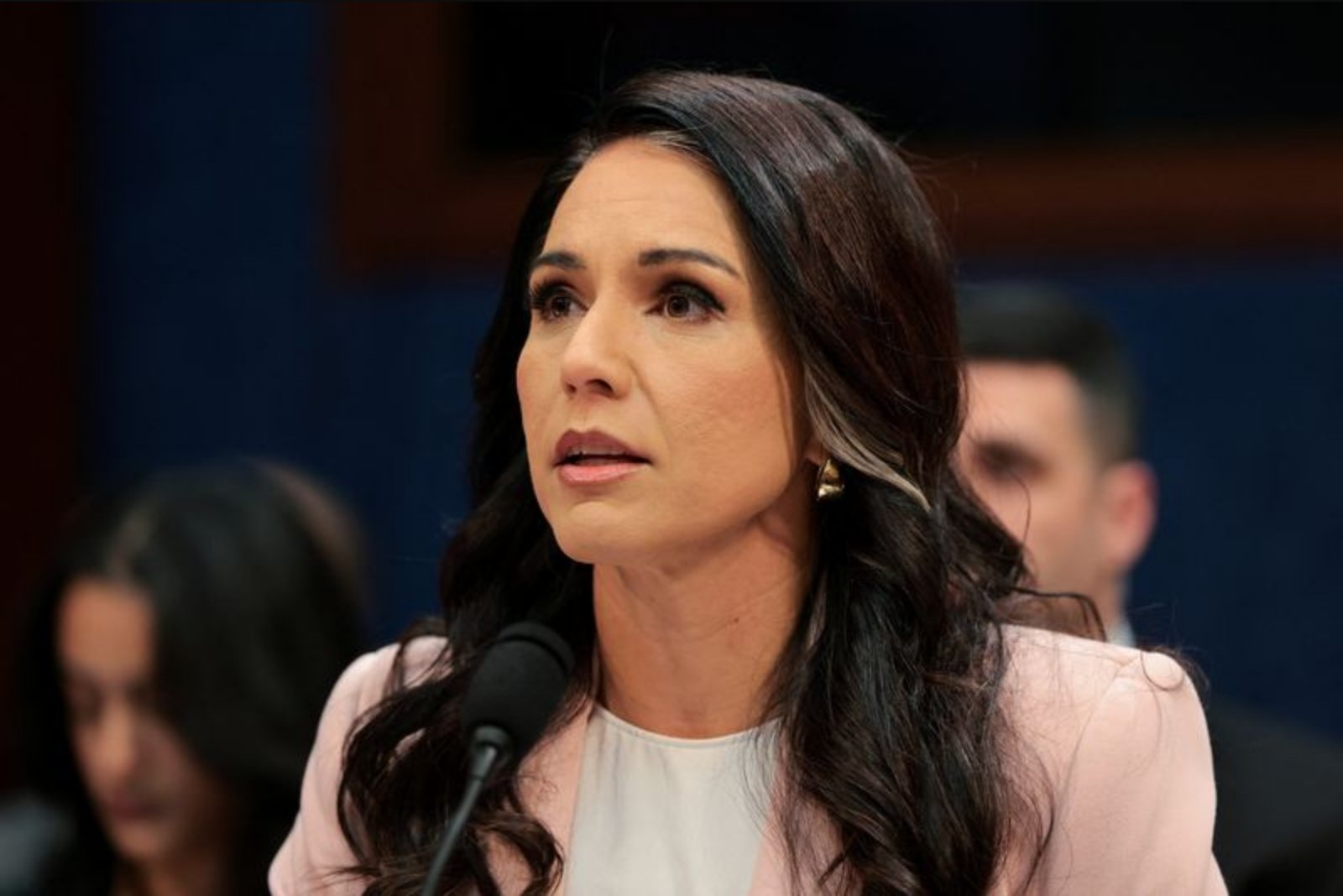
President Donald Trump said on March 29 that his director of national intelligence, Tulsi Gabbard, approaches Iran's nuclear challenge with a different tilt than he does, describing her as "a little bit softer" on the issue. Trump made the remarks while aboard Air Force One as he flew back to Washington following a weekend at his Mar-a-Lago residence in Florida.
When asked by a reporter whether he still had confidence in Gabbard, the president answered, "yeah, sure," and then elaborated on the difference in their outlooks. He emphasized his own position that he does not want Iran to possess a nuclear weapon, saying that if Iran obtained one, it would deploy it immediately. While noting Gabbard's relative softening on the question, he added that such a difference in thinking did not render an official unavailable to serve.
Context within the administration
Trump's comment is a rare public acknowledgement of debate among senior officials about the campaign aimed at constraining Iran's nuclear capabilities, a campaign now entering its second month. The administration's public messaging on the status of Iran's nuclear program has been mixed. In the run-up to the military action, some senior officials asserted that Iran was only weeks away from developing a nuclear weapon, while other voices in the administration - including the president - have said a prior U.S.-Israeli operation last summer had effectively destroyed Iran's weapons program.
Separately, Vice President JD Vance has adopted a more cautious posture regarding the conflict, and some other leading Republicans have privately expressed concern about the domestic economic and political costs associated with the campaign.
Intelligence community statements and personnel moves
Gabbard, who served previously in Congress as a Democrat before leading the intelligence office, told lawmakers earlier this month that the U.S. intelligence community had "high confidence" in its understanding of where Iran stores its stockpile of highly enriched uranium. During that public congressional appearance she declined to discuss whether the United States possesses the capability to destroy that stockpile.
An official closely associated with Gabbard, Joe Kent, who had headed the National Counterterrorism Center, resigned earlier this month in protest of the war. Kent said in his resignation that Iran did not present an imminent threat to the United States.
What the president said
On the White House plane, Trump reiterated a central pillar of his public stance on Iran: that preventing Tehran from acquiring nuclear weapons is imperative because of the risk he perceives such weapons would be used immediately. He contrasted that view with what he characterized as Gabbard's softer posture on the subject, while making clear he still considered her able to serve in her post.
Remaining questions
The administration continues to present divergent public signals about the timeline and current status of Iran's nuclear capacity, and officials inside and outside the administration hold differing views on the risks and costs of the military campaign. Some Republican leaders have voiced private concerns over the domestic economic and political ramifications, but the public record shows a mix of assertions about how close Iran was to a weapon and whether prior operations had already degraded its program. Iran, for its part, maintains that its nuclear activities are for peaceful purposes.