
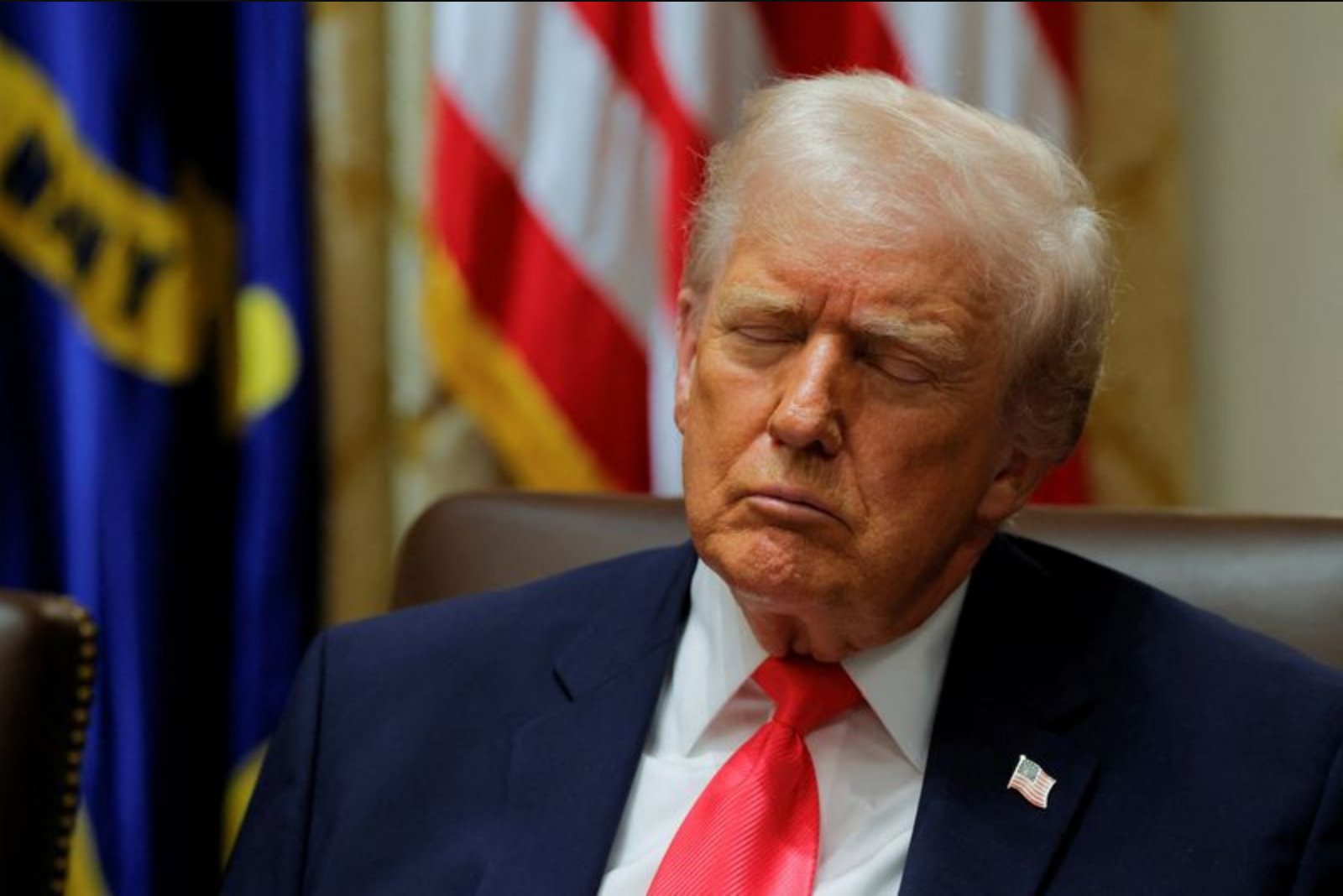
President Donald Trump dismissed suggestions that he had dozed off during a December cabinet meeting, saying he merely closed his eyes out of boredom. Speaking to officials in the White House Cabinet Room, Trump said his behavior had been misread and emphasized that he had not slept during the session.
"Some people said, he closed his eyes. Look, it got pretty boring," Trump told laughing officials. "I didn't sleep. I just closed them because I wanted to get the hell outta here." He added, "I didn't sleep, by the way. I don't sleep much."
The comments were made during a televised cabinet meeting that ran 81 minutes and was shortened from the usual format by skipping several officials and foregoing a back-and-forth with reporters on the news of the day. The president abbreviated the meeting's format, according to the White House account of the event.
At 79 and serving his final term, Trump has been attentive to questions about his vitality and mental fitness. He has publicly asserted his cognitive fitness, directed aides to make more meetings visible on his public calendar and on occasion hinted at interest in a third term despite the constitutional two-term limit. Advisories distributed to the press about his schedule now include explicit line items labeled "policy time," "Signing Time" and "Print Interview."
Cabinet meetings in past administrations were often unremarkable and not routinely televised. Under Trump, they have become a platform for the president and his team to spotlight achievements they argue receive insufficient attention from the media. In one instance last year, a cabinet meeting extended for more than three hours live on television, a duration described by the White House as apparently the longest camera appearance of the president's public life.
Observers have frequently noted Trump closing his eyes during televised appearances and other public events. On this occasion he did not appear to fall asleep, and he told aides and attendees directly that boredom, not slumber, explained his repeated eye closures.
Questions about presidential stamina are not new. The matter has come up for previous presidents as well, including inquiries during the Reagan era when the then-70-something president was seen appearing to nod off; Ronald Reagan's press secretary, Marlin Fitzwater, fielded those questions. Trump's immediate predecessor, Joe Biden, withdrew his 2024 candidacy amid concerns from voters and some Democrats about his fitness for office at age 81.
Trump continues to deride Biden with the nickname "Sleepy Joe" and has placed a plaque at the White House suggesting his predecessor ran his presidency with an automated pen, a claim Biden has denied. Trump himself was the oldest man to be inaugurated as U.S. president when he took office last year.
He is more active in travel, social media and press interaction than his predecessor was, yet public questions about his health persist. Those questions have included scrutiny of medical imaging tests the White House disclosed and of bruising observed on the president's hands. The White House has characterized the imaging as preventative and has said the results indicated good cardiac health. It has attributed the bruising - sometimes concealed with makeup - to routine aspirin the president takes as a prophylactic against cardiovascular disease.
Context and implications
The president's comments seek to pre-empt interpretations of physical behavior that could raise concerns about his capacity to lead. By framing repeated eye closures as an expression of impatience rather than sleep, the White House aims to quell questions about stamina while continuing to provide selective disclosures intended to document fitness for office.