
President Donald Trump on Wednesday criticized Minneapolis Mayor Jacob Frey for refusing to cooperate with federal immigration agents, warning the mayor he was "playing with fire" after Frey reiterated that city police would not help enforce federal immigration law. The confrontation followed a short-lived shift in tone from the administration and came amid ongoing protests and community alarm over recent federal operations in the city.
Tensions in Minneapolis have been elevated since two U.S. citizens were fatally shot by federal officers, including the weekend killing of nurse Alex Pretti. In the wake of those shootings, the administration indicated it would "de-escalate a bit" in Minneapolis and dispatched a senior border official, Tom Homan, to take over operations from Gregory Bovino, a Border Patrol official whose methods had drawn criticism.
A senior administration official said that Homan's arrival would signal a return to more traditional, targeted enforcement actions rather than the broad sweeps that critics have attributed to Bovino in multiple cities. Even so, it remained uncertain how significantly tactics would change in Minneapolis, a city where federal agents have repeatedly encountered protesters.
Local observers and activists reported that Immigration and Customs Enforcement activity appeared to ease somewhat on Tuesday before resuming more fully on Wednesday. They described a shift toward operations that appeared to focus on specific individuals rather than the more confrontational practices that had been reported in recent weeks.
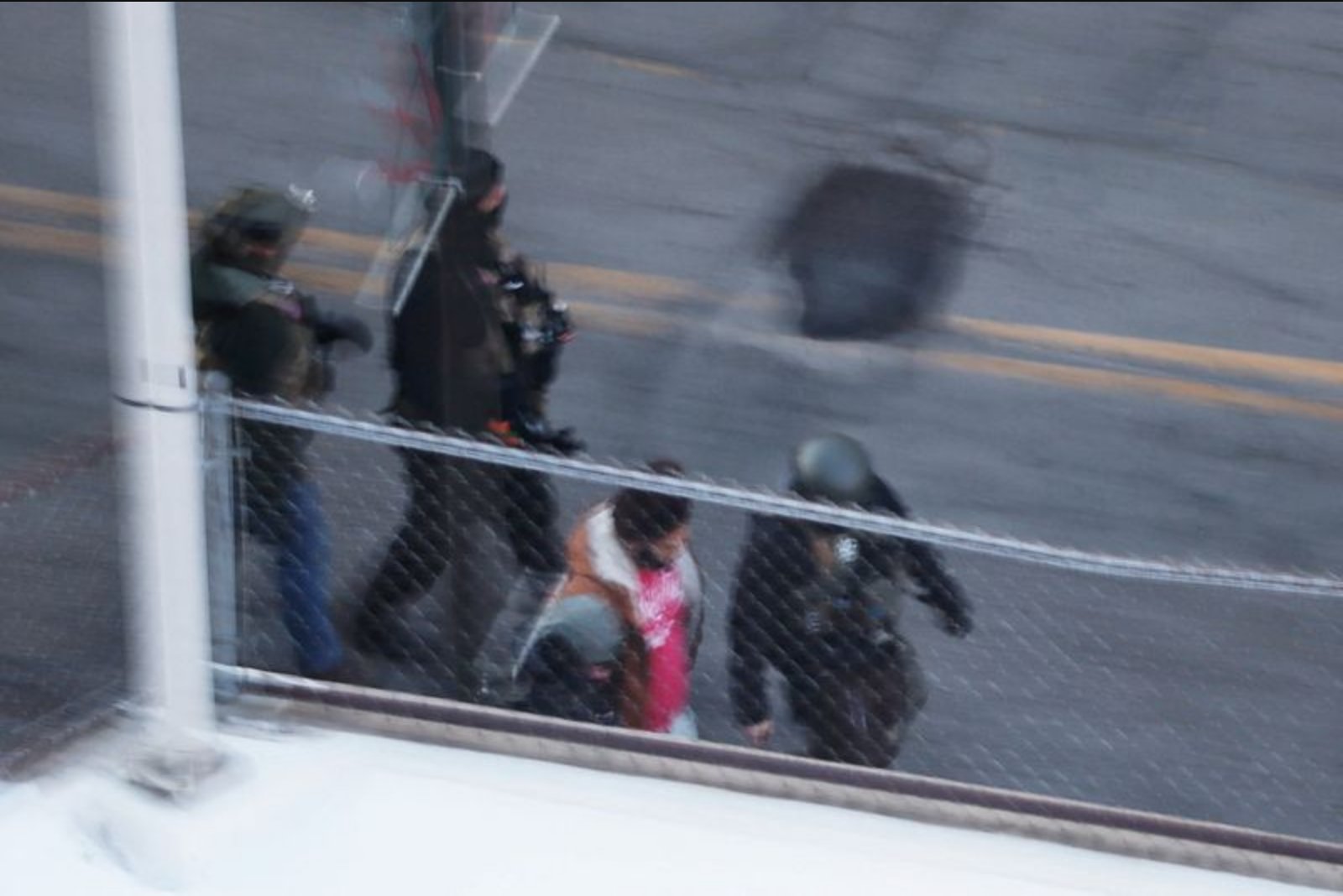
On Wednesday, ICE agents were observed operating in several parts of the city in small caravans - typically three vehicles carrying six to eight agents - pulling up to homes and businesses, knocking on doors and conducting searches that appeared to be aimed at particular targets. When the person sought was not present, the agents were said to leave the scene rather than engaging in the kinds of random stops and demands to verify legal status that had previously provoked angry exchanges with residents and community monitors.
Community trackers noted the difficulty of producing a precise tally of raids. Authorities do not publish comprehensive counts of enforcement actions, and volunteers who follow ICE and Border Patrol units reported that many of their encrypted communications have splintered into localized, smaller groups. Organizers said the fragmentation was partly intended to reduce the risk of infiltration by federal agents.
"They definitely shift around," said Patty O'Keefe, a community ICE observer in south Minneapolis, describing how activity seemed to ebb at times. "Let up for a few days so people let their guard down, I think." Another observer, speaking on condition of anonymity, said he did not believe the change in tone from the president would necessarily produce a meaningful reduction in detentions, but expressed cautious hope that Homan's presence might reduce the frequency of lethal encounters and lessen confrontations with community watchers.
Political flashpoints and violent incidents
The broader political fallout has remained acute. Representative Ilhan Omar, a Democrat from Minneapolis who has been a frequent target of the president's criticism, was sprayed with a foul-smelling liquid by a man carrying a syringe during a town hall on Tuesday. Omar was unharmed. Police arrested the suspect, identified as Anthony Kazmierczak, 55, on a third-degree assault charge. He was booked into Hennepin County Jail. It was not clear whether he had an attorney.
Separately, Ecuador's foreign ministry lodged a protest with the U.S. embassy in Quito after reporting that an ICE agent attempted to enter Ecuador's Minneapolis consulate on Tuesday. The ministry sent a note of protest to the embassy, according to local officials in Ecuador.
Under mounting pressure, Mr. Trump temporarily scaled back his public attacks on Mayor Frey and Minnesota Governor Tim Walz after speaking with both officials following the shooting of Alex Pretti. The president pledged to work with local leaders to "lower the temperature." Yet on social media on Wednesday he again criticized Frey for stating the city would not enforce federal immigration law, writing: "Could somebody in his inner sanctum please explain that this statement is a very serious violation of the Law, and that he is PLAYING WITH FIRE!"
Mayor Frey responded by reaffirming his position on social media: "The job of our police is to keep people safe, not enforce fed immigration laws." The dispute carries practical implications; the president has threatened to withhold federal funds from states that include jurisdictions he deems to be sanctuary areas that limit cooperation with federal immigration authorities.
Investigations and scrutiny
The killing of Alex Pretti, 37, on Saturday during protests near his home has become a focal point in the political crisis. Some administration officials initially suggested Pretti had intended to attack law enforcement officers, pointing to the handgun he reportedly carried. However, video verified by multiple observers showed Pretti holding only a phone when Border Patrol agents forced him to the ground. Additional footage indicated an agent located a firearm at Pretti's waist and removed it seconds before another agent fired a shot that struck a restrained Pretti in the back.
The Pretti shooting, along with an earlier fatal shooting of Renee Good by an ICE officer, provoked calls from a growing number of Republicans in Congress for independent investigations into both incidents. Those requests mark a rare willingness among some members of the president's party to demand outside scrutiny.
Stephen Miller, a White House adviser closely associated with the administration's immigration agenda, issued a statement acknowledging that agents "may not have been following" protocol prior to Pretti's death. Miller had earlier described Pretti in strongly condemnatory terms immediately after the shooting, using the words "assassin" and "terrorist."
Local monitoring and community response
Community members and volunteer observers have continued to track federal movements and to try to document enforcement actions. They reported that operations sometimes slowed, then resumed, and that the pattern of activity appeared to be shifting toward more narrowly targeted exercises. Observers said that when agents did not find the person they sought, they typically departed the location, a contrast with earlier episodes in which agents engaged in wider sweeps that led to confrontations with residents and onlookers.
Volunteers managing encrypted messaging channels said those networks fragmented into smaller, hyper-local groups, a change organizers attributed to concerns about infiltration by federal officers. That fragmentation, they said, makes it harder to assemble a comprehensive public record of every enforcement action.
As federal and local officials trade accusations and as community tension remains elevated, the situation in Minneapolis continues to evolve. The change in operational leadership at the federal level could alter how agents engage with local neighborhoods, but observers and activists in the city remain uncertain about the extent and permanence of any shift.