
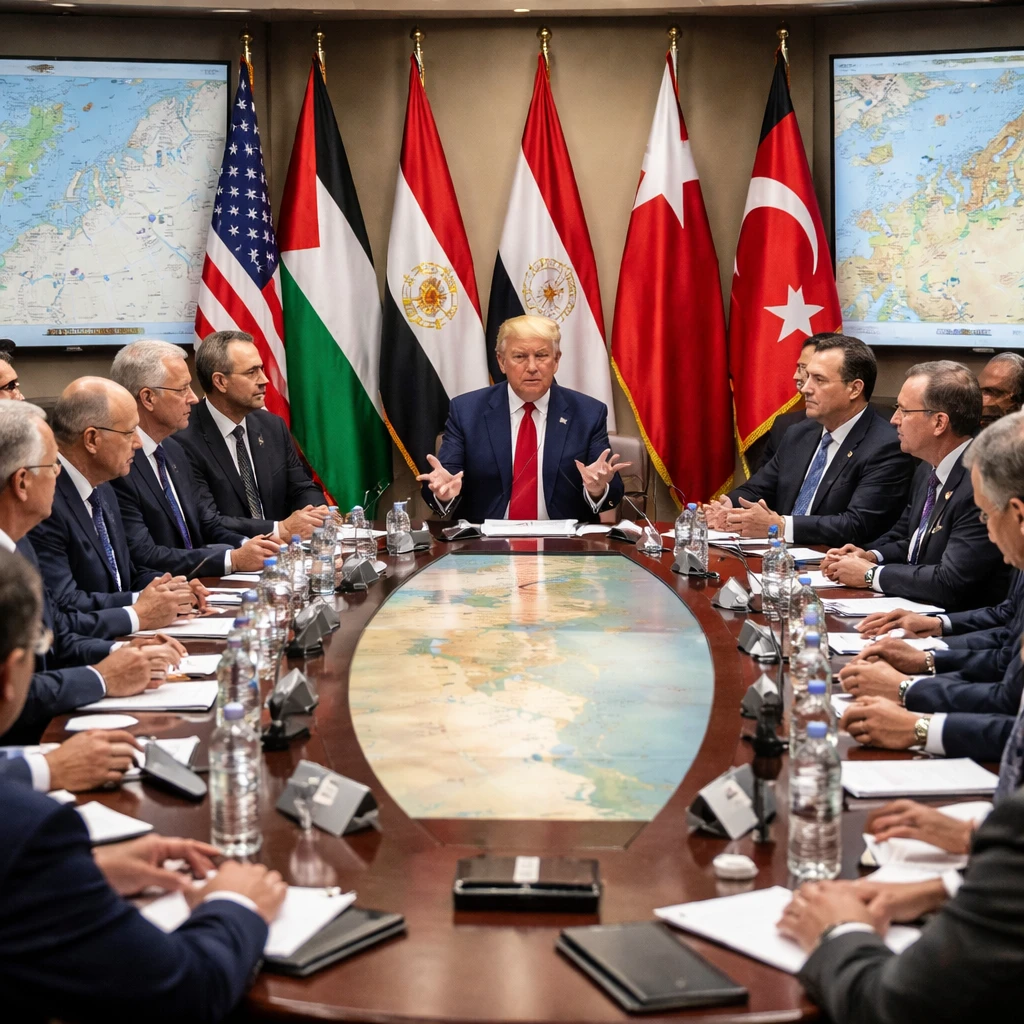
On January 15, U.S. President Donald Trump publicly declared his support for the newly established "Palestinian Technocratic Government," which has been designated to oversee the governance of Gaza during a transitional phase. This development aligns with Washington's announcement of a second phase in the ceasefire agreement that was initially implemented in October, though the truce has remained precarious.
In a series of social media posts, Trump revealed that he is backing the National Committee for the Administration of Gaza, which functions under the oversight of the so-called "Board of Peace." This board, an international supervisory entity, has been created to manage Gaza’s governance throughout the transitional period. Trump further noted that he chairs this newly formed Board of Peace, with its member appointments to be announced in the near future.
The ceasefire arrangement was initially agreed upon by Israel and Hamas in October, guided by a plan developed under Trump's administration. However, both sides have since leveled accusations against one another regarding breaches of the truce. The conflict since the cessation of hostilities has resulted in substantial casualties, with over 440 Palestinians, including more than 100 children, and three Israeli soldiers reported killed.
Complicating the fragile peace are ongoing issues. They include the unresolved recovery of one remaining Israeli hostage’s remains, delays by Israel in reopening Gaza’s border crossing with Egypt, and Hamas’ firm stance against disarmament to date. Moving forward with the next phase of the ceasefire demands that the United States and its mediating partners confront these entrenched challenges. Key tasks involve negotiating Hamas’s disarmament, coordinating further Israeli military withdrawal contingent upon disarmament progress, and deploying an international peacekeeping mission.
The Palestinian technocratic panel is composed of 15 members and is led by Ali Shaath, a former deputy minister within the Western-backed Palestinian Authority. Shaath previously managed the development of industrial zones, suggesting a technocratic and administrative focus for the committee, as detailed by mediators Egypt, Qatar, and Turkey. President Trump emphasized that these Palestinian leaders exhibit unwavering dedication to a peaceful future.
Despite the U.S. endorsement, some experts have critiqued the governance structure proposed by the Board of Peace, citing concerns that Trump’s chairmanship evokes a model reminiscent of colonial oversight. Trump also highlighted that Egypt, Qatar, and Turkey will play critical roles in securing a "comprehensive demilitarization agreement" with Hamas as part of the peace process.
The consequences of the conflict in Gaza have been devastating. Israeli military operations since late 2023 have resulted in tens of thousands of deaths, widespread food shortages, and the internal displacement of the entire Gaza population. Multiple rights organizations, academics, and a United Nations inquiry characterize these events as amounting to genocide. Israel defends its actions as self-defense following a Hamas-led attack in 2023 that resulted in 1,200 deaths and the abduction of over 250 hostages.
In summary, the endorsement by President Trump of the Palestinian Technocratic Government, the establishment of the Board of Peace under his chairmanship, and the ongoing efforts to implement and maintain the ceasefire highlight complex diplomatic and security challenges ahead. The path to stability in Gaza involves tangled negotiations over governance, disarmament, and humanitarian concerns amid continuing hostilities.