
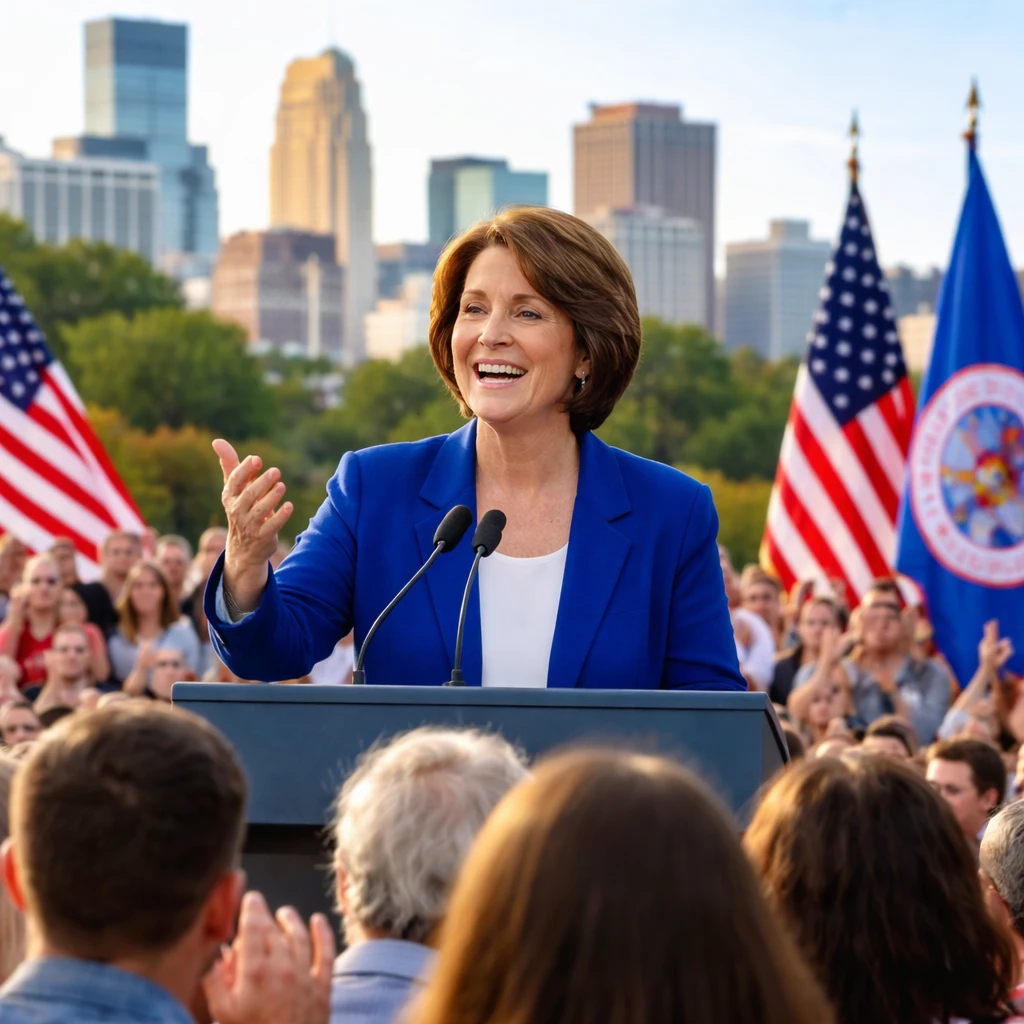
On January 22, Amy Klobuchar, a Democratic U.S. Senator from Minnesota, completed the necessary paperwork to launch her campaign for governor of the state. This move comes after Governor Tim Walz, also a Democrat, declared earlier in the month that he would not seek a third term. Walz’s decision followed a period of intense political pressure and contentious interactions with the administration of then-President Donald Trump.
Klobuchar registered her gubernatorial campaign committee with the Minnesota Campaign Finance and Public Disclosure Board, which publicly listed her status on Thursday. The gubernatorial election is slated for November of this year.
Throughout her tenure in the Senate, Klobuchar has voiced criticism of the Trump administration, particularly on policies and strategies implemented within Minnesota. One notable issue involves the deployment of approximately 3,000 U.S. Immigration and Customs Enforcement (ICE) officers in the state’s largest city, Minneapolis. This federal action followed heightened tensions after an immigration officer fatally shot a U.S. citizen. The presence of ICE agents has created unease among residents, especially within immigrant communities.
Local officials and Democrats have denounced the federal agents’ approach, describing it as aggressive and unnecessary, contributing to widespread fear among immigrant populations. The state and Minneapolis have witnessed significant protests reacting to these enforcement actions. The Trump administration contended that such measures are essential steps to combat allegations of fraud and illegal immigration.
Governor Walz revealed his decision to forgo a re-election campaign to concentrate on an emerging crisis involving claims of fraud in Minnesota’s welfare system. This issue escalated amid scrutiny and pressure from the Trump administration. However, advocates for immigrant rights have challenged the administration’s stated motives, arguing fraud accusations have been used as a pretext for targeting immigrants and opposing political figures. Critics also questioned the credibility of Trump’s claims on fighting fraud, citing his previous pardons for individuals convicted of fraud-related offenses.
In recent weeks, Klobuchar engaged with educational leaders statewide, including school principals, where she reported hearing distressing accounts of children and parents feeling "under siege" by ICE activities. She has called for peaceful responses among citizens and suggested that the federal government’s interventions extend beyond merely addressing fraud concerns.