
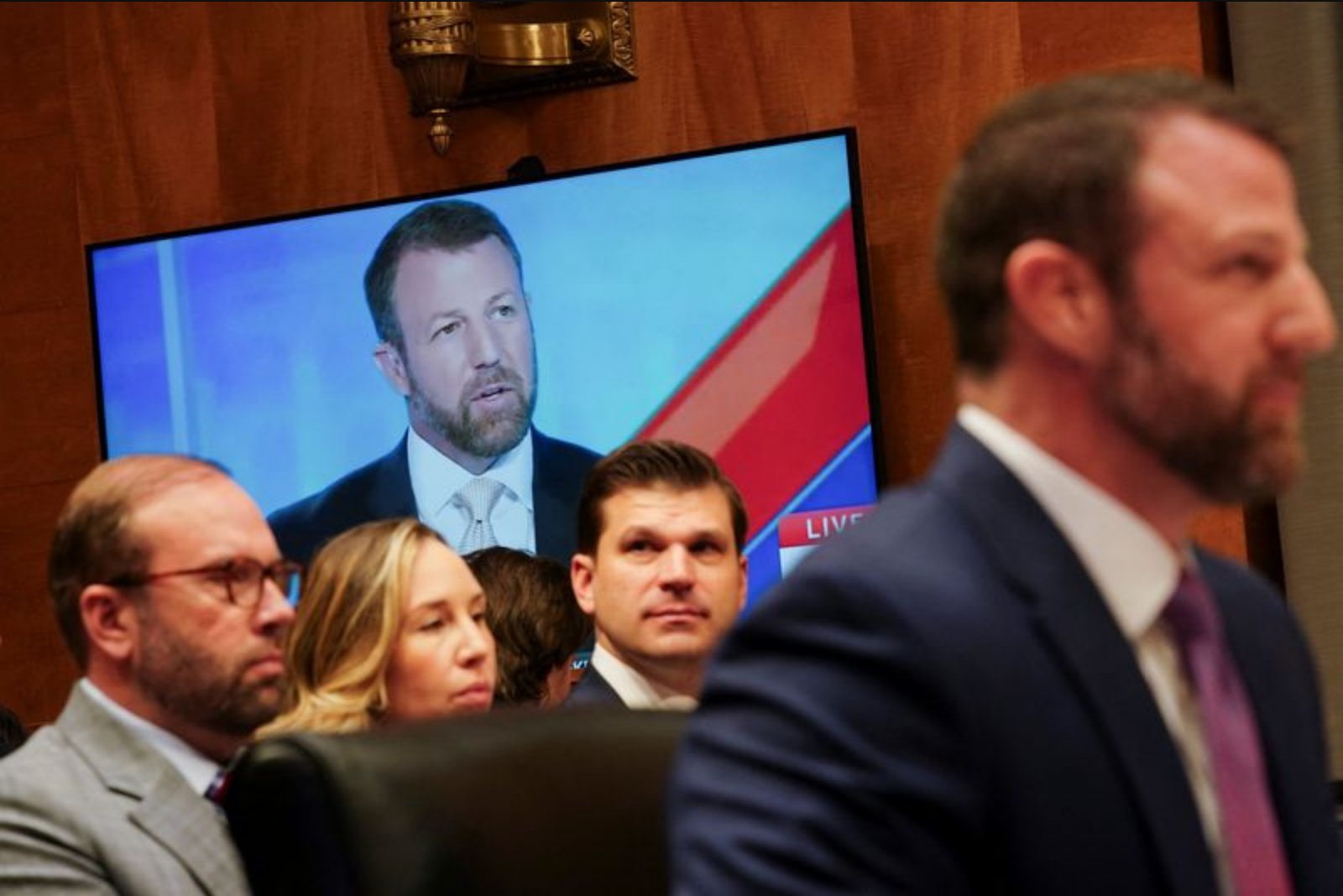
The United States Senate confirmed Markwayne Mullin to lead the Department of Homeland Security (DHS) by a 54-45 vote, approving President Donald Trump’s nominee to succeed Kristi Noem. Mullin, described as a businessman and a former mixed-martial arts fighter, has aligned with the administration’s firm stance on immigration but suggested during his confirmation hearing that he would temper some of the more forceful tactics used by federal immigration authorities.
At the confirmation hearing, Mullin signaled he would retreat from certain directives that had empowered federal immigration officers to forcibly enter private homes or businesses without judicial warrants. That position marks a departure from some previous agency guidance and was highlighted during the Senate consideration of his nomination.
Meanwhile, congressional Democrats have used funding as leverage to press the administration to change its enforcement approach. Since mid-February, Democrats have blocked funding for DHS, arguing for limits on aggressive immigration measures. That standoff has had immediate operational consequences, including payroll disruptions for Transportation Security Administration (TSA) screeners.
Airport security screeners who missed paychecks have increasingly called out sick, a trend that has contributed to longer lines at U.S. airports. Senate Republicans repeatedly rejected a Democratic proposal that would have maintained pay for TSA workers while negotiations over immigration enforcement practices continued. The administration began deploying federal immigration officers at airports on Monday to assist with screening, though officials have reported the impact of that deployment remains unclear.
The change in DHS leadership gives the Trump administration an opportunity to shift away from the high-profile approach associated with Noem. As a former governor of South Dakota, Noem championed an expansive deportation strategy and became the face of the administration’s mass deportation effort. She came under sharp criticism in congressional hearings earlier in March for comments that characterized two U.S. citizens fatally shot by federal immigration officers in Minneapolis as perpetrators of "domestic terrorism" even as video evidence called those assertions into question.
Noem also faced scrutiny over a $220 million advertising campaign awarded to Republican-connected firms without following a standard contract bidding process. Following the hearings, President Trump announced he had fired Noem, saying she would leave by March 31 and assume a role as special envoy to a new initiative called "Shield of the Americas," intended to promote the administration’s security policies in the Western Hemisphere.
In the wake of Noem’s dismissal, the president nominated Mullin and Republicans in the Senate moved quickly to secure his confirmation. Republicans hold a 53-47 edge in the chamber, which framed the pace of the confirmation process.
During Mullin’s Senate panel hearing the prior Thursday, Senator Rand Paul, the panel’s senior Republican, criticized Mullin for a record of violent rhetoric. Paul referenced remarks from February in which Mullin appeared to condone an assault on Paul in 2017 that resulted in broken ribs and a damaged lung. Senator Paul opposed the nomination on those grounds. Despite that opposition, Democratic Senator John Fetterman of Pennsylvania offered support that allowed Mullin to advance to a full Senate vote.
Public support for the administration’s immigration posture has softened in recent months amid the deployment of masked federal agents to U.S. cities to seek suspected immigration offenders. The administration has signaled it may alter how it communicates the issue. White House Deputy Chief of Staff James Blair reportedly advised Republican lawmakers at a closed-door meeting in Florida this month to pivot away from emphasizing mass deportations and instead underscore arrests of individuals with criminal records.
Reports have also indicated that President Trump privately told aides that certain mass deportation policies had been excessive. In response to requests for comment on the administration’s plans, White House spokeswoman Abigail Jackson asserted that the administration’s enforcement priorities would remain unchanged, stating: "President Trump’s highest priority has always been the deportation of illegal alien criminals who endanger American communities."
The confirmation of Mullin concludes a contentious chapter at DHS and initiates a period of scrutiny over whether the department’s operational posture and public messaging on immigration will shift under new leadership. Key immediate concerns for observers include the resolution of the DHS funding impasse, the operational effects on airport security staffing, and how enforcement directives will be implemented going forward.